
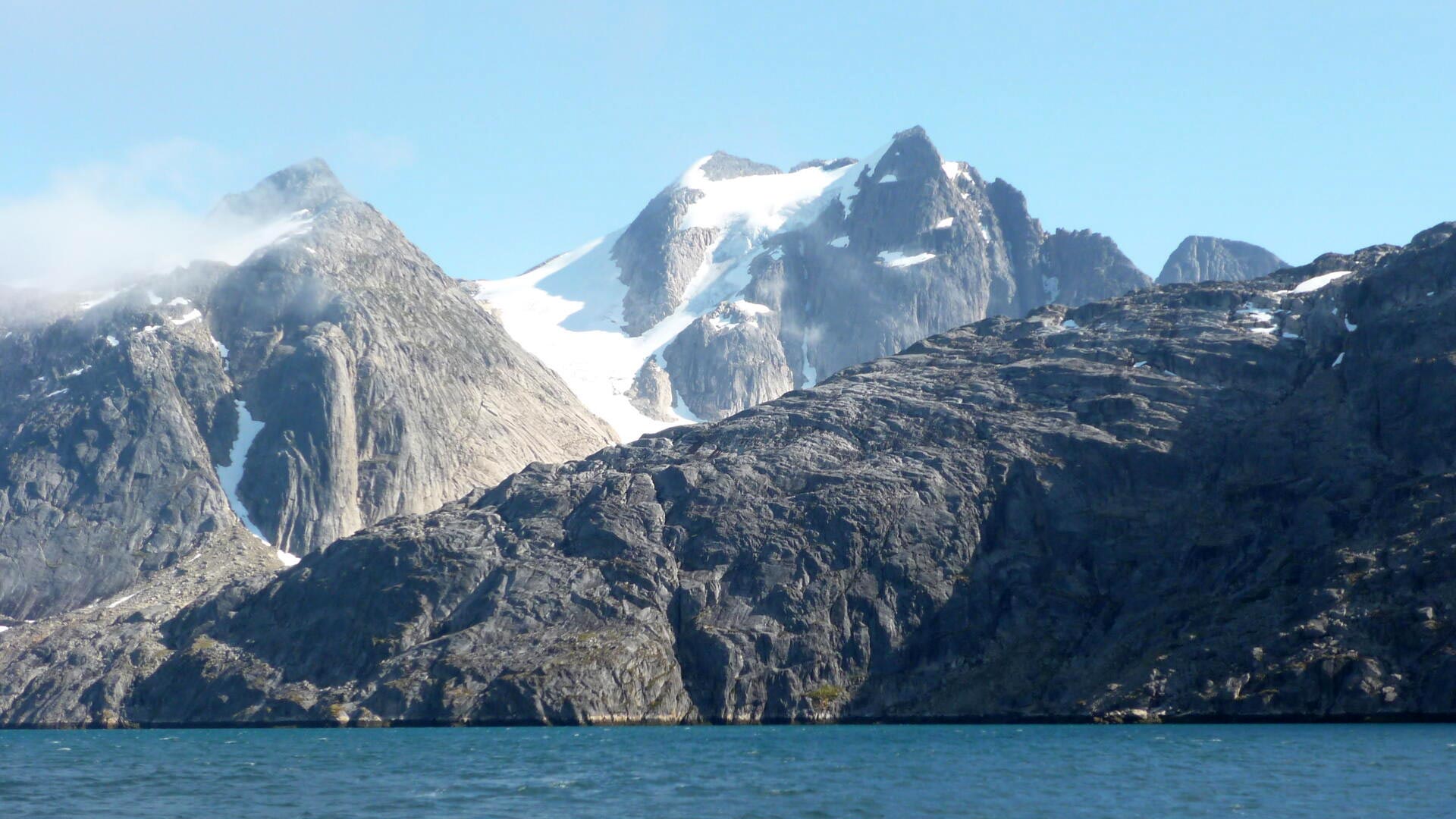
Several years after scientists discovered what was considered the oldest crater a meteorite made on the planet, another team found it’s actually the result of normal geological processes.
During fieldwork at the Archean Maniitsoq structure in Greenland, an international team of scientists led by the University of Waterloo’s Chris Yakymchuk found the features of this region are inconsistent with an impact crater. In 2012, a different team identified it as the remnant of a three-billion-year-old meteorite crater.
“Zircon crystals in the rock are like little time capsules,” said Yakymchuk, a professor in Waterloo’s Department of Earth and Environmental Sciences. “They preserve ancient damage caused by shockwaves you get from a meteorite impact. We found no such damage in them.”
Additionally, there are multiple places where the rocks melted and recrystallized deep in the Earth. This process—called metamorphism—would occur almost instantaneously if produced from an impact. The Waterloo-led team found it happened 40 million years later than the earlier group proposed.
“We went there to explore the area for potential mineral exploration, and it was through close examination of the area and data collected since 2012 that we concluded the features are inconsistent with a meteorite impact,” Yakymchuk said. “While we were disappointed that we weren’t working in a structure that was the result of a meteorite hitting the planet three billion years ago, science is about advancing knowledge through discovery, and our understanding of the Earth’s ancient history continues to evolve. Our findings provide scientific data for resource companies and Greenlandic prospectors to find new mineral resources.”
The study, “Stirred not shaken; critical evaluation of a proposed Archean meteorite impact in West Greenland,” by Yakymchuk and an international team of scientists from Canada, Australia, Denmark, Greenland and the United Kingdom, appears in the journal Earth and Planetary Science Letters.
Reference: “Stirred not shaken; critical evaluation of a proposed Archean meteorite impact in West Greenland” by Chris Yakymchuk, Christopher L. Kirkland, Aaron J. Cavosie, Kristoffer Szilas, Julie Hollis, Nicholas J. Gardiner, Pedro Waterton, Agnete Steenfelt and Laure Martin, 11 January 2021, Earth and Planetary Science Letters.
DOI: 10.1016/j.epsl.2020.116730
Never miss a breakthrough: Join the SciTechDaily newsletter.
Follow us on Google and Google News.
11 Comments
The World’s largest impact crater. Look it up. Every geological feature in the world, (mountains, canyons, caves, continents, everything) was formed in a single collision event.
The perception we accept as an ‘impact crater’ needs to be redefined.
By the way, the Arizona crater is Not from a meteor strike. Imagine making toffee, pouring the viscous liquid out to cool, bubbles in the liquid ‘pop’ as it hardens, leaving a crater.
That conclusion does not match the evidence. That is the only such crater in the area, especially when we see that Sunset Crater some miles away is of a different type of volcanic activity and material (basaltic cinder). Even though no core has ever been found at M.C., it is generally accepted by scientists that the crater’s meteorite vaporized upon impact.
Why should we believe you? You provide no explanation or citations to support your contention.
fppp
TRULYTRUE TRUE, Something was built there! That’s why there’s a Knub! It’s an anvil!
Is anyone concerned that they went to check out possibilities for resource extraction and that now as a result of their findings the region will probably be a lot less restrictive toward resource extraction plans?
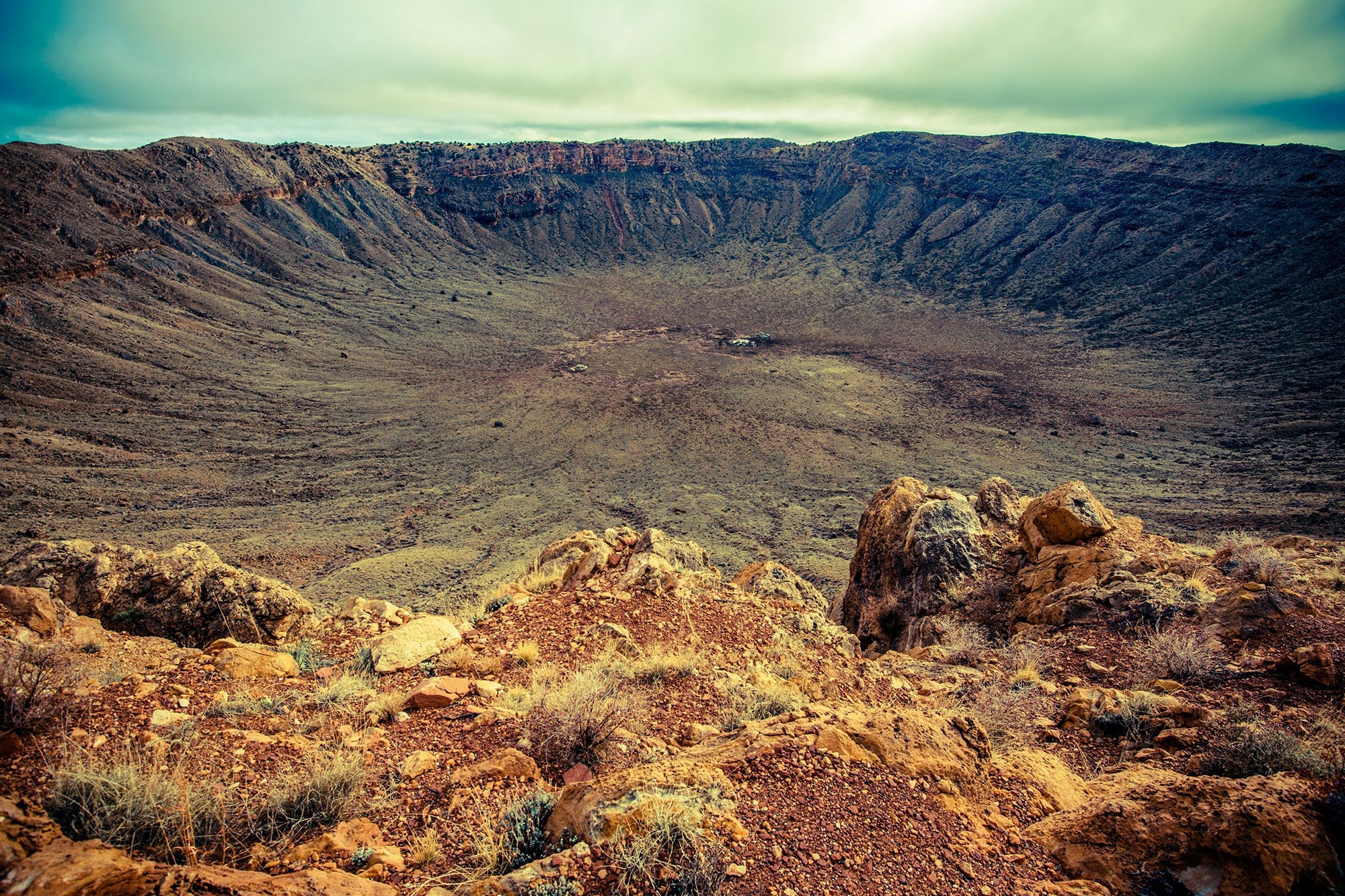
I’m not a scientist, certainly not a geologist, but that sure looks to me like a gigantic impact crater.
Stratton
I think that you are confused. There is no overhead photograph of what was presumed to be an impact crater in Greenland! The picture of a crater is that of a 50,000 year old crater in northern Arizona.
Everyone knows that Meteor Crater is the result of ancient sandworm activity in that part of Arizona. Sandworm larvae which produce “spice” was a highly sought after mineral and very dangerous to harvest by the Anasazi, which would explain why they eventually vanished. By sheer scale of the crater we can see that the size of the sandworms was enormous to say the least.
… one oopsy at the time, that is okay…
So what the hell is it then?
Very likely linked to a solar plasma event.
No geological mass, just a mega hit by a solar launched plasma ejaculation.