
Close Menu
    Facebook X (Twitter) Instagram
    SciTechDaily
    • Biology
    • Chemistry
    • Earth
    • Health
    • Physics
    • Science
    • Space
    • Technology
    Facebook X (Twitter) Pinterest YouTube RSS
    SciTechDaily
    Home»Biology»Orcas’ One-Breath Mystery – Marine Biologists Confirm Longstanding Hypothesis
    Biology

    Orcas’ One-Breath Mystery – Marine Biologists Confirm Longstanding Hypothesis

    By University of British ColumbiaMay 30, 20242 Comments3 Mins Read
    Facebook Twitter Pinterest Telegram LinkedIn WhatsApp Email Reddit
    Share
    Facebook Twitter LinkedIn Pinterest Telegram Email Reddit
    Orca Killer Whale
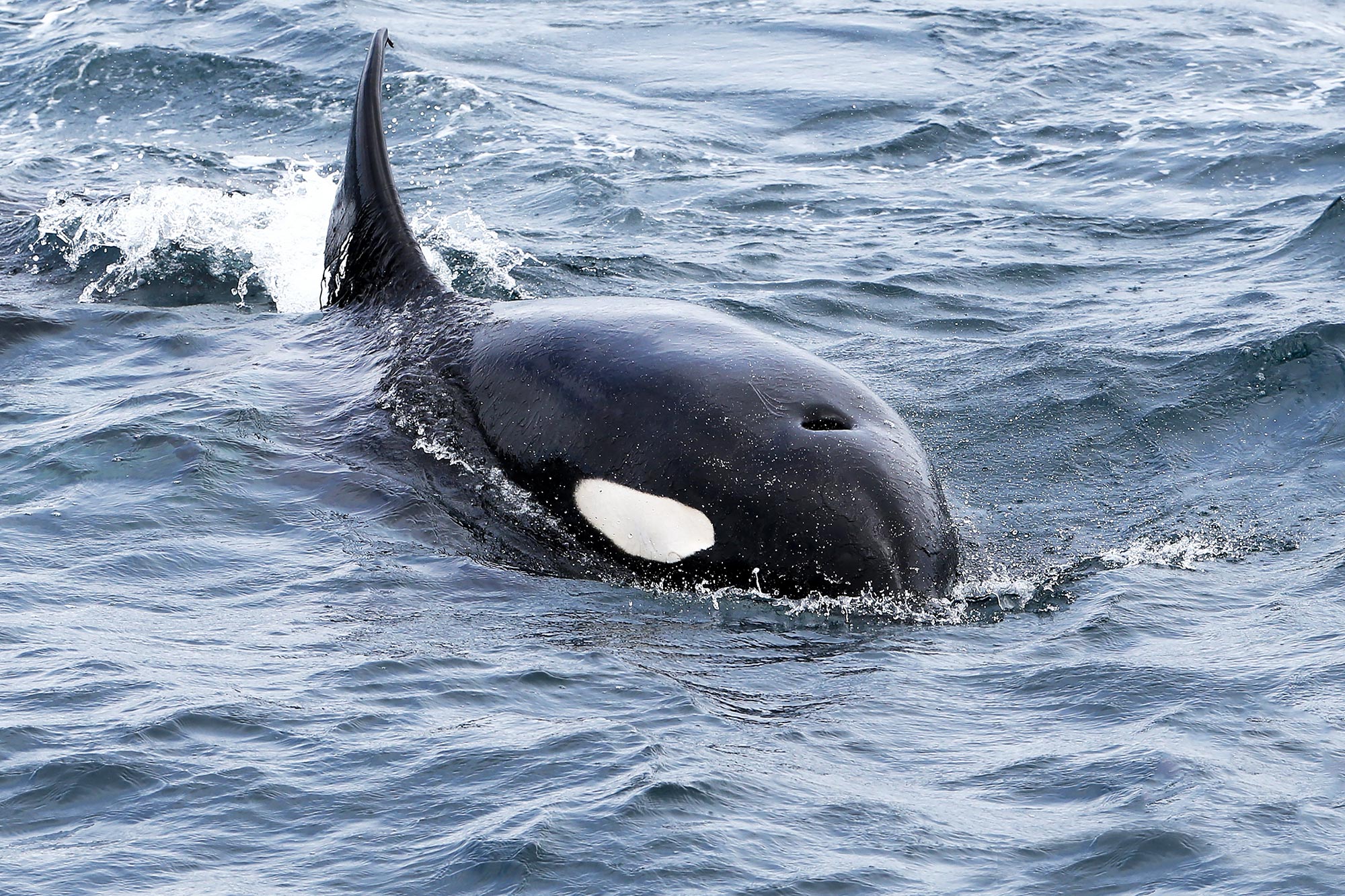
    A recent study using drone footage and biological tags on 11 killer whales off the coast of British Columbia reveals that orcas take only one breath between dives and primarily engage in short, shallow dives. The research also provides insights into orca breathing patterns and energy needs, indicating how much fish they require daily for conservation efforts.

    Research shows that killer whales take just one breath between short, shallow dives, with findings aiding in the conservation by estimating their daily fish requirements.

    A recent study has verified a longstanding assumption: orcas only breathe once between dives.

    The researchers used drone footage and biological data from tags suction-cupped to 11 northern and southern resident killer whales off the coast of B.C. to gather information on the animals’ habits.

    Whaley fun facts

    Published in PLOS ONE, the study found that residents spend most of their time making shallow dives, with the majority of dives less than one minute. The longest dive recorded was 8.5 minutes, for an adult male. “Killer whales are like sprinters who don’t have the marathon endurance of blue and humpback whales to make deep and prolonged dives,” said co-author Dr. Andrew Trites, professor in the UBC Institute for the Oceans and Fisheries (IOF).

    For how many fish could an orca wish?

    Confirming orcas take only one breath between dives allowed the researchers to calculate how many liters of oxygen adults and juveniles consume per minute. This provides another piece of the puzzle in estimating orca energy expenditure, and eventually, how many fish the animals need to eat per day. “Researchers can then work out if the orcas are getting enough food, including the endangered southern residents, a key factor in their conservation,” said first author Tess McRae, IOF masters student.

    Breathe like an orca

    Killer whales in the study took 1.2 to 1.3 breaths per minute while resting and 1.5 to 1.8 while traveling or hunting. Comparatively, humans tend to take about 15 breaths per minute when resting and from 40 to 60 while exercising. “It’s the equivalent of holding your breath and running to the grocery store, shopping, and coming back before breathing again,” said co-author Dr. Beth Volpov, IOF postdoctoral fellow.

    Reference: “Killer whale respiration rates” by Tess M. McRae, Beth L. Volpov, Evan Sidrow, Sarah M. E. Fortune, Marie Auger-Méthé, Nancy Heckman and Andrew W. Trites, 15 May 2024, PLOS ONE.
    DOI: 10.1371/journal.pone.0302758

    Never miss a breakthrough: Join the SciTechDaily newsletter.
    Follow us on Google and Google News.

    Marine Biology Orca Popular University of British Columbia Wildlife
    Share. Facebook Twitter Pinterest LinkedIn Email Reddit

    Related Articles

    Shadow Hunters: Shark Scars Reveal New Population of Killer Whales

    “Astonishing” Footage – Orca’s Solo Hunt of Great White Shark Rattles Marine Science

    Unprecedented Footage – First-Ever Live Newborn Great White Shark Sighted

    Ancient Orca Oasis: Scientists Discover 20,000 Years Old Refugium in the Northern Pacific

    Scientists Were Misled for Decades – New Study Unveils the Deceptive Role of Seaweed in Reef Health

    A Potential Health Threat for Humans: Sea Otters Killed by Unusual Parasite Strain

    Adult White Killer Whale Spotted in the Wild for the First Time

    Researchers Discover ‘Supergiant’ Amphipods in the Kermadec Trench

    Mesodinium Chamaeleon Is A Unique Life Form That is Half Plant Half Animal

    2 Comments

    1. MOHAMMED ALI HUMRAN on May 30, 2024 11:01 pm

      i would like to know more about marine innovation

      Reply
    2. MOHAMMED ALI HUMRAN on May 30, 2024 11:03 pm

      I’m a Ph.D. researcher, Yemen and I’m Geopolitical and Strategic planning. Currently, President the Union of Arab Academics. I’m interested in geopolitics, international relations, research, development, and innovations. regional maritime innovation and strategic management in Red Sea and Indian ocean

      Reply
    Leave A Reply Cancel Reply

    • Facebook
    • Twitter
    • Pinterest
    • YouTube

    Don't Miss a Discovery

    Subscribe for the Latest in Science & Tech!

    Trending News

    Scientists Uncover Potential Brain Risks of Popular Fish Oil Supplements

    Scientists Discover a Surprising Way To Make Bread Healthier and More Nutritious

    After 60 Years, Scientists Uncover Unexpected Brain Effects of Popular Diabetes Drug Metformin

    New Research Uncovers Hidden Side Effects of Popular Weight-Loss Drugs

    Scientists Rethink Extreme Warming After Surprising Ocean Discovery

    Landmark Study Links Never Marrying to Significantly Higher Cancer Risk

    Researchers Discover Unknown Beetle Species Just Steps From Their Lab

    Largest-Ever Study Finds Medicinal Cannabis Ineffective for Anxiety, Depression, PTSD

    Follow SciTechDaily
    • Facebook
    • Twitter
    • YouTube
    • Pinterest
    • Newsletter
    • RSS
    SciTech News
    • Biology News
    • Chemistry News
    • Earth News
    • Health News
    • Physics News
    • Science News
    • Space News
    • Technology News
    Recent Posts
    • Not Just Alzheimer’s: Scientists Uncover Clues to a Second, Overlooked Disorder
    • Scientists Uncover Dangerous Connection Between Serotonin and Heart Valve Disease
    • Scientists Discover a “Protector” Protein That Could Help Reverse Hair Loss
    • Powerful Lasers Reveal How Matter Becomes Plasma in Trillionths of a Second
    • A Simpler Path to Super-Resolution: Scientists Reinvent Microscopy
    Copyright © 1998 - 2026 SciTechDaily. All Rights Reserved.
    • Science News
    • About
    • Contact
    • Editorial Board
    • Privacy Policy
    • Terms of Use

    Type above and press Enter to search. Press Esc to cancel.