
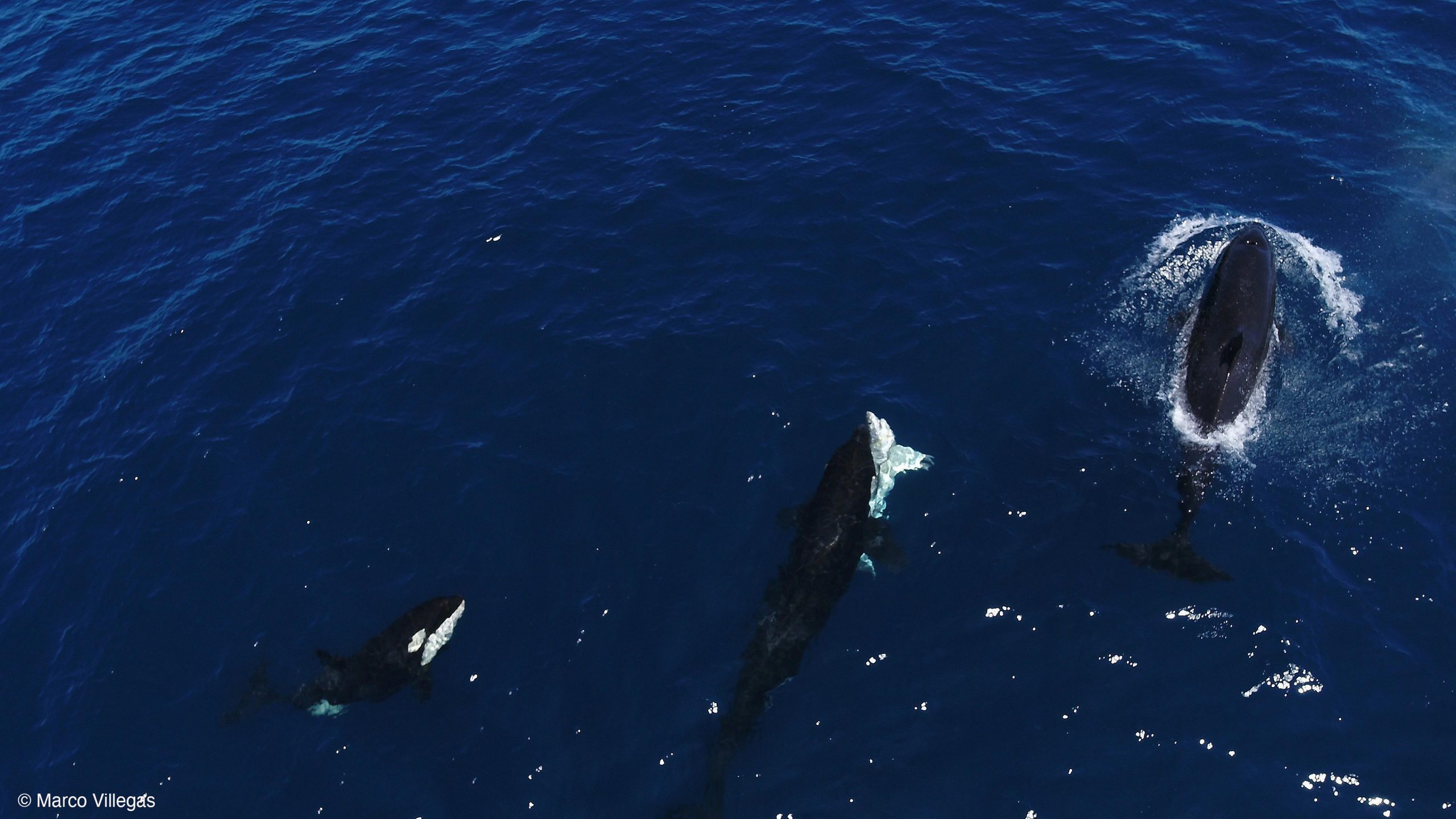
In Mexico’s Gulf of California, scientists captured rare footage of a group of orcas called Moctezuma’s pod hunting young great white sharks by flipping them upside down to paralyze them and extract their nutrient-rich livers.
The hunts reveal not only the orcas’ remarkable intelligence and cooperative behavior but also how warming ocean temperatures may be shifting shark nursery areas, putting inexperienced juveniles in the path of these skilled predators.
Orcas Perfect the Art of Shark Hunting
A pod of orcas in the Gulf of California has been filmed using remarkable precision to hunt young great white sharks, flipping them onto their backs to reach the nutrient-rich liver inside. Known as Moctezuma’s pod, this group may be exploiting the effects of warming waters that are altering shark nursery zones. These shifts could be drawing inexperienced juvenile sharks into new areas where the orcas can ambush them more easily. Researchers say the observations indicate that orcas may hunt white sharks more frequently than once believed, though more data are needed to confirm that pattern.
“I believe that orcas that eat elasmobranchs — sharks and rays — could eat a great white shark, if they wanted to, anywhere they went looking for one,” said marine biologist Erick Higuera Rivas, project director at Conexiones Terramar and Pelagic Life and lead author of the article in Frontiers in Marine Science. “This behavior is a testament to orcas’ advanced intelligence, strategic thinking, and sophisticated social learning, as the hunting techniques are passed down through generations within their pods.”
Predators Become Prey
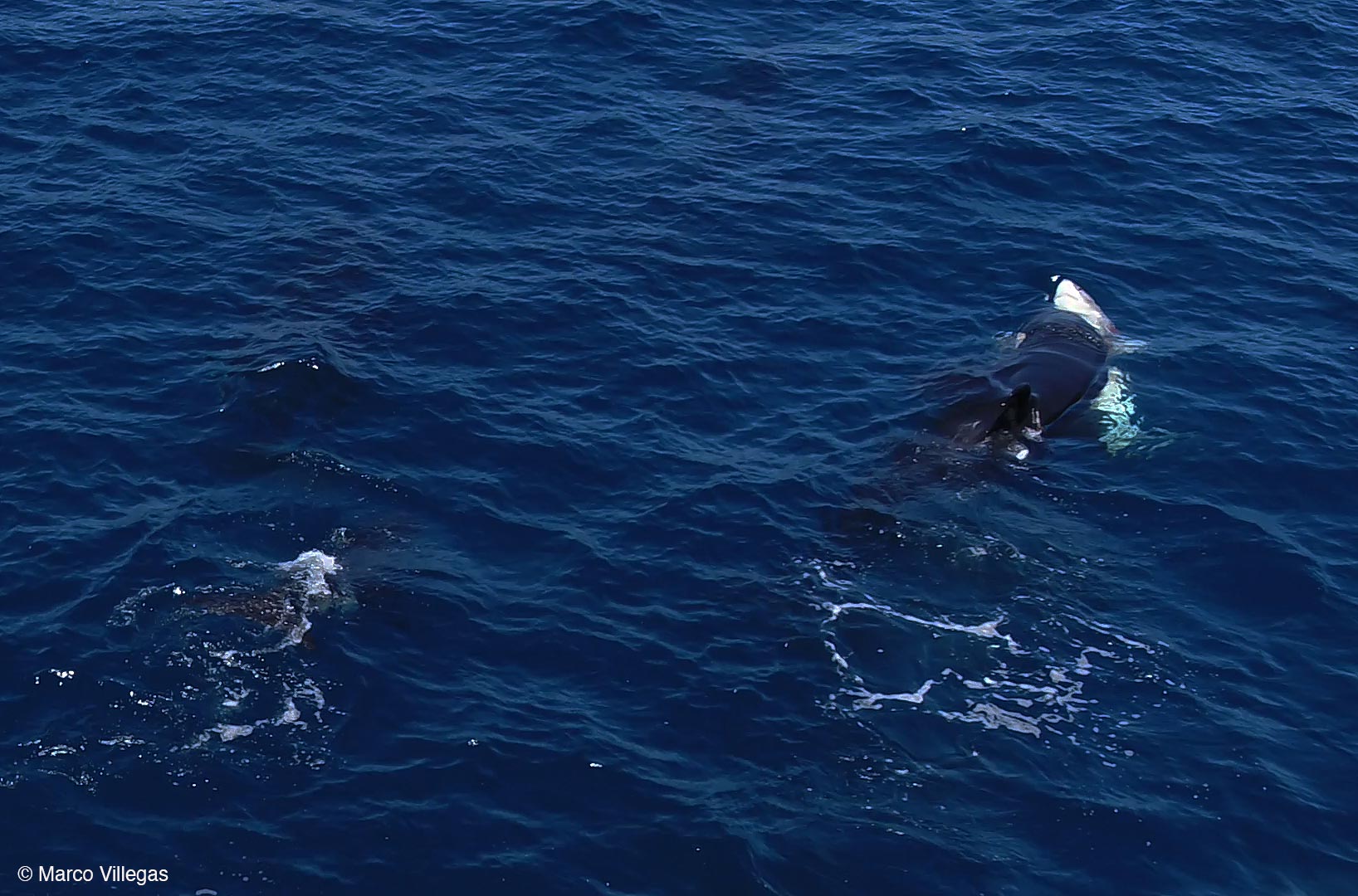
While monitoring the orcas, scientists witnessed two hunting events in which three white sharks were killed. They documented each encounter in detail and identified the individual orcas involved by the markings on their dorsal fins.
In the first sighting, recorded in August 2020, five orcas pursued a young white shark, forcing it toward the surface and coordinating to flip it upside down. The group then dragged the shark below and resurfaced with its liver. Soon after, they repeated the same method on another juvenile shark. Two years later, in August 2022, researchers observed a similar attack: five orcas pushed a juvenile white shark onto its back and brought it up to the surface. The shark was bleeding from the gills, and its exposed liver confirmed that the orcas were feeding on it.
The Deadly Technique: Tonic Immobility
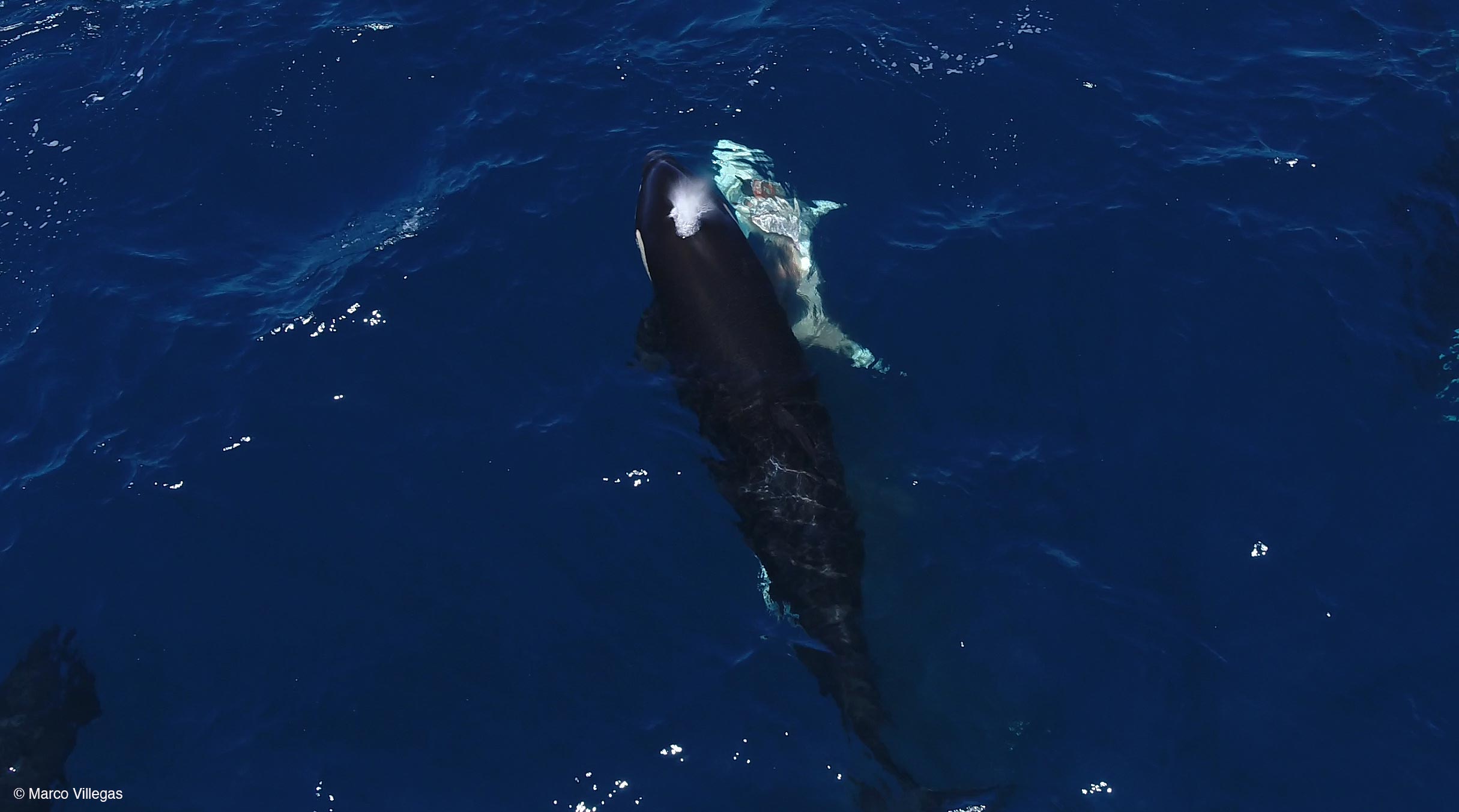
When a shark is turned upside down, it enters a condition known as tonic immobility, which disrupts its perception of its surroundings and leaves it unable to move.
“This temporary state renders the shark defenseless, allowing the orcas to extract its nutrient-rich liver and likely consume other organs as well, before abandoning the rest of the carcass,” explained Higuera.
Based on the wounds observed, scientists believe that orcas may have refined this technique to trigger paralysis while avoiding injury themselves. This strategy likely works best on smaller (and therefore younger) great white sharks, which may be less capable of resisting or escaping compared with older, more experienced individuals.
Targeting the Naive: Young White Sharks at Risk
“This is the first time we are seeing orcas repeatedly target juvenile white sharks,” said Dr. Salvador Jorgensen of California State University, an author of the article. “Adult white sharks react quickly to hunting orcas, completely evacuating their seasonal gathering areas and not returning for months. But these juvenile white sharks may be naive to orcas. We just don’t know yet whether white shark anti-predator flight responses are instinctual or need to be learned.”
After identification, the orca pod turned out to be the one called Moctezuma’s pod, named after a prominent member of the pod. This pod has already been seen hunting rays as well as whale and bull sharks, and may have learned from their experiences how to tackle great white sharks.
Changing Ranges, Changing Diets?
Changes in the distribution of white sharks in the Pacific may have presented Moctezuma’s pod with an opportunity. Climate events like El Niño appear to have altered white shark nursery areas and increased their presence in the Gulf of California, which could mean that they are more exposed to this pod — and each new cohort of juveniles could be a vulnerable seasonal target.
Future Research and Conservation Challenges
However, these are only observations. The scientists plan to follow up with a detailed survey of this orca population’s diet, which would clarify whether they regularly hunt white sharks or if they focus on the juveniles when they’re available. This won’t be easy, though: fieldwork is expensive and orca hunts are unpredictable.
“So far we have only observed this pod feeding on elasmobranchs,” said Dr. Francesca Pancaldi of the Instituto Politécnico Nacional Centro Interdisciplinario de Ciencias Marinas, co-author. “There could be more. Generating information about the extraordinary feeding behavior of killer whales in this region will lead us to understand where their main critical habitats are, so we can create protected areas and apply management plans to mitigate human impact.”
Reference: “Novel evidence of interaction between killer whales (Orcinus orca) and juvenile white sharks (Carcharodon carcharias) in the Gulf of California, Mexico” by Jesús Erick Higuera-Rivas, Francesca Pancaldi, Salvador J. Jorgensen and Edgar Mauricio Hoyos-Padilla, 27 August 2025, Frontiers in Marine Science.
DOI: 10.3389/fmars.2025.1667683
Never miss a breakthrough: Join the SciTechDaily newsletter.
Follow us on Google and Google News.
1 Comment
“… this group may be exploiting the effects of warming waters that are altering shark nursery zones.”
This speculation is a bit of a stretch. Orca attacks on Great White Sharks go back a few years, probably first reported from South Africa. Water temperatures are only changing at about half the rate of the air in temperate regions, or about 0.1 degrees in the last 25-years. There was no evidence presented that nurseries are changing, albeit it has been demonstrated that Great White Sharks leave feeding areas after predation by Orcas, as documented in the Farallon Islands near San Francisco (Calif.) in 1997. However, the article did acknowledge, “Adult white sharks react quickly to hunting orcas, completely evacuating their seasonal gathering areas and not returning for months.” It would appear that there is more evidence for predator avoidance than for abandoning ancestral nurseries supposedly for a minuscule change in average temperature. Even if it is happening, no supporting evidence was provided. The authors further speculate on the role of El Nino; however, ENSO events have probably been occurring for as long as these predator/prey associations have existed — certainly more than two or three decades!
Why is anthropogenic global warming always blamed for things that Occam’s Razor suggests are more likely?