
Close Menu
    Facebook X (Twitter) Instagram
    SciTechDaily
    • Biology
    • Chemistry
    • Earth
    • Health
    • Physics
    • Science
    • Space
    • Technology
    Facebook X (Twitter) Pinterest YouTube RSS
    SciTechDaily
    Home»Health»Ordinary Fruits, Extraordinary Benefits: Naturally Occurring Substance in Pomegranates Can Improve Alzheimer’s Symptoms
    Health

    Ordinary Fruits, Extraordinary Benefits: Naturally Occurring Substance in Pomegranates Can Improve Alzheimer’s Symptoms

    By University of Copenhagen - The Faculty of Health and Medical SciencesMay 28, 20241 Comment3 Mins Read
    Facebook Twitter Pinterest Telegram LinkedIn WhatsApp Email Reddit
    Share
    Facebook Twitter LinkedIn Pinterest Telegram Email Reddit
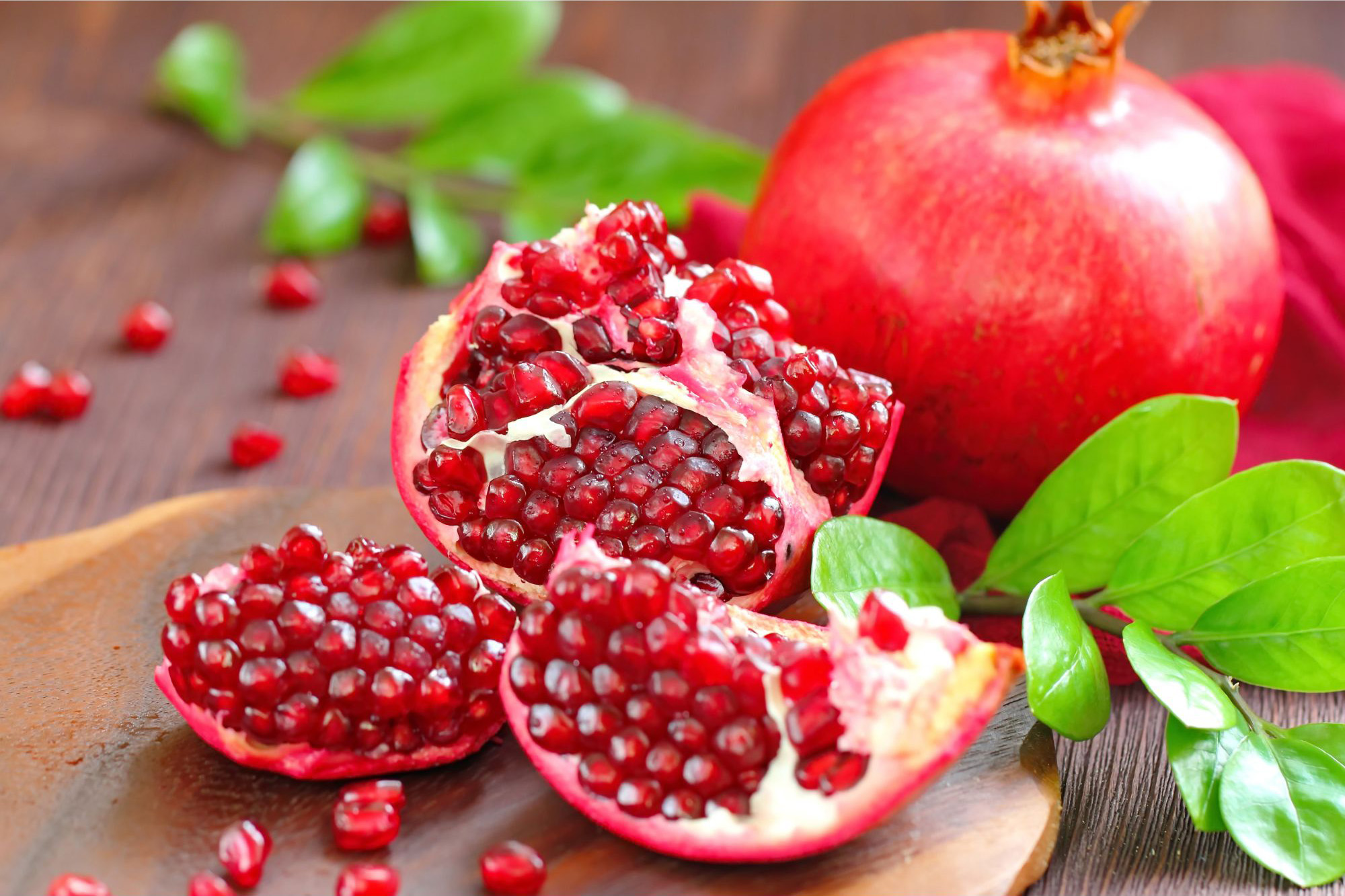
    Pomegranate
    A new study from the University of Copenhagen has found that urolithin A, a compound found in pomegranates, strawberries, and walnuts, can improve memory and potentially treat Alzheimer’s disease symptoms. While the research, initially conducted on mouse models, shows that urolithin A can effectively remove damaged mitochondria from the brain, human clinical trials are upcoming.

    A substance naturally occurring in i.e. pomegranates, strawberries, and walnuts can improve memory and treatment of Alzheimer’s disease, a new study conducted at the University of Copenhagen concludes.

    Forgetfulness, difficulty finding words, and confusion about time and place are all common symptoms of Alzheimer’s disease.

    Now researchers at the University of Copenhagen have discovered that an ordinary fruit can help.

    “Our study on mouse models with AD shows that urolithin A, which is a naturally occurring substance in i.a. pomegranates, can alleviate memory problems and other consequences of dementia,” says Vilhelm Bohr, who is an Affiliate Professor at the Department of Cellular and Molecular Medicine at the University of Copenhagen and previously Department Chair at the US National Institute on Aging.

    This is good news for patients with dementia – a disease that is difficult to treat.

    “Even though the study was conducted on mouse models, the prospects are positive. So far, research has shown promising results for the substance in the muscles, and clinical trials on humans are being planned.”

    Substance improves brain function

    The researchers previously discovered that a specific molecule, nicotinamide riboside (NAD supplement), plays a key role in neurodegenerative diseases such as Alzheimer’s and Parkinson’s, as it actively helps remove damaged mitochondria from the brain.

    “Many patients with neurodegenerative diseases experience mitochondrial dysfunction, also known as mitophagy. This means that the brain has difficulties removing weak mitochondria, which thus accumulate and affect brain function. If you are able to stimulate the mitophagy process, removing weak mitochondria, you will see some very positive results,” Vilhelm Bohr explains.

    The results of the new study show that a substance found in pomegranates, urolithin A, removes weak mitochondria from the brain just as effectively as NAD supplements.

    Possible preventive effect

    The researchers still don’t know how much urolithin A is needed to improve memory and alleviate symptoms of i.a. Alzheimer’s.

    “We still cannot say anything conclusive about the dosage. But I imagine that it is more than a pomegranate a day. However, the substance is already available in pill form, and we are currently trying to find the right dosage,” Vilhelm Bohr says.

    He also hopes the substance can be used for preventive purposes with no significant side effects.

    “The advantage of working with a natural substance is the reduced risk of side effects. Several studies so far show that there are no serious side effects of NAD supplementation. Our knowledge of urolithin A is more limited, but as I mentioned, clinical trials with Urolithin A have been effective in muscular disease, and now we need to look at Alzheimer’s disease,” he says.

    He adds: “If we are going to eat something in the future to reduce the risk of Alzheimer’s, which we talk a lot about, we have to make sure there are no significant side effects.”

    Reference: “Urolithin A improves Alzheimer’s disease cognition and restores mitophagy and lysosomal functions” by Yujun Hou, Xixia Chu, Jae-Hyeon Park, Qing Zhu, Mansoor Hussain, Zhiquan Li, Helena Borland Madsen, Beimeng Yang, Yong Wei, Yue Wang, Evandro F. Fang, Deborah L. Croteau and Vilhelm A. Bohr, 16 May 2024, Alzheimer’s & Dementia.
    DOI: 10.1002/alz.13847

    Never miss a breakthrough: Join the SciTechDaily newsletter.
    Follow us on Google and Google News.

    Alzheimer's Disease Brain Dementia Popular University of Copenhagen
    Share. Facebook Twitter Pinterest LinkedIn Email Reddit

    Related Articles

    Dementia Breakthrough: New AI Solves in Minutes a Challenge That Would Take Neuroscientists Weeks

    Natural Compound in Basil May Protect Against Alzheimer’s Disease

    Groundbreaking Research Identifies Likely Cause of Alzheimer’s Disease – Potential for New Treatment

    Neurologist Explores Link Between COVID and “Brain Fog,” Memory Loss and Dementia

    Your Eyes May Reveal Your Alzheimer’s Disease Risk

    COVID-19 Associated With Long-Term Cognitive Dysfunction, Acceleration of Alzheimer’s Symptoms

    Are We Wrong About Alzheimer’s? Researchers Question Prevailing Theory After New Discovery

    Statins Used to Lower Cholesterol Linked to Doubled Risk of Developing Dementia

    Identifying “The Terrorist Inside My Husband’s Brain” – Living Brain Imaging Can Clearly Differentiate Between Types of Dementia

    1 Comment

    1. Jojo on May 28, 2024 3:58 pm

      I’m about 3 years into growing a pomegranate bush/tree in my backyard!

      Reply
    Leave A Reply Cancel Reply

    • Facebook
    • Twitter
    • Pinterest
    • YouTube

    Don't Miss a Discovery

    Subscribe for the Latest in Science & Tech!

    Trending News

    Scientists Uncover Promising New Strategy To Stop Parkinson’s in Its Tracks

    Experts Reveal the Surprising Cancer Link Behind a Common Vitamin

    This Strange “Golden Orb” Found 2 Miles Deep Stumped Scientists for Years

    Giant “Last Titan” Dinosaur Discovered in Thailand Was Bigger Than 9 Elephants

    This “Longevity Gene” May Protect the Brain From Aging and Dementia

    Common Cleaning Chemical Could Triple Your Risk of a Dangerous Liver Disease

    Scientists Discover Bizarre 100-Million-Year-Old Insect With Giant Claws

    Scientists Discover “Good” Gut Microbes That Could Protect Against Autism and ADHD

    Follow SciTechDaily
    • Facebook
    • Twitter
    • YouTube
    • Pinterest
    • Newsletter
    • RSS
    SciTech News
    • Biology News
    • Chemistry News
    • Earth News
    • Health News
    • Physics News
    • Science News
    • Space News
    • Technology News
    Recent Posts
    • Scientists Turn Wool Into Bone-Healing Material in Medical Breakthrough
    • NASA’s Roman Space Telescope Nears Launch for Epic Hunt Across the Universe
    • Ancient Mega-Floods Once Ripped Across Mars and Left This Giant Scar
    • Scientists Just Used Sunlight To Pull Off a Quantum Physics Feat Once Thought Impossible
    • Scientists Discover “Immature” Brain Cells That May Defy Alzheimer’s
    Copyright © 1998 - 2026 SciTechDaily. All Rights Reserved.
    • Science News
    • About
    • Contact
    • Editorial Board
    • Privacy Policy
    • Terms of Use

    Type above and press Enter to search. Press Esc to cancel.