
Close Menu
    Facebook X (Twitter) Instagram
    SciTechDaily
    • Biology
    • Chemistry
    • Earth
    • Health
    • Physics
    • Science
    • Space
    • Technology
    Facebook X (Twitter) Pinterest YouTube RSS
    SciTechDaily
    Home»Biology»Otters Juggle Stones – Now Researchers Think They Know Why [Video]
    Biology

    Otters Juggle Stones – Now Researchers Think They Know Why [Video]

    By University of ExeterMay 7, 20203 Comments3 Mins Read
    Facebook Twitter Pinterest Telegram LinkedIn WhatsApp Email Reddit
    Share
    Facebook Twitter LinkedIn Pinterest Telegram Email Reddit
    Otter Juggling Stones
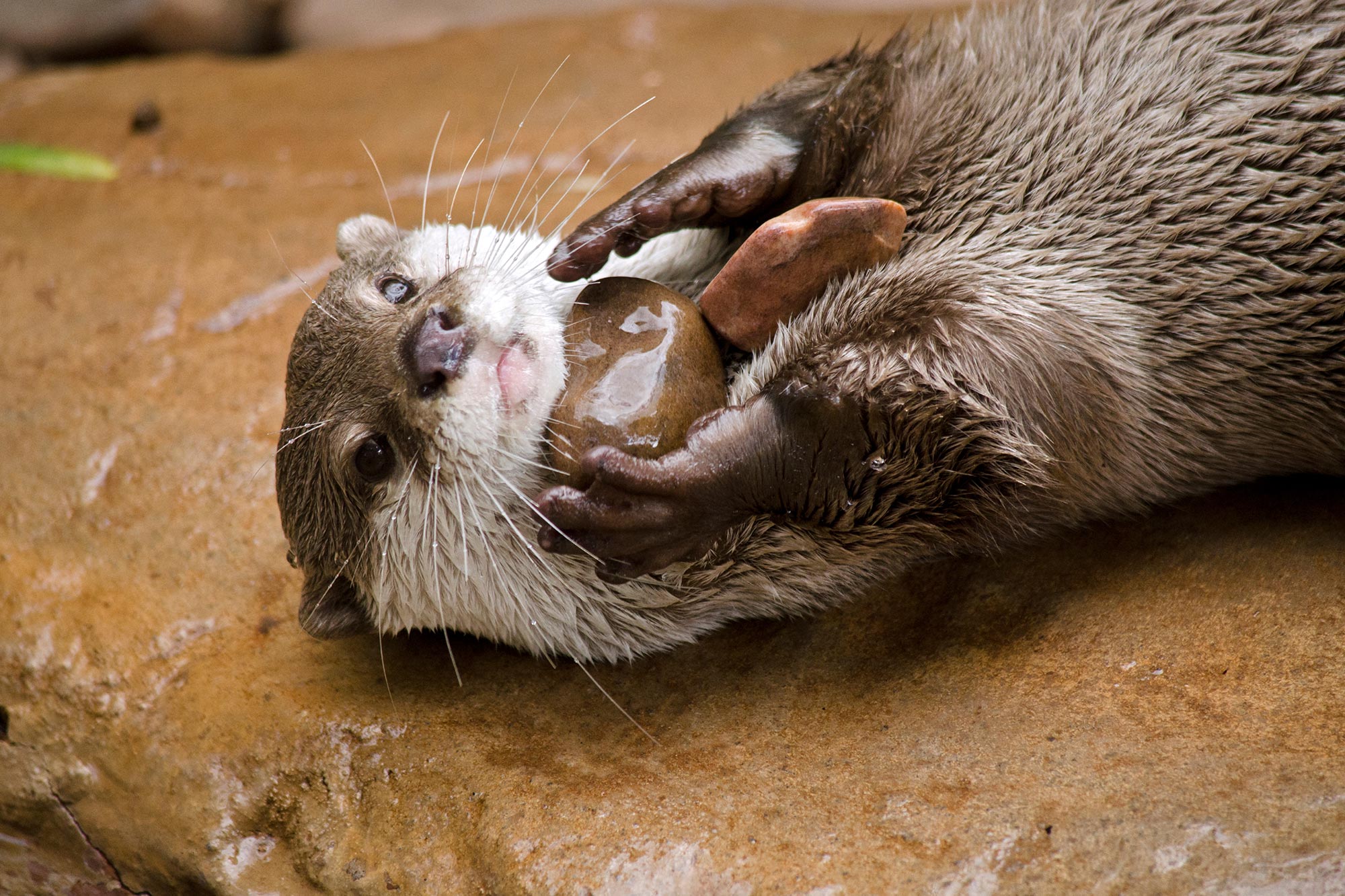
    The research team analyzed rock juggling in Asian small-clawed (Aonyx cinereus) and smooth-coated (Lutrogale perspicillata) otters found in zoo environments.

    Hunger is likely to be the main driver of stone juggling in otters, new research has shown.

    Researchers from the University of Exeter have carried out an extensive study into why captive otters tend to play with stones, commonly referred to as “rock juggling.”

    The dextrous mammals are often seen lying on their backs and batting the stones into the air, catching them, and rolling them around their chests and necks.

    Experts had suggested the behavior might help the animals practice the foraging skills they need to extract foods from complex prey such as mussels and clams.

    However, while the new research showed that young and older otters tended to juggle more than reproductive adults, these frequent jugglers were no better at solving food puzzles — suggesting the practice does not hone foraging skills.

    Instead, the study showed that otters juggle more when hungry, in anticipation of feeding times in captivity – suggesting that it could be exciting for food.

    The study is published in Royal Society Open Science on Wednesday, May 6, 2020.

    Mari-Lisa Allison, lead author of the study said: “Zoo visitors are often enthralled by the otters’ playfulness. Surprisingly, very few studies have investigated why otters are so keen to juggle stones. Our study provides a glimpse into this fascinating behavior. While hunger is likely to drive rock juggling in the moment, the ultimate function of the behavior is still a mystery.”

    For the new study, the research team analyzed rock juggling in Asian small-clawed (Aonyx cinereus) and smooth-coated (Lutrogale perspicillata) otters found in zoo environments.

    While the species are closely related, Asian small-clawed otters perform extractive foraging movements to exploit crabs and shellfish, while smooth-coated otters forage on fish.

    The team set a series of puzzles for the otters to solve in order to gain access to a reward of food, to see whether the otters that juggled more frequently were faster at solving the puzzles. They also investigated whether sex, age, and hunger levels could explain why some otters juggled more than others.

    The team found that both juvenile and senior otters juggled more than adults. The authors suggested that the function of the behavior may change over an otter’s lifetime — aiding development in juveniles while potentially keeping the brain active in seniors. Otter parents may have been juggling less as they did not have the time while looking after their pups. However, rock-juggling frequency did not differ between species or sexes.

    Crucially, otters juggled more when “hungry”, indicating that juggling may be a misdirected behavior in anticipation of feeding time.

    Senior author Dr. Neeltje Boogert added: “While it did not appear that frequent jugglers solved food puzzles faster, more research is needed to exclude the “practice makes perfect” hypothesis to explain rock juggling in otters.

    Reference: “The drivers and functions of rock juggling in otters” by Mari-Lisa Allison, Rebecca Reed, Emile Michels and Neeltje Boogert, 16 April 2020, Royal Society Open Science.
    DOI: 10.5061/dryad.rn8pk0p64

    Never miss a breakthrough: Join the SciTechDaily newsletter.
    Follow us on Google and Google News.

    Evolution Marine Biology University of Exeter Zoology
    Share. Facebook Twitter Pinterest LinkedIn Email Reddit

    Related Articles

    Ancient Sponge Discovery May Rewrite the Origins of Animal Life

    A Fair Society Evolves From “Veil of Ignorance” – Mongooses Solve Inequality Problem

    Evolutionary Mystery: New Marine Scale Worm Species First to Provide Evidence of Male Dwarfism

    Scent Trails of Dung and Urine Could Boost Elephant Conservation

    Pace of Life: Friends and Enemies “Make Sense” for Long-Lived Animals

    Mountain Gorillas That Live in Large Groups Have Less Diverse Social Relationships

    Finding Nemo’s Cousins: Meet the Little Fish That Can See UV Light

    Tracking Basking Sharks Yields Fascinating Insights Into Their Behavior

    Relationships of Male Dolphins from Shark Bay Determined by Slow Swimming

    3 Comments

    1. C. Peter O'Connor on May 7, 2020 5:35 am

      It has nothing to do with the reason offered.

      Reply
      • Mike O'Neill on May 7, 2020 5:44 am

        What is the reason then?

        Reply
        • Seedy on May 9, 2020 3:48 pm

          If only captive otters do it, I’d imagine it’s likely due to stress or boredom. I’m sure prisoners do some things more often, which those with total freedom never/rarely do.

          Animals aren’t designed to be caged. It’s cruel, and I think the smarter the animal, the more captivity negatively affects them.

          Reply
    Leave A Reply Cancel Reply

    • Facebook
    • Twitter
    • Pinterest
    • YouTube

    Don't Miss a Discovery

    Subscribe for the Latest in Science & Tech!

    Trending News

    First-of-Its-Kind Discovery: Homer’s Iliad Found Embedded in a 1,600-Year-Old Egyptian Mummy

    Beyond Inflammation: Scientists Uncover New Cause of Persistent Rheumatoid Arthritis

    A Simple Molecule Could Unlock Safer, Easier Weight Loss

    Scientists Just Built a Quantum Battery That Charges Almost Instantly

    Researchers Unveil Groundbreaking Sustainable Solution to Vitamin B12 Deficiency

    Millions of People Have Osteopenia Without Realizing It – Here’s What You Need To Know

    Researchers Discover Boosting a Single Protein Helps the Brain Fight Alzheimer’s

    World-First Study Reveals Human Hearts Can Regenerate After a Heart Attack

    Follow SciTechDaily
    • Facebook
    • Twitter
    • YouTube
    • Pinterest
    • Newsletter
    • RSS
    SciTech News
    • Biology News
    • Chemistry News
    • Earth News
    • Health News
    • Physics News
    • Science News
    • Space News
    • Technology News
    Recent Posts
    • New Research Challenges Long-Held Beliefs About How the Brain Makes Decisions
    • Breakthrough Technology Reveals New Treatment Targets for Cancer
    • Scientists Discover New Way To Make Drug-Resistant Cancer Treatable Again
    • This Simple Exercise Trick Builds Muscle With Less Effort, Study Finds
    • Middle Age Is Becoming a Breaking Point in America, Study Reveals
    Copyright © 1998 - 2026 SciTechDaily. All Rights Reserved.
    • Science News
    • About
    • Contact
    • Editorial Board
    • Privacy Policy
    • Terms of Use

    Type above and press Enter to search. Press Esc to cancel.