
Key Findings
- Out of 246 drivers who died in crashes, 41.9% had active THC in their blood, with average levels of 30.7 ng/mL, well above the legal limits set in most states.
- The percentage of drivers testing positive for THC stayed high and steady over a six-year period, showing no change even after recreational cannabis became legal.
- Researchers say public awareness campaigns must do more to highlight the serious dangers of driving after using cannabis.
Widespread THC Found in Fatal Crashes
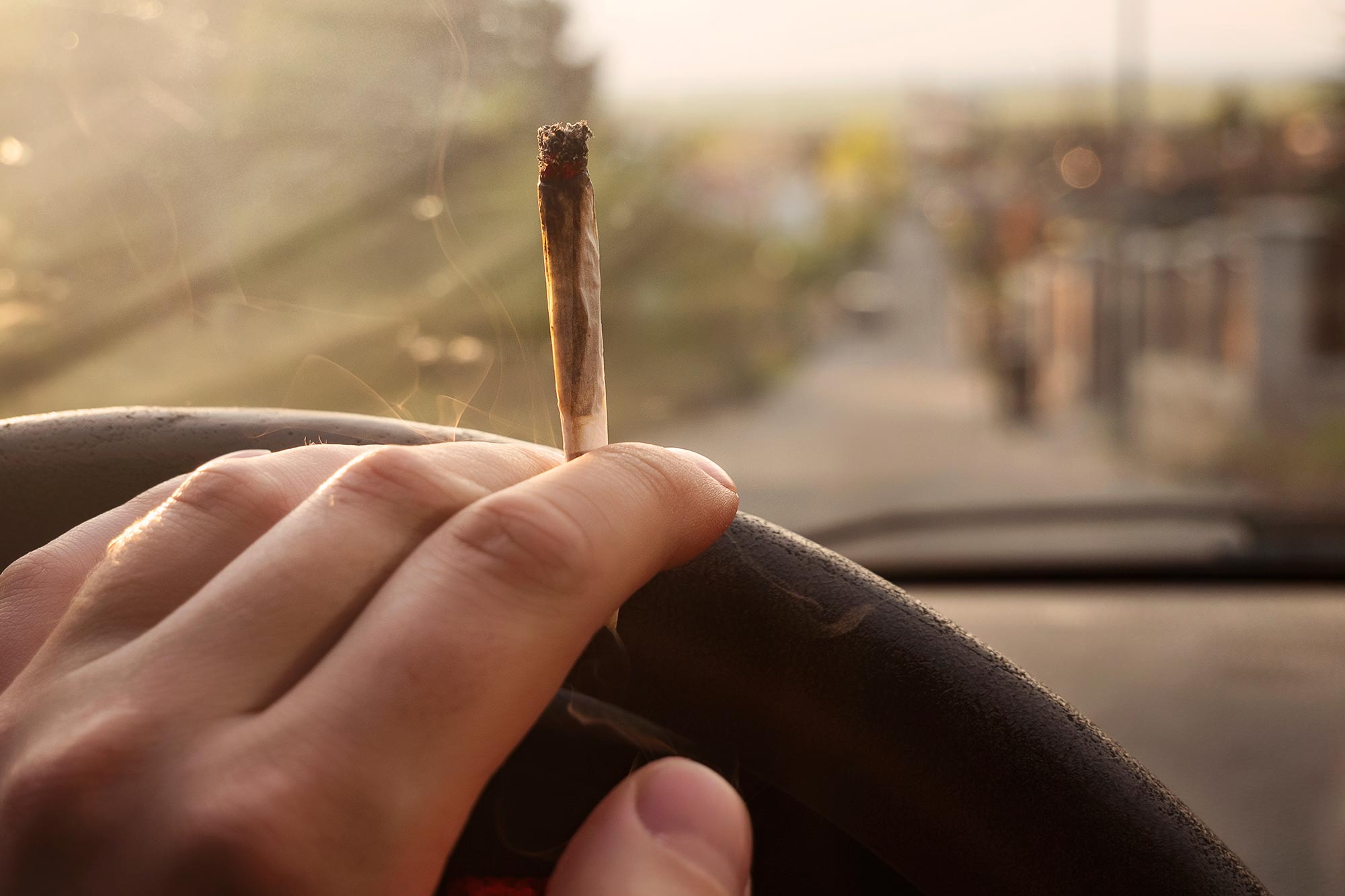
A recent study found that more than 40% of drivers who died in car crashes had active delta-9-tetrahydrocannabinol (THC) in their blood, with average levels well above the threshold known to cause impairment. According to researchers, the findings point to an ongoing and serious public safety concern that has not improved since the legalization of recreational cannabis.
The study was presented at the American College of Surgeons (ACS) Clinical Congress 2025 in Chicago.
To conduct the research, scientists reviewed coroner records from Montgomery County, Ohio, covering January 2019 through September 2024. They examined data from 246 drivers who died in crashes and underwent postmortem toxicology testing for THC, which is routinely performed during autopsies. The timeline also spanned the state’s legalization of recreational marijuana in 2023.
Shockingly High THC Levels in Drivers
“I was surprised to see that level,” said lead author Akpofure P. Ekeh, MBBS, FACS, a professor of surgery at Wright State University in Dayton, Ohio. “An average level of 30.7 ng/mL generally means those people must have consumed marijuana at some time close to driving. This isn’t about residual use; it’s about recent consumption.”
Key Study Findings
- High Prevalence: 103 drivers (41.9%) overall tested positive for THC, with yearly rates ranging from 25.7% to 48.9%.
- No Effect from Legalization: The rate of drivers who tested positive for THC did not change significantly before or after legalization (42.1% vs. 45.2%), indicating that legal status did not influence the behavior of those who chose to drive after use.
- Consistent Over Time: The high rate of THC positivity showed no significant change over the six-year study period.
Beyond Legalization: The Real Public Health Threat
The study notes that blood THC levels are typically drawn by the coroner within hours of death, providing an accurate snapshot of a driver’s state at the time of the crash. Most states that have set legal limits for driving range from 2 to 5 nanograms per milliliter (ng/mL) — a threshold the average level in this study (30.7 ng/mL) far exceeded.
A Call for Stronger Warnings
“The messaging over the last few years has been just the push towards recreational legalization,” Dr. Ekeh noted. “The problem is that from a public health standpoint, there has not been enough emphasis on some of the downsides and the dangers that can occur. People should treat smoking marijuana just like they treat alcohol: don’t smoke and drive.”
Co-authors are Lois Nguapa, BS; Clara Mussin Phillips, BS; and Ann Cardosi, BS, MPH.
Disclosures: The authors have no relevant disclosures.
Citation: Ekeh A, et al. Cannabis Prevalence in Drivers Involved in Motor Vehicle Crash Fatalities over a 6-Year Period, Scientific Forum, American College of Surgeons (ACS) Clinical Congress 2025.
Note: This research was presented as an abstract at the ACS Clinical Congress Scientific Forum. Research abstracts presented at the ACS Clinical Congress Scientific Forum are reviewed and selected by a program committee but are not yet peer reviewed.
Never miss a breakthrough: Join the SciTechDaily newsletter.
Follow us on Google and Google News.
7 Comments
But, but, how can this be?? Users have been telling us for decades that mary jane grass was not dangerous or harmful in any way??
study is a bit small. why the expense?
how many of these drivers had any, if at all, qty. of alcohol in their system?
With THC levels as high as the ‘study’ suggests, these people could have stopped smoking two months previous to the autopsy and still tested higher than legal.
“With THC levels as high as the ‘study’ suggests, these people could have stopped smoking two months previous to the autopsy and still tested higher than legal.”
That is not a defense. It simply points out that even occasional use may be dangerous. Users that I have known attempted to compensate (ineffectively in my sober judgement), right after smoking but not the rest of the time. From personal observation, regular users rarely go two months between highs. It almost certainly builds up in their system even if they only use it on weekends.
“study is a bit small. why the expense?”
What expense?
For a simple statistic, like a percentage of users, 20 or 30 is the lower threshold for a reliable estimate and statistical significance. The article stated: “Out of 246 drivers who died in crashes, 41.9% had active THC in their blood, with average levels of 30.7 ng/mL, well above the legal limits set in most states.” With the sample ~10X the recommended minimum, I doubt you can make a strong case that the number of samples was inadequate to reach any conclusions. If the average was “30.7 ng/mL,” it means that some were even higher. Although, I would like to have seen the uncertainty (at least range) and p-value. While it is true that not everyone will react the same to the same dose, that argument does not establish that THC played no role or that all were habituated and therefore more tolerant of the effects. I’m of the opinion that you are just trying to rationalize your behavior.
It should be a wake-up call, but it probably won’t be. Too many people making money selling, and pot friendliness/normalization has become a point of pride in the recent generations. Seen as some kind of progress. The study does not appear to include the deaths of the other motorists, cyclists and pedestrians hit by these intoxicated drivers.
For me, a non-using senior lay American male, it immediately begs a few additional questions: 1) did any in the study cause the crash; 2) if so, why were they using, externally imposed discomforts and/or chronic illnesses; 3) were they tested for food allergy reactions and FDA approved food poisoning (e.g., soy [since the late 1960s], TBHQ [1972] and added MSG [1980, drowsiness in particular]), minimally? As a better informed senior lay victim of multiple food and toxic food additive sensitivities, since late 1981, by partially avoiding my known allergic offenders and taking targeted nutritional supplements to help compensate for related-resultant bad diet, despite the additional aches and pains therefrom I don’t generally feel the need for any mood/spirit enhancing substitutes for natural well being any more. I suspect a lot of other drivers do, especially when I hear of them falling-asleep-at-the-wheel.
Understated. Where I live, many of the delivery drivers and residents are driving DUI. How can we tell? Smell, when they pass by, if they have the windows open. Shame!