
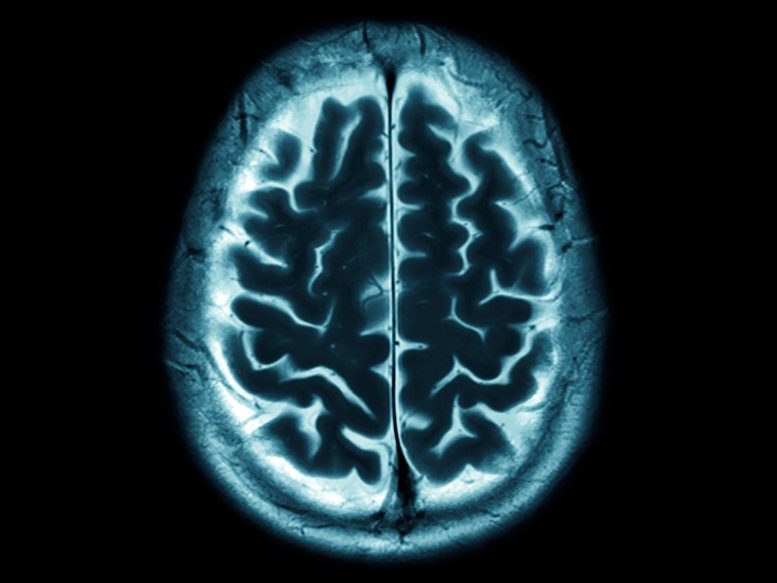
A newly identified brain pathway helps control passive and active stress responses in rats, offering insights into potential resilience mechanisms against stress.
At one time or another, we’ve all felt paralyzed by a threat or danger.
Now scientists have traced where that reaction to a threat arises. In a new study, University of Iowa researchers confirmed a neural circuit linking two separate regions in the brain governs how animals, including humans, react to a stressful situation. Through experiments, the researchers demonstrated how rats responded to a threat either passively or actively—and linked each reaction to a specific pathway in the brain.
In another experiment, the scientists successfully manipulated the neural circuit, so that rats overcame what would have been a paralyzing response to danger. Instead, they responded aggressively to the threat.
Key Brain Pathway for Stress Resilience
The neural circuit identified with stress response connects the caudal medial prefrontal cortex to the midbrain dorsolateral periaqueductal gray. Due to the known physical and mental health effects of chronic stress, clinching the connection, and how it regulates stress, is important.
“A lot of chronic stress diseases, like depression and anxiety disorders, are associated with what we call a passive coping behavior,” explains Jason Radley, associate professor in the Department of Psychological and Brain Sciences and the study’s corresponding author. “We know that a lot of these conditions are caused by life stress. The simplest reason we’re interested in this pathway is thinking about it as a circuit that can promote resilience against stress.”
Previous research has identified the caudal medial prefrontal cortex-midbrain dorsolateral periaqueductal gray as a key pathway governing how animals respond to stress. Radley’s team confirmed the pathway’s importance by inactivating it, then observing how the rats responded to a threat. The rats could respond in two basic ways: One is passively, which essentially means that they did not move in response to the threat. The other is actively, through a range of behaviors, such as burying the threat (a shock probe, in the experiments), rearing up on hind legs, or seeking an escape route.
The researchers learned that when they inactivated the rats’ stress neural circuit, the animals responded passively, meaning they did not directly respond to the threat.
“That shows this pathway is necessary for active coping behavior,” Radley says.
Circuit Activation Reduces Stress Hormones
Next, the researchers forced the rats to respond passively by removing the bedding in their cage, which prevents them from trying to bury the threat mechanism. When the team activated the neural pathway, the rats switched their behavior and responded actively to the threat. The active response occurred even though the animals were left without their bedding, which should have triggered a passive reply. Moreover, blood samples taken before and after the rats’ neural circuits had been activated showed their stress hormone levels did not spike when confronted with the threat.
“What that means is by activating the pathway, we saw broad stress-buffering effects,” Radley says. “It not only revived the rats’ active coping behaviors, it also restored them and greatly decreased stress hormone release.”
Chronic Stress and Resilience Factors
In a third set of experiments, the investigators subjected rats to chronic variable stress. This means that they were exposed to regular stress over two weeks. After the two-week conditioning, the rats were placed in cages and exposed to the threat. They responded passively, unwilling to move, and their stress hormones shot up, as the researchers had hypothesized.
Because humans face chronic stress, the chronic stress test is important, says Radley. For reasons that are unknown, some people continue to carry those stress burdens, which can lead to physical and mental disorders. Others, though, show little to no past memory of the chronic stress. This behavior is called “stress resilience” by the researchers.
“It’s possible we can co-opt some of these brain circuits if we could understand the processes in the brain that can regulate resilience,” Radley says, though he adds this is not an imminent option.
The researchers plan to investigate the neutral connections that are upstream and downstream of the brain pathway they studied.
“We don’t understand how these effects are altering the brain more widely,” Radley says.
Reference: “Activity in a prefrontal-periaqueductal gray circuit overcomes behavioral and endocrine features of the passive coping stress response” by Shane B. Johnson, Ryan T. Lingg, Timothy D. Skog, Dalton C. Hinz, Sara A. Romig-Martin, Victor Viau, Nandakumar S. Narayanan and Jason J. Radley, 28 October 2022, Proceedings of the National Academy of Sciences (PNAS).
DOI: 10.1073/pnas.2210783119
The first author, from Iowa, is Shane Johnson. Co-authors, all from Iowa, are Ryan Lingg, Timothy Skog, Dalton Hinz, Sara Romig-Martin, and Nandakumar Narayanan. Victor Viau, from the University of British Columbia, in Vancouver, is a contributing author.
The National Institutes of Health Office of Mental Health and the Brain and Behavior Research Foundation funded the research.
Never miss a breakthrough: Join the SciTechDaily newsletter.
Follow us on Google and Google News.
2 Comments
How can some people carry the stress burden which leads to mental disorders while some people take it lightly though it’s a huge stress? And how people who are likely to take a lot of stress improve their stress resilience?
These abusive non conclusive useless experiments only cause suffering to animals that don’t wish to go through this torture but still are enslaved by humans. How can it be that in our days of developed technology and after we know that experiments in animals have very little contribution to treating human conditions we still continue and do it? Stop it please.