
Close Menu
    Facebook X (Twitter) Instagram
    SciTechDaily
    • Biology
    • Chemistry
    • Earth
    • Health
    • Physics
    • Science
    • Space
    • Technology
    Facebook X (Twitter) Pinterest YouTube RSS
    SciTechDaily
    Home»Science»Paleontologist Trackers Discover Giant Crocodile That Walked on Two Legs
    Science

    Paleontologist Trackers Discover Giant Crocodile That Walked on Two Legs

    By University of Colorado DenverJune 13, 2020No Comments3 Mins Read
    Facebook Twitter Pinterest Telegram LinkedIn WhatsApp Email Reddit
    Share
    Facebook Twitter LinkedIn Pinterest Telegram Email Reddit
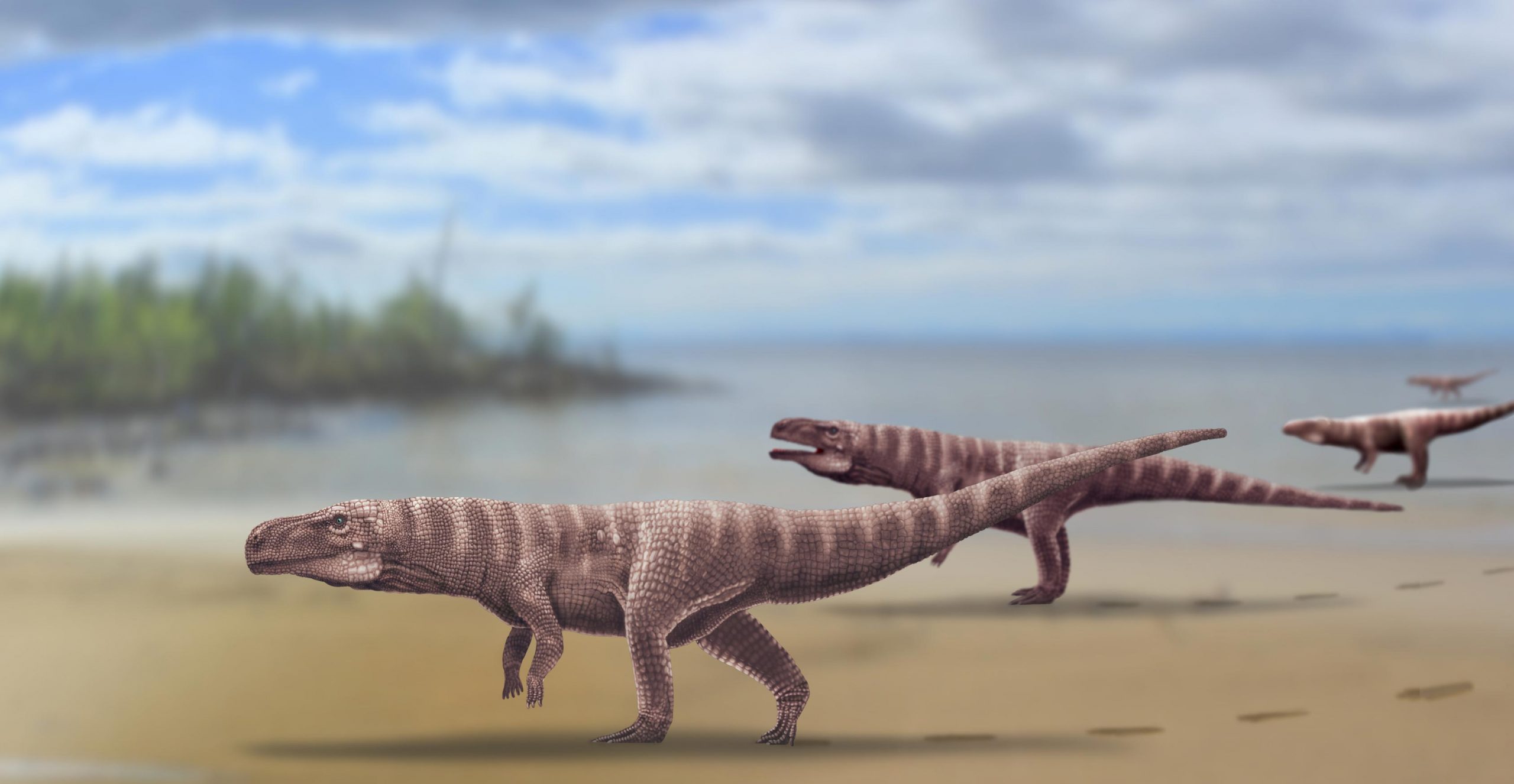
    South Korean Crocodile Track-Makers
    A reconstruction of the ancient landscape of South Korea with crocodile track-makers. Credit: Dr Anthony Romilio

    University of Colorado Denver researcher Marin Lockley was a member of the team that found the well-preserved footprints.

    A new study released on June 11 in Scientific Reports announced the surprising discovery of abundant, well-preserved 110-120-million-year-old footprints, belonging to a large bipedal ancestor of modern-day crocodiles from the Lower Cretaceous Jinju Formation of South Korea. The team of paleontologist trackers that made the discovery includes researchers from Korea, Australia, and University of Colorado Denver professor, Martin Lockley.
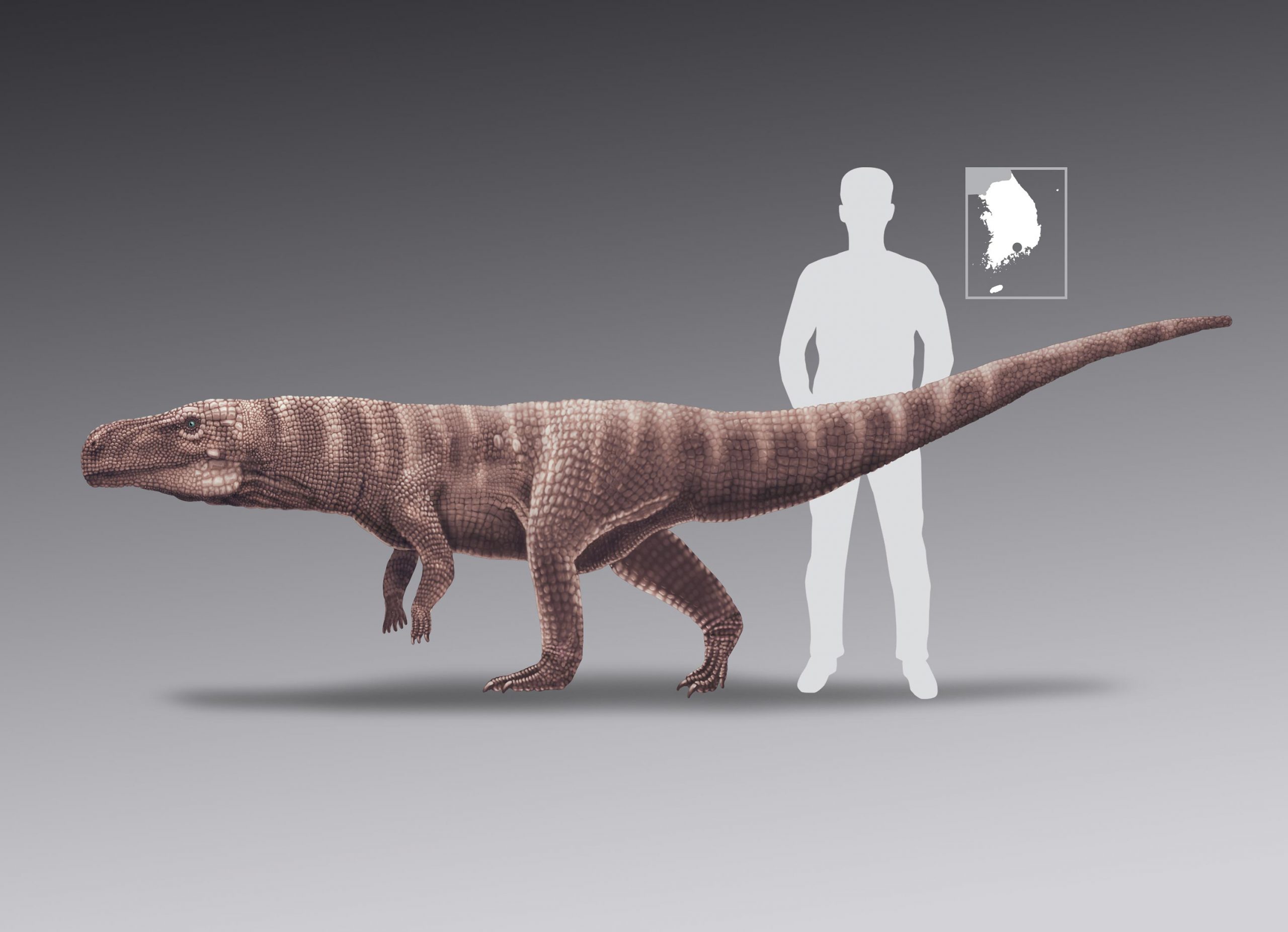
    South Korean Crocodile Track Makers Reconstruction
    Reconstruction of a 4 meter (13 foot) long bipedal crocodile based on trackways from the Cretaceous of Korea. Credit: Dr Anthony Romilio

    While paleontologists knew that some crocodiles from the “age of dinosaurs” were more adapted to life on land than their modern relatives, these were small animals about one meter long with footprints showing they walked on all fours.
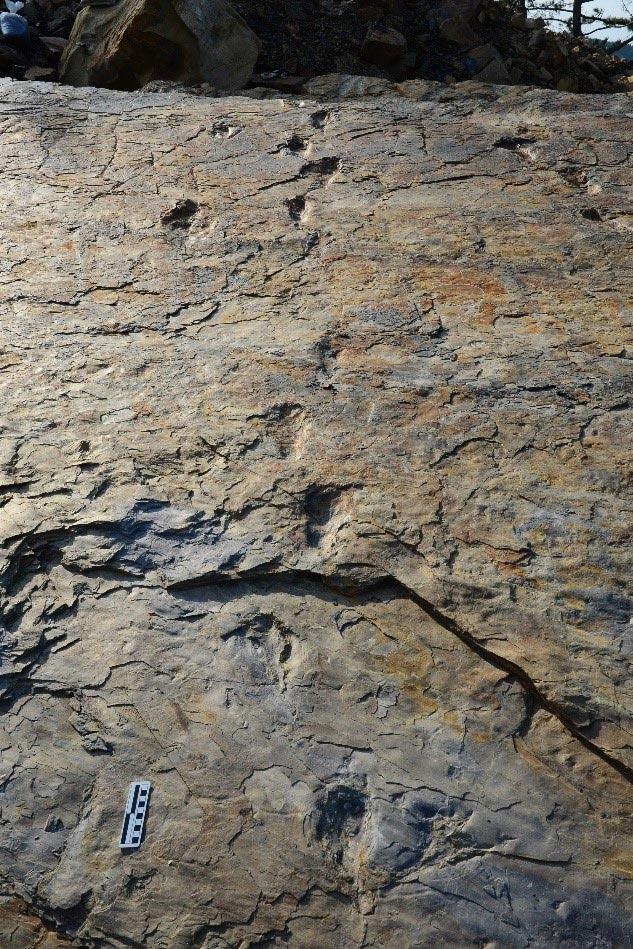
    Crocodile Narrow Trackway
    The narrow trackway of a crocodile from the Cretaceous of the Jinju City area, Korea, proves it was bipedal animal. Credit: Kyung Soo Kim

    “It shocked us to learn that the trackways represent bipedal animals 3-4 meters (10-13 feet) long,” said team leader Professor Kyung Soo Kim, Chinju National University of Education.

    The team named the 18-24 cm-long (7-9 in-long) tracks Batrachopus grandis emphasizing the large size in comparison with much older and smaller 2-3 cm-long (about 1 in-long) tracks of the Batrachopus type, commonly found in the Jurassic of North America.

    “Nobody expected such large bipedal crocs,” said Martin Lockley, a University of Colorado professor who has been studying fossil footprints in Korea for 30 years. “The Jinju Formation is so rich in tracks; you can read the entire ecology.”

    The discovery of well-preserved tracks is important to paleontologist trackers because they show details of skin impressions as clear as if made yesterday. Tracks also read the pattern of pads, showing foot bone structure and the tell-tale narrowness of trackways which show a bipedal gait, different from the sprawling posture of modern crocodiles. There has even been evidence from parallel trackways that show they may have traveled in social groups, just like their dinosaur cousins.
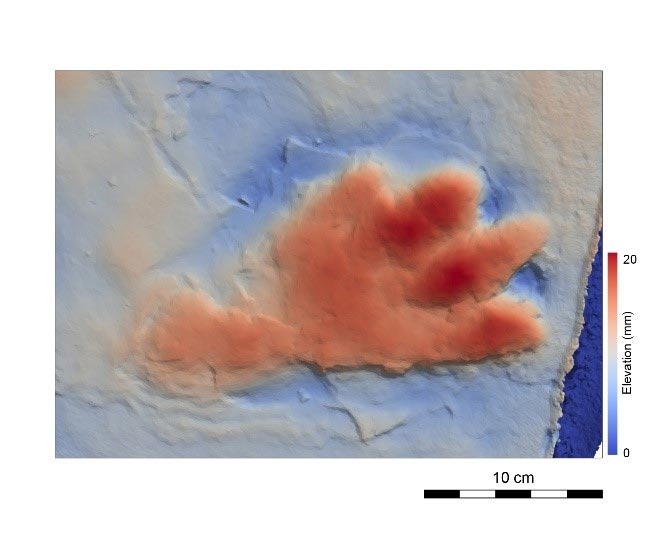
    3D Image Batrachopus grandis
    3D image of Batrachopus grandis, the new name for the footprint of a large bipedal Cretaceous crocodilian. Credit: Martin Lockley

    Among the remains of some of the oldest terrestrially adapted crocodiles, are large Triassic species, more than 200 million years old, that some paleontologists think may have been bipedal, based on anatomy.

    “The Korean trackways prove this hypothesis, at least for the Cretaceous Period,” said co-author of the study, Anthony Romilio. “It also proves this adaptation was effective for millions of years, even with big fierce dinosaurs running around.”

    The new study has also solved a tracking mystery dating back to 2012, when some poorly preserved tracks of a bipedal animal were first found in another South Korean rock unit, described as “enigmatic.” There was debate over whether the giant pterosaurs were bipeds, quadrupeds, or possibly even pterosaurian or human.

    For more on this study, read Researchers Stunned to Discover Ancient Crocodiles That Walked on Two Legs.

    Reference: “Trackway evidence for large bipedal crocodylomorphs from the Cretaceous of Korea” by Kyung Soo Kim, Martin G. Lockley, Jong Deock Lim, Seul Mi Bae and Anthony Romilio, 11 June 2020,  Scientific Reports.
    DOI: 10.1038/s41598-020-66008-7

    Never miss a breakthrough: Join the SciTechDaily newsletter.
    Follow us on Google and Google News.

    Archaeology Evolution Paleontology Reptiles University of Colorado
    Share. Facebook Twitter Pinterest LinkedIn Email Reddit

    Related Articles

    Surprising Diversity of Cretaceous Reptiles at Argentina Fossil Site – Revealed by Discovery of Ancient Teeth

    Fossilized Monkey Teeth Discovered in Peru Indicate Ancient Primates Crossed the Atlantic Ocean From Africa

    New Twist to the Story of Human Ancestors From an Unusual Skullcap and Thousands of Clues

    Remarkable Discovery of 1 Billion-Year-Old Green Seaweed Micro-Fossils in China

    Paleontologists Find Evidence of Dog Domestication During Last Ice Age – 28,500 Years Ago

    Earliest Interbreeding Between Ancient Human Populations Discovered – Evolutionary Puzzle Solved

    New Evidence Shows Humans Mastered Fire Earlier Than Thought

    New Species of Giant Predatory Dinosaur Discovered in Thailand Provides a New Glimpse at Dinosaur Evolution

    Paleontologists Identify a New Species of Prehistoric Reptile, Colobops Noviportensis

    Leave A Reply Cancel Reply

    • Facebook
    • Twitter
    • Pinterest
    • YouTube

    Don't Miss a Discovery

    Subscribe for the Latest in Science & Tech!

    Trending News

    First-of-Its-Kind Discovery: Homer’s Iliad Found Embedded in a 1,600-Year-Old Egyptian Mummy

    Beyond Inflammation: Scientists Uncover New Cause of Persistent Rheumatoid Arthritis

    A Simple Molecule Could Unlock Safer, Easier Weight Loss

    Scientists Just Built a Quantum Battery That Charges Almost Instantly

    Researchers Unveil Groundbreaking Sustainable Solution to Vitamin B12 Deficiency

    Millions of People Have Osteopenia Without Realizing It – Here’s What You Need To Know

    Researchers Discover Boosting a Single Protein Helps the Brain Fight Alzheimer’s

    World-First Study Reveals Human Hearts Can Regenerate After a Heart Attack

    Follow SciTechDaily
    • Facebook
    • Twitter
    • YouTube
    • Pinterest
    • Newsletter
    • RSS
    SciTech News
    • Biology News
    • Chemistry News
    • Earth News
    • Health News
    • Physics News
    • Science News
    • Space News
    • Technology News
    Recent Posts
    • After Decades, MIT Researchers Capture the First 3D Atomic View of a Mysterious Material
    • Your Favorite Fishing Spot Is Turning Brown – and the Fish Are Changing
    • 380-Million-Year-Old Fish Fossil Reveals Secrets of Life’s First Steps Onto Land
    • Mezcal “Worm” in a Bottle Mystery: DNA Testing Reveals a Surprise
    • Scientists Turn Red Lettuce Green, Unlocking Hidden Nutrients
    Copyright © 1998 - 2026 SciTechDaily. All Rights Reserved.
    • Science News
    • About
    • Contact
    • Editorial Board
    • Privacy Policy
    • Terms of Use

    Type above and press Enter to search. Press Esc to cancel.