
Analysis of Paleolithic-era teeth from a 28,500-year-old fossil site in the Czech Republic provides supporting evidence for two groups of canids – one dog-like and the other wolf-like – with differing diets, which is consistent with the early domestication of dogs.
The study, published in the Journal of Archaeological Science on February 8, 2020, was co-directed by Peter Ungar, Distinguished Professor of anthropology at the University of Arkansas.
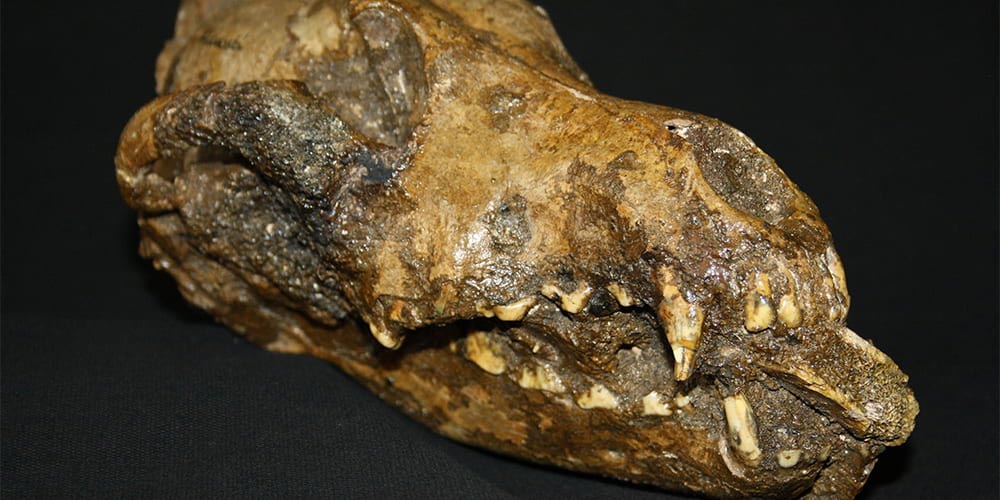
The researchers performed dental microwear texture analysis on a sample of fossils from the Předmostí site, which contains both wolf-like and dog-like canids. Canids are simply mammals of the dog family. The researchers identified distinctive microwear patterns for each canid morphotype. Compared to the wolf-like canids, the teeth of the early dog canids – called “protodogs” by the researchers – had larger wear scars, indicating a diet that included hard, brittle foods. The teeth of the wolf-like canids had smaller scars, suggesting they consumed more flesh, likely from mammoth, as shown by previous research.
This greater durophagy – animal eating behavior suggesting the consumption of hard objects – among the dog-like canids means they likely consumed bones and other less desirable food scraps within human settlement areas, Ungar said. It provides supporting evidence that there were two types of canids at the site, each with a distinct diet, which is consistent with other evidence of early-stage domestication.
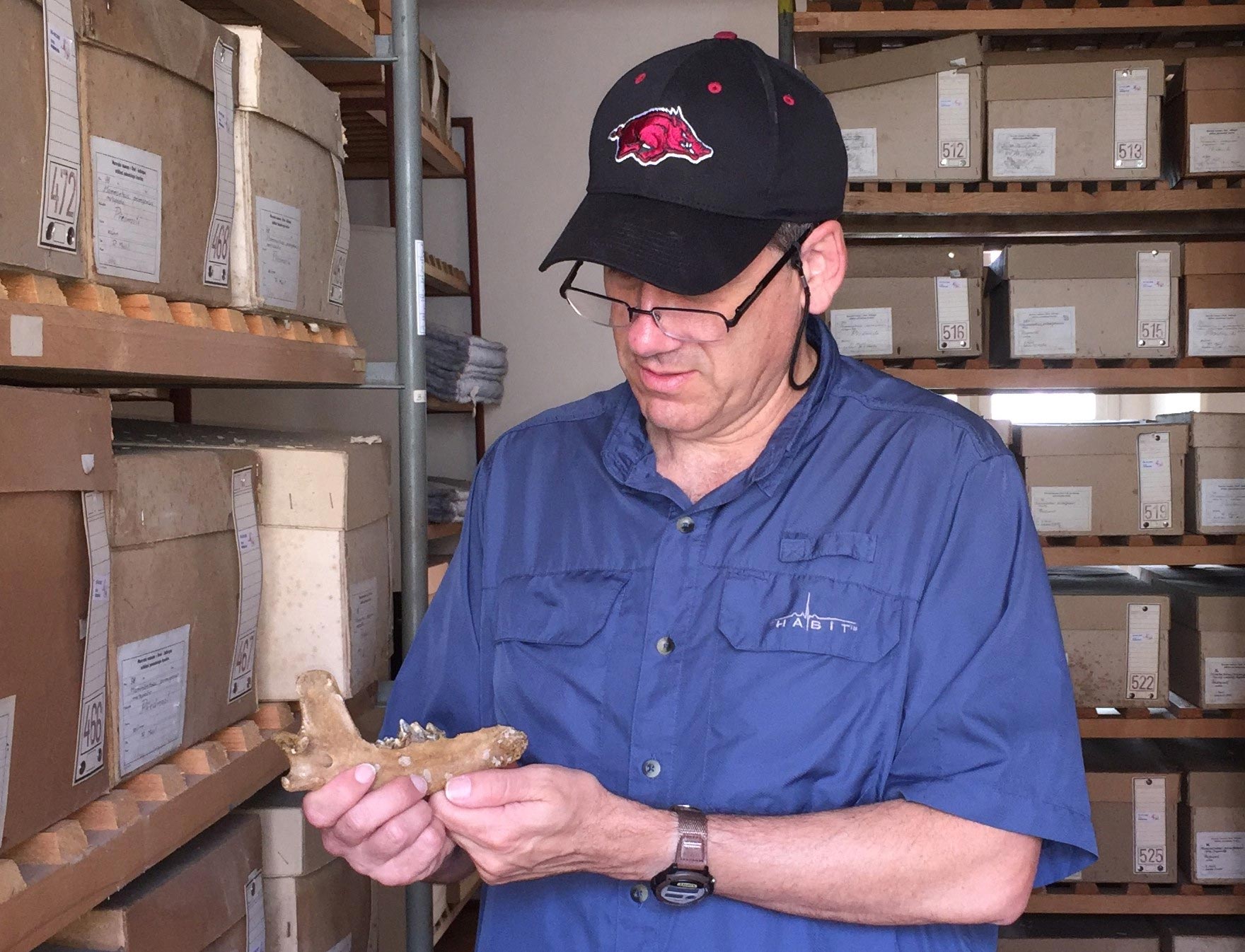
“Our primary goal was to test whether these two morphotypes expressed notable differences in behavior, based on wear patterns,” said Ungar. “Dental microwear is a behavioral signal that can appear generations before morphological changes are established in a population, and it shows great promise in using the archaeological record to distinguish protodogs from wolves.”
Dog domestication is the earliest example of animal husbandry and the only type of domestication that occurred well before the earliest definitive evidence of agriculture. However, there is robust scientific debate about the timing and circumstances of the initial domestication of dogs, with estimates varying between 15,000 and 40,000 years ago, well into the Ice Age, when people had a hunter-gatherer way of life. There is also debate about why wolves were first domesticated to become dogs. From an anthropological perspective, the timing of the domestication process is important for understanding early cognition, behavior, and the ecology of early Homo sapiens.
Reference: “Dental microwear as a behavioral proxy for distinguishing between canids at the Upper Paleolithic (Gravettian) site of Předmostí, Czech Republic” by Kari A.Prassacka, Josephine DuBois, Martina Lázničková-Galetová, Mietje Germonpré and Peter S.Ungar, 8 February 2020, Journal of Archaeological Science.
DOI: 10.1016/j.jas.2020.105092
The study’s lead author is Kari Prassack, curator of paleontology at Hagerman Fossil Beds National Monument, which is part of the National Park Service. Co-authors were Martina Lázničková-Galetová of the Moravian Museum in Czech Republic; Mietje Germonpré of the Royal Belgian Institute of Natural Sciences; and Josephine DuBois, Ungar’s former Honors College student and now student at the University of Missouri-Kansas City School of Dentistry.
This research was supported by the Czech Science Foundation, the Ministry of Culture of the Czech Republic and the University of Arkansas Honors College. Fossil material for this study came from collections of the Moravian Museum in Czech Republic.
Never miss a breakthrough: Join the SciTechDaily newsletter.
Follow us on Google and Google News.
2 Comments
Human NEOTENY was the model for CANINE NEOTENY
I think that you might enjoy my ODE TO OUT OF EVERYWHEREICA. I invite you to ADD VERSES TO MY POEM
There was a crooked man who walked a crooked path
of Darwin’s Evolution.
As Science it is new and facts there are but few
well seasoned with confusion.
From Teilhardina miniatures – it seems – the primates came.
The Lemuroids and Tarsieroids have very little fame.
The Monkeys are much better known – from New World and from Old.
Gorilla, Orang, Chimp and Gibbon are man-like we are told.
From Apes to Man the gap is wide –
for a long time left apart
Till small Australopithecus
was found by Raymond Dart.
How long have they been on the scenes?
Those cute Australo-pithecenes….
How and when they reached each haunt?
Perhaps they started in Levant??
From there through warm Eurasian band?
And southward through all African land
As they traveled – they would find
Related types of ape-men-kind.
Hominids of many strange shapes
Crossed with bonobos and other such apes.
Gorillas, Chimps and Bonobos did their forest thing
While bipedal relatives had their naked fling.
Like Timber Wolf of northern snow
Has no qualms, but wants to know
The carnal charms of Dingo Sheila
Or Jackal bitch, or cute Akita.
Like all Canines on this Earth
Our forebears – bred — gave birth
Left their genes with all uncouth
Anywhere they’d find some mirth,
As long as genes of Human-kind
Meshed as still ALL Doggie-kind
DNA would ebb and flow
And recombine towards high and low.
Thus, we see on Line of Wallace
Austalopithecus on Isle of Flores
Some — thirteen thousand years ago
Maybe later… the Dutch would know.
Australopithecus of Latter-Day
On Flores Island – I would say
Is better way to name that type
Brainette for “Homo” is un-ripe.
Most would die but some survived
Some would kill, and thus had thrived.
Settled types and new-comers
Produced better survivors.
North America HAD primates in days of yore.
South America HAS monkeys – from shore to shore.
Pliopithecus and Dryopithecus of Europe’s past
Were Hominids too – – so not so fast!
As BuzzWord it may be – all the rage
But “Out of Everywhere-ica” can upstage
The paradigm we had learnt to take
May yet be nothing but a fake.
From Petr Jandáček
Los Alamos NM USA
stop the nerd yap