
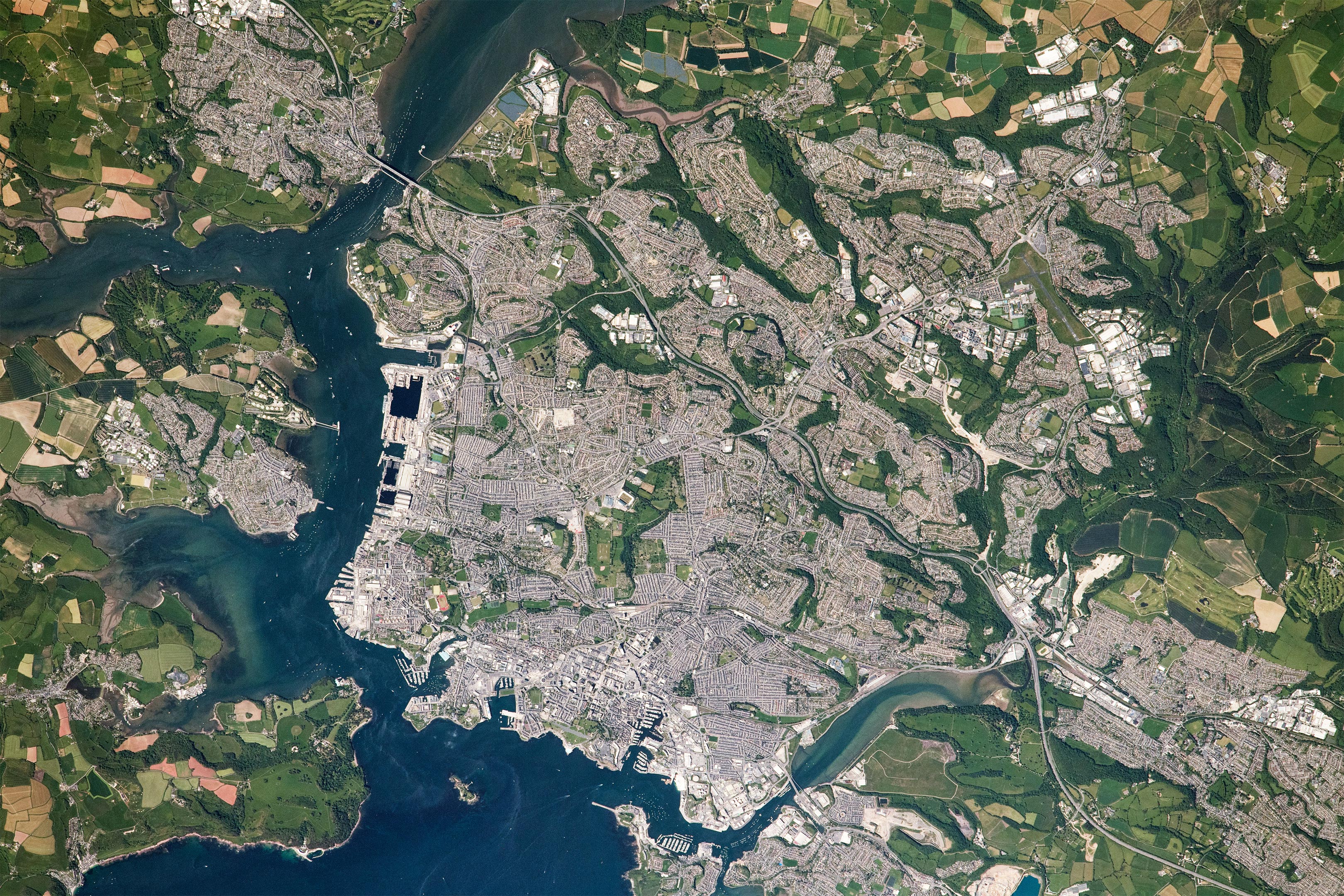
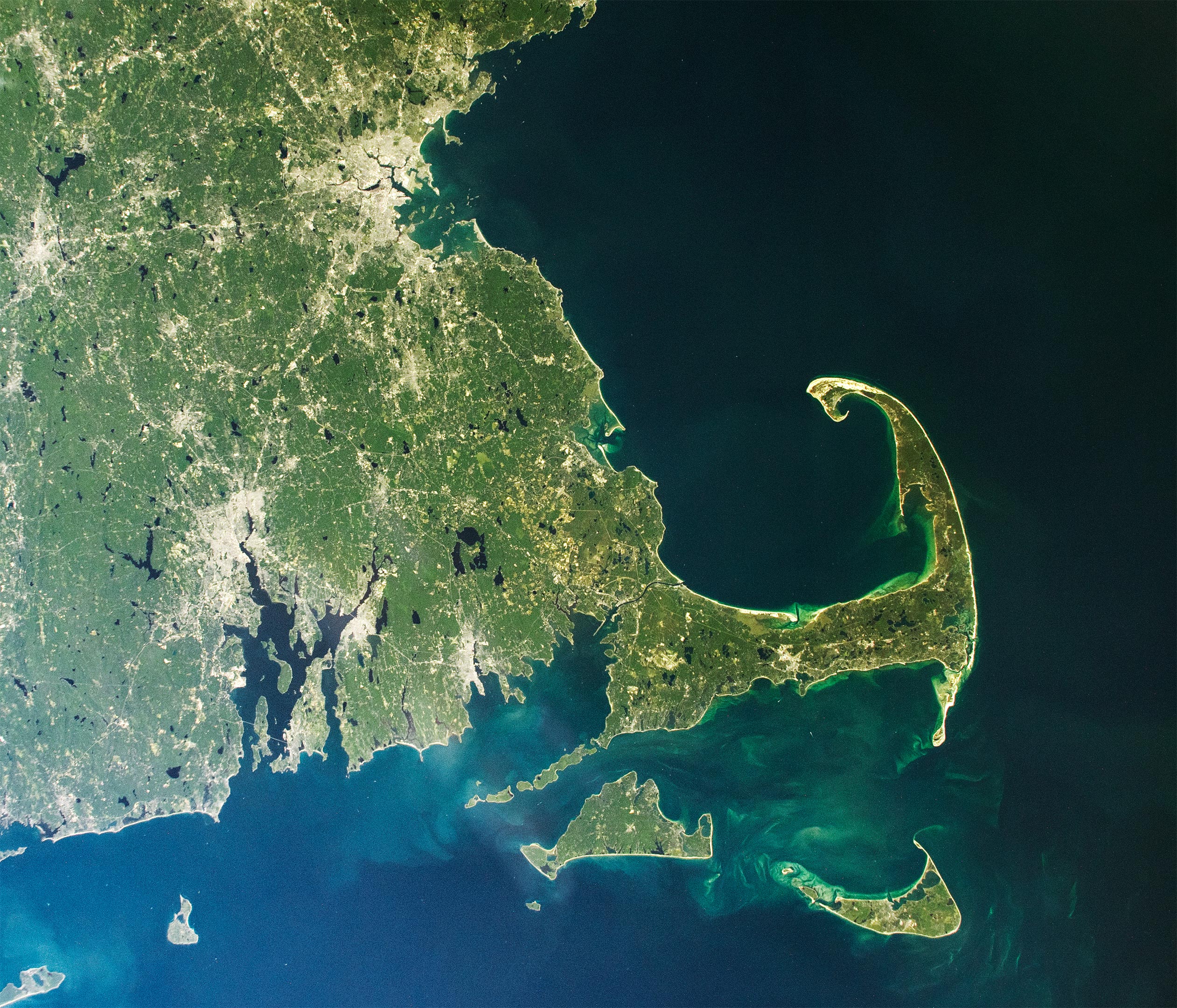
Plymouth, Massachusetts, and Plymouth, England—linked by name and colonial history—also share ancient geologic roots. Both Plymouths were once part of Avalonia, a microcontinent later split by the opening of the Atlantic Ocean.
This autumn marks the 400th anniversary of a 1621 gathering of members of the Wampanoag Nation and European colonists near Plymouth, Massachusetts. Historians still debate the exact circumstances of the gathering, but the story inspired the modern American tradition of Thanksgiving, which was designated a national holiday by Abraham Lincoln in 1863. For many Native Americans, however, it is not a day of thanksgiving, but of mourning.
The colonists landed on Cape Cod in November 1620 after crossing the Atlantic on the Mayflower from Plymouth in southwest England. After exploring parts of the Cape and making their first encounters with the Wampanoag, the colonists sailed across Cape Cod Bay, landed near an abandoned Wampanoag settlement known as Patuxet, and founded the Plymouth Colony.
Plymouth, Massachusetts, and Plymouth, England, are shown above in photographs shot by astronauts from the International Space Station. These two similarly named locations also share an even older geological connection. During the Paleozoic Era, several hundred million years ago, the land that would become southeastern Massachusetts and southwestern England were part of the same microcontinent—Avalonia, or the Avalon terrane.
Avalonia: The Ancient Microcontinent Connection
A terrane is a group of rocks that share a similar origin and geologic history. Much of northeast North America is made of terranes. Over several hundred million years, plate tectonic forces welded various terranes on to the east coast of Laurentia, the ancient paleocontinent that makes up the core of North America.
The land that would become Avalonia first formed as a chain of volcanoes off the western coast of the supercontinent Gondwana about 600 million years ago. Then, about 465 million years ago, the land rifted away from Gondwana. It began inching west across the proto-Atlantic Ocean, driven by plate tectonic forces.
Between about 425 million and 380 million years ago, Avalonia collided with Laurentia and forced up a mountain range along the suture. This collision was an early part of the Acadian Orogeny, the second major mountain-building phase of the Appalachian Mountains. In the U.K., it is called the Caledonian Orogeny.
The third phase of Appalachian mountain-building, the Alleghanian Orogeny, occurred around 350 million to 250 million years ago. During this phase, Avalonia, now attached to North America, was caught in the middle as the continents converged, closing the proto-Atlantic Ocean and forming the supercontinent Pangaea.
When Pangaea began to break up about 200 million years ago, Avalonia was rifted apart. Pieces of it can now be found in North America, Europe, and Africa. Continued rifting separated North America and Europe and opened the modern Atlantic Ocean—setting the stage for the historical events to follow millions of years later.
Astronaut photograph ISS065-E-93706 of Plymouth, U.K., was acquired on June 8, 2021, with a Nikon D4 digital camera using an 1150 millimeter lens. Astronaut photograph ISS065-E-124634 of Plymouth, MA, was acquired on June 18, 2021, with a Nikon D4 digital camera using a 50 millimeter lens. Both images were provided by the ISS Crew Earth Observations Facility and the Earth Science and Remote Sensing Unit, Johnson Space Center, and were taken by a member of the Expedition 65 crew. These images have been cropped and enhanced to improve contrast, and lens artifacts have been removed. The International Space Station Program supports the laboratory as part of the ISS National Lab to help astronauts take pictures of Earth that will be of the greatest value to scientists and the public, and to make those images freely available on the Internet.
Never miss a breakthrough: Join the SciTechDaily newsletter.
Follow us on Google and Google News.