
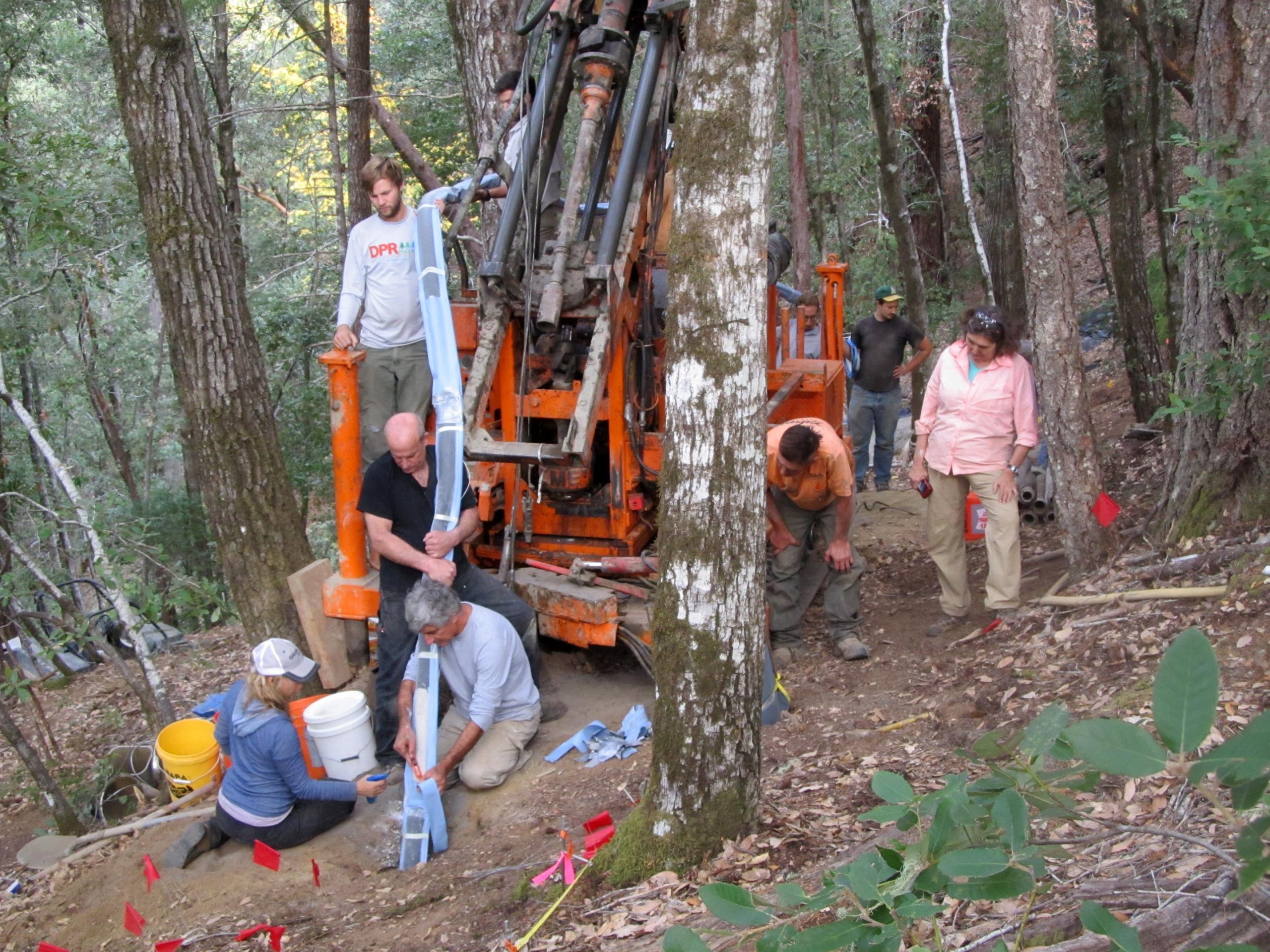
The bedrock beneath our feet has a reputation as an inhospitable place. In contrast, soil is known to be teeming with life – from microbes to plant roots to bugs.
This perspective has set soil up as the most important source of carbon dioxide produced by forests, the CO2 being a natural byproduct of the life within it. But according to a study led by The University of Texas at Austin, the prevailing view is just scratching the surface.
The study found that CO2 can also be produced deeper underground in bedrock fractures, and that this source could account for up to 29% of the daily average CO2 emitted by the land, depending on the season.
This finding does not mean that landscapes are emitting more CO2 into the atmosphere, but it does challenge the conventional wisdom about where CO2 is being produced. It can also help improve climate change models because understanding how and where CO2 is produced is an essential part of creating accurate forecasts.
The study linked CO2 production in the rock to the seasonal uptake of water by deep tree roots many meters below the surface, a finding that suggests that tree roots and the microbial communities around them are the source of the CO2 – and that bedrock fractures are a place for life to thrive.

“This is paradigm shifting in terms of where the action is,” said Daniella Rempe, an assistant professor at the UT Jackson School of Geosciences who coauthored the study. “Soils may not be the only key player in forests.”
The study was published on December 6, 2020, in the journal JGR Biogeosciences.
Alison Tune, a graduate student at the Jackson School, led the research. Other coauthors include Jackson School Professor Philip Bennett, Jia Wang, a graduate student at the University of Illinois Urbana-Champaign, and Jennifer Druhan, an assistant professor at the University of Illinois Urbana-Champaign who played a key role in designing and executing the research.
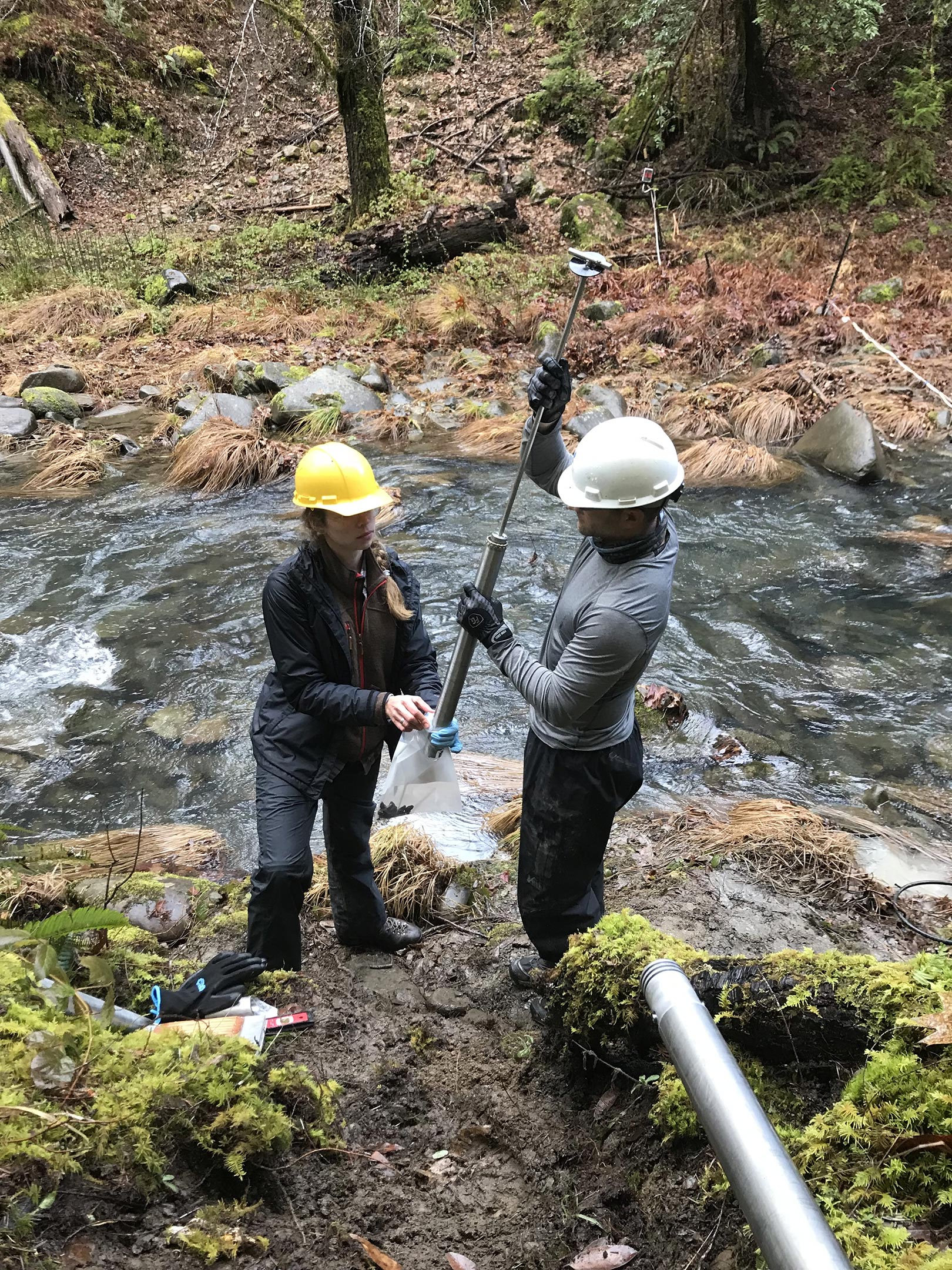
Soil does not sit on top of solid bedrock. Rather, a transition zone of fractured and weathered bedrock sits between these two extremes. This altered rock is notoriously difficult to sample. The research relied on a specialized sampling tool buried in a hill slope in northern California, that extended from the top of the fractured bedrock to the bottom, about 44 feet.
This tool quickly revealed that this region was an active site of CO2 production.
“There is a large CO2 source below the soil,” Tune said. “When we first measured the [CO2] concentration profiles in the field we were pretty excited by what we found.”
By analyzing thousands of samples collected from 2017-2019, the researchers discovered that the CO2 didn’t stay put. During the dry season, the CO2 primarily traveled up into the soil where it was released into the atmosphere. During the wet season, when groundwater rose up to fill the fractures, nearly 50% of the CO2 dissolved into the water, which eventually flows to streams and rivers.
The researchers found that this dissolved CO2 ramps up rock weathering, with as much as 80% of the dissolved carbon in groundwater exiting the study area coming from the fractured bedrock. This finding is significant, Rempe said, because it is the first time scientists have been able to pinpoint where ongoing rock weathering is happening within the hillslope.
This study builds on a growing body of knowledge showing fractured bedrock as an ecologically important region. For example, in a 2018 study, Rempe and collaborators found evidence for rock moisture in fractured rock sustaining trees during droughts.
Mark Torres, an assistant professor at Rice University who studies how carbon cycles through environments, said that the research is significant because it sheds light on a part of the landscape that is considered a “black box” between the soil and the groundwater.
“In the work I do, I usually scoop up river water and I have to infer what’s going on underneath a hill,” he said. “What’s really impressive about the work is how they observed things that are incredibly difficult to see.”
The researchers are planning on investigating fractured bedrock in other places, including a local research site at the Jackson School’s White Family Outdoor Learning Center, a 266-acre site in Dripping Springs, Texas.
“Fractured bedrock is really common in Texas, where the soil is really thin and there’s lots of deep rooting,” Tune said. “It could be an important part of the carbon cycle in these ecosystems and it could be important to understand that as we go forward and as the climate changes over time.”
Reference: “Carbon Dioxide Production in Bedrock Beneath Soils Substantially Contributes to Forest Carbon Cycling” by Alison K. Tune, Jennifer L. Druhan, Jia Wang, Philip C. Bennett and Daniella M. Rempe, 27 November 2020, JGR Biogeosciences.
DOI: 10.1029/2020JG005795
The Department of Energy, the National Science Foundation, and the Geological Society of America supported the research.
Never miss a breakthrough: Join the SciTechDaily newsletter.
Follow us on Google and Google News.
5 Comments
“The study found that CO2 can also be produced deeper underground in bedrock fractures, and that this source could account for up to 29% of the daily average CO2 emitted by the land, depending on the season.”
This is bad news for those trying to capture and geologically bury billons of tons of CO2 with technology.and keep it from leaking.
Why do you say that? That idea involves much deeper sequestration. This research involves the upper fractured bedrock layer, including tree roots and their associated microorganisms. Also, I wonder if the results are broadly applicable, or is the CO2 in other settings lower? I would imagine climate, hydrology, and rock type are just some of things that will affect the applicability of this research to other areas.
“The study found that CO2 can also be produced deeper underground in bedrock fractures, and that this source could account for up to 29% of the daily average CO2 emitted by the land, depending on the season.”
This is bad news for those trying to technologically capture and geologically store CO2 underground without it leaking
Check out Meerreflection.com for a VERY comprehensive approach to the climate emergency. Run by researcher out of Harvard.
Interesting.
Think Contraraian.
Just as the there is a water cycle is there a Carbon Cycle which helps farmers to put food on the table and what role does the acidity of carbonic Acid play in providing the nrcessary carbon for the growth of Trees, and the Three Variety’s of Grass that most of Humanity is depenedent on for providing energy to the Cells in the Human Body?
We will need to understand for the ten billion Humans expected soon on the Planet! Maybe we can optimise agricultural production and reforestation using Mother Nature?