

Close Menu
    Facebook X (Twitter) Instagram
    SciTechDaily
    • Biology
    • Chemistry
    • Earth
    • Health
    • Physics
    • Science
    • Space
    • Technology
    Facebook X (Twitter) Pinterest YouTube RSS
    SciTechDaily
    Home»Space»Peregrine’s Pacific Plunge: Moon Lander’s Fiery Farewell in Earth’s Atmosphere
    Space

    Peregrine’s Pacific Plunge: Moon Lander’s Fiery Farewell in Earth’s Atmosphere

    By NASAJanuary 18, 2024No Comments4 Mins Read
    Facebook Twitter Pinterest Telegram LinkedIn WhatsApp Email Reddit
    Share
    Facebook Twitter LinkedIn Pinterest Telegram Email Reddit
    Small Satellite Burning Up Art
    NASA and Astrobotic’s Peregrine lunar lander was set for a controlled re-entry into Earth’s atmosphere, having successfully collected space data despite not landing on the Moon. (Artist’s concept.) Credit: SciTechDaily.com

    NASA and Astrobotic’s Peregrine Mission One, initially intended for a lunar landing, was put on a controlled trajectory for re-entry into Earth’s atmosphere on Thursday at 4 p.m. EST. The re-entry point was redirected to the South Pacific to ensure safety. Despite not landing on the Moon, NASA instruments on the spacecraft have successfully collected valuable data on radiation and chemical compounds in space.

    Carrying NASA science and technology, Astrobotic’s Peregrine lunar lander remained on a trajectory toward Earth and was predicted to re-enter Earth’s atmosphere today at about 4 p.m. EST.

    To ensure a controlled, safe re-entry, Astrobotic in coordination with NASA and other government agencies, changed the spacecraft’s projected re-entry location to a remote area of the South Pacific. No ground hazards are anticipated.

    Astrobotic evaluated several options with NASA consultation to end the mission safely and determined that the best approach for minimizing risk and ensuring responsible disposal of the spacecraft would be Peregrine’s re-entry into Earth’s atmosphere, likely causing the spacecraft to burn up.
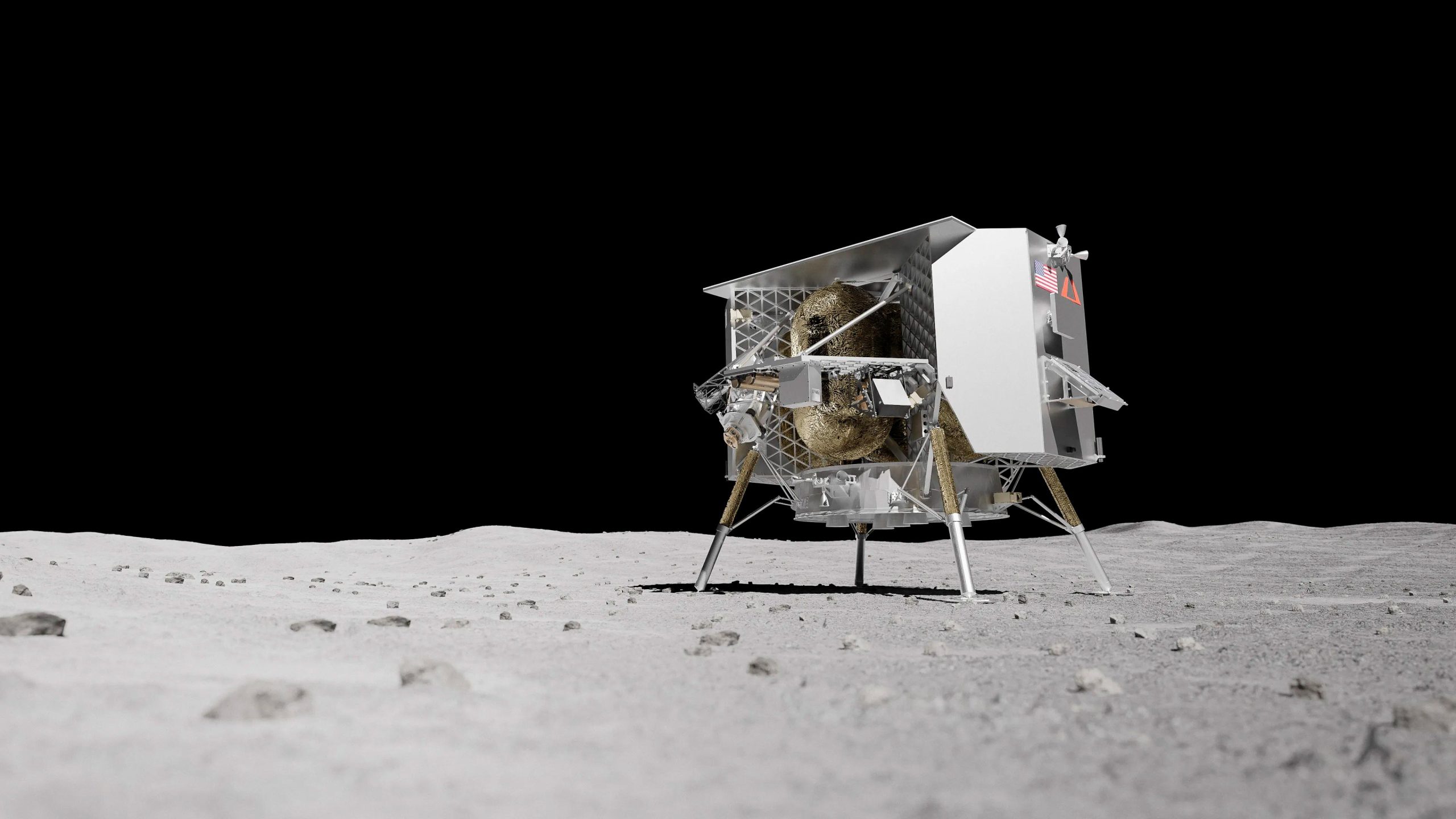
    Astrobotic Peregrine Lunar Lander on Moon
    Peregrine is Astrobotic’s small-class lunar lander. It was poised to carry out one of the first commercial missions to the Moon, and be among the first American spacecraft to land on the Moon since the Apollo program. Credit: Astrobotic Technology

    After Astrobotic confirmed Astrobotic’s Peregrine Mission One would not be a soft-landing on the Moon, NASA science teams adjusted their procedures to collect data in space near the Moon. All NASA payloads designed to power on have received power and collected data, including: Linear Energy Transfer Spectrometer (LETS), Near-Infrared Volatile Spectrometer System (NIRVSS), Neutron Spectrometer System (NSS), and the Peregrine Ion-Trap Mass Spectrometer (PITMS). Since the LRA (Laser Retroreflector Array) instrument is a passive experiment designed for the lunar surface, it cannot conduct any operations in transit.

    Although interpreting the results will require some time, preliminary data suggests that the instruments have collected measurements of the radiation environment and chemical compounds in the lander vicinity, a positive sign that the instruments survived the harsh conditions of space and are functioning as expected.

    The NSS and LETS experiments gathered measurements of the radiation environment in interplanetary space around the Earth and the Moon. The two instruments collected different components of the radiation spectrum, providing complementary insights into the galactic cosmic ray activity and space weather resulting from solar activity.
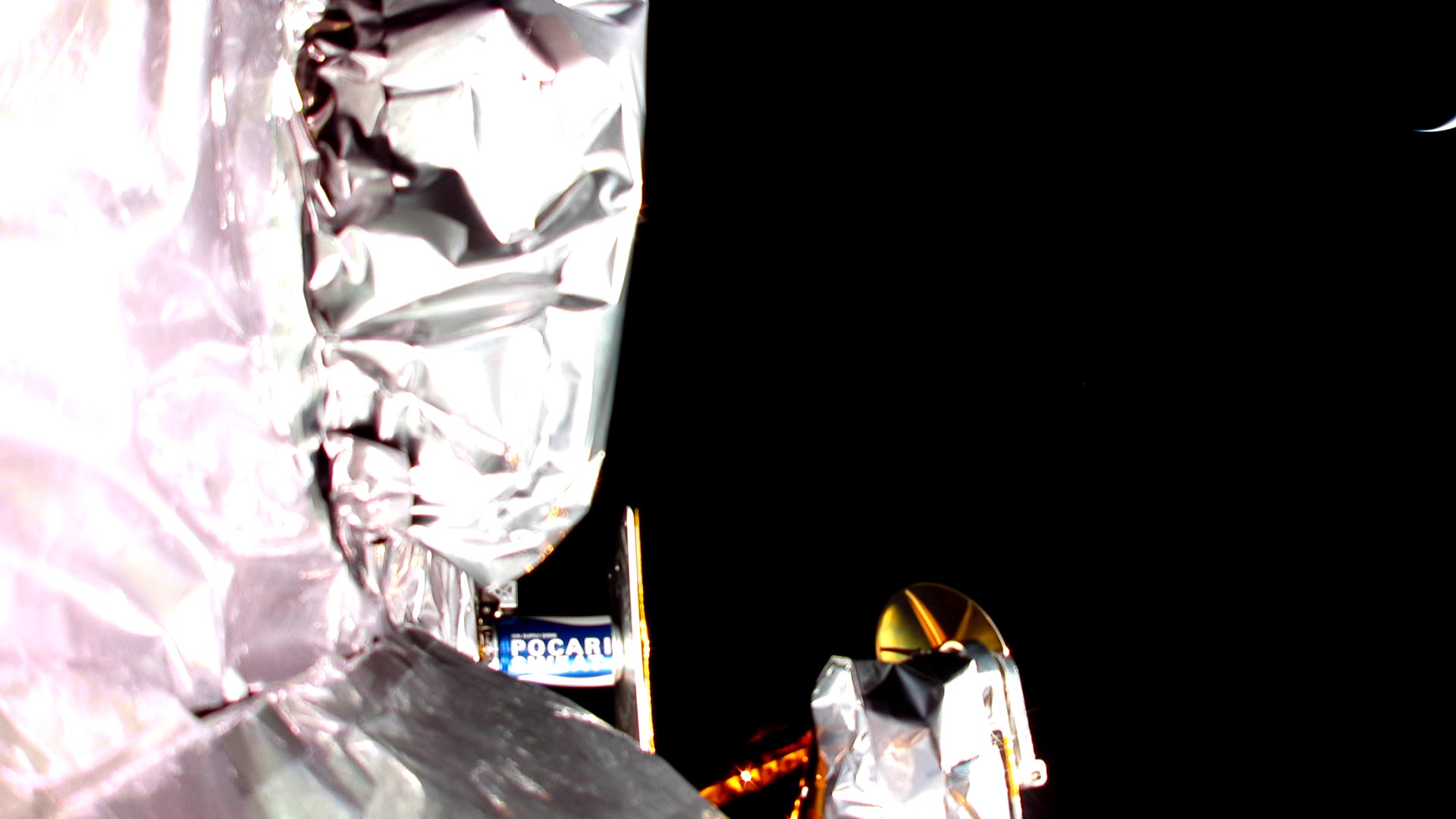
    Astrobotic Peregrine Lunar Lander in Space
    An image captured in space from Peregrine’s journey. The curved sliver in the upper right corner is Earth. The camera that took this image is located on the bottom of one of Peregrine’s payload decks. Just left of center in the image is the DHL MoonBox payload covered in MLI, which contains hundreds of thousands of messages from the people of Earth. Visible to the right of MoonBox and near the bottom center of the photo is Astroscale’s Pocari Sweat Lunar Dream Time Capsule – this was the first payload under contract with Astrobotic and contains messages from children around the world. The bottom center right of the image shows one of Peregrine’s landing legs obscured by the electrical interface where we were connected with the launch vehicle. Credit: Astrobotic

    The PITMS operations were successful, and the team was able to acquire multiple mass spectra both before and after opening the instrument’s protective dust cover. The data confirm PITMS was in good health and that the instrument could provide useful measurements of lunar volatile compounds on future missions. The PITMS is a partnership between NASA; The Open University; RAL Space; and ESA (European Space Agency).

    NIRVSS also successfully powered on and collected images, spectra, and additional data around the lander. A variety of chemical compounds were detected in the NIRVSS spectra which the team currently attributes to lander outgassing and leaked fuel. The team also refined their process for capturing spectra, or intensity of light being emitted, and images while at low data rates. Some of this work validated data processing methods, tools, and operational procedures, all of which will improve NASA’s ability to map the lunar surface in the future.

    NASA will join Astrobotic during their media telecon at 1 p.m. EST on Friday, January 19, to provide an end of mission update. Audio of the call will stream live on NASA’s website.

    Never miss a breakthrough: Join the SciTechDaily newsletter.
    Follow us on Google and Google News.

    Astrobotic Moon NASA
    Share. Facebook Twitter Pinterest LinkedIn Email Reddit

    Related Articles

    Astrobotic’s Peregrine Lander Hit by Critical Propulsion Issue on Flight to the Moon

    Unraveling Lunar Secrets: Inside NASA’s Peregrine Moon Mission’s Five Payloads

    NASA’s Robotic Moonshot: First US Private Robotic Artemis Mission Launches

    Astrobotic Lunar Lander Ready: Watch NASA’s Historic Artemis Moon Mission Launch

    Join NASA’s Artemis Mission: Send Your Name to the Moon With VIPER Rover

    NASA Begins Building VIPER – Its First Robotic Moon Rover

    The Peregrine Ion-Trap Mass Spectrometer – Which Will Fly to the Moon – Has Been Delivered to NASA

    VIPER: NASA Rover to Search for Water & Other Resources on Moon

    Astrobotic Selected by NASA to Fly VIPER Rover to the Moon [Video]

    Leave A Reply Cancel Reply

    • Facebook
    • Twitter
    • Pinterest
    • YouTube

    Don't Miss a Discovery

    Subscribe for the Latest in Science & Tech!

    Trending News

    Why Popular Diabetes Drugs Like Ozempic Don’t Work for Everyone: The “Genetic Glitch”

    Scientists Stunned After Finding Plant Thought Extinct for 60 Years

    Scientists Discover Tiny New Spider That Hunts Prey 6x Its Size

    Natural Component From Licorice Shows Promise for Treating Inflammatory Bowel Disease

    Scientists Warn: Popular Sweetener Linked to Dangerous Metabolic Effects

    Monster Storms on Jupiter Unleash Lightning Beyond Anything on Earth

    Scientists Create “Liquid Gears” That Spin Without Touching

    The Simple Habit That Could Help Prevent Cancer

    Follow SciTechDaily
    • Facebook
    • Twitter
    • YouTube
    • Pinterest
    • Newsletter
    • RSS
    SciTech News
    • Biology News
    • Chemistry News
    • Earth News
    • Health News
    • Physics News
    • Science News
    • Space News
    • Technology News
    Recent Posts
    • 5 Simple Ways To Remember More and Forget Less
    • This Common Habit Could Signal Serious Health Problems in Later Life
    • Common Food Preservative Linked to Rising Suicide Deaths Among Young People
    • Seeing the Invisible: Scientists Develop New Way To Track Particles in 3D
    • The Atomic Gap That Could Cost the Semiconductor Industry Billions
    Copyright © 1998 - 2026 SciTechDaily. All Rights Reserved.
    • Science News
    • About
    • Contact
    • Editorial Board
    • Privacy Policy
    • Terms of Use

    Type above and press Enter to search. Press Esc to cancel.