
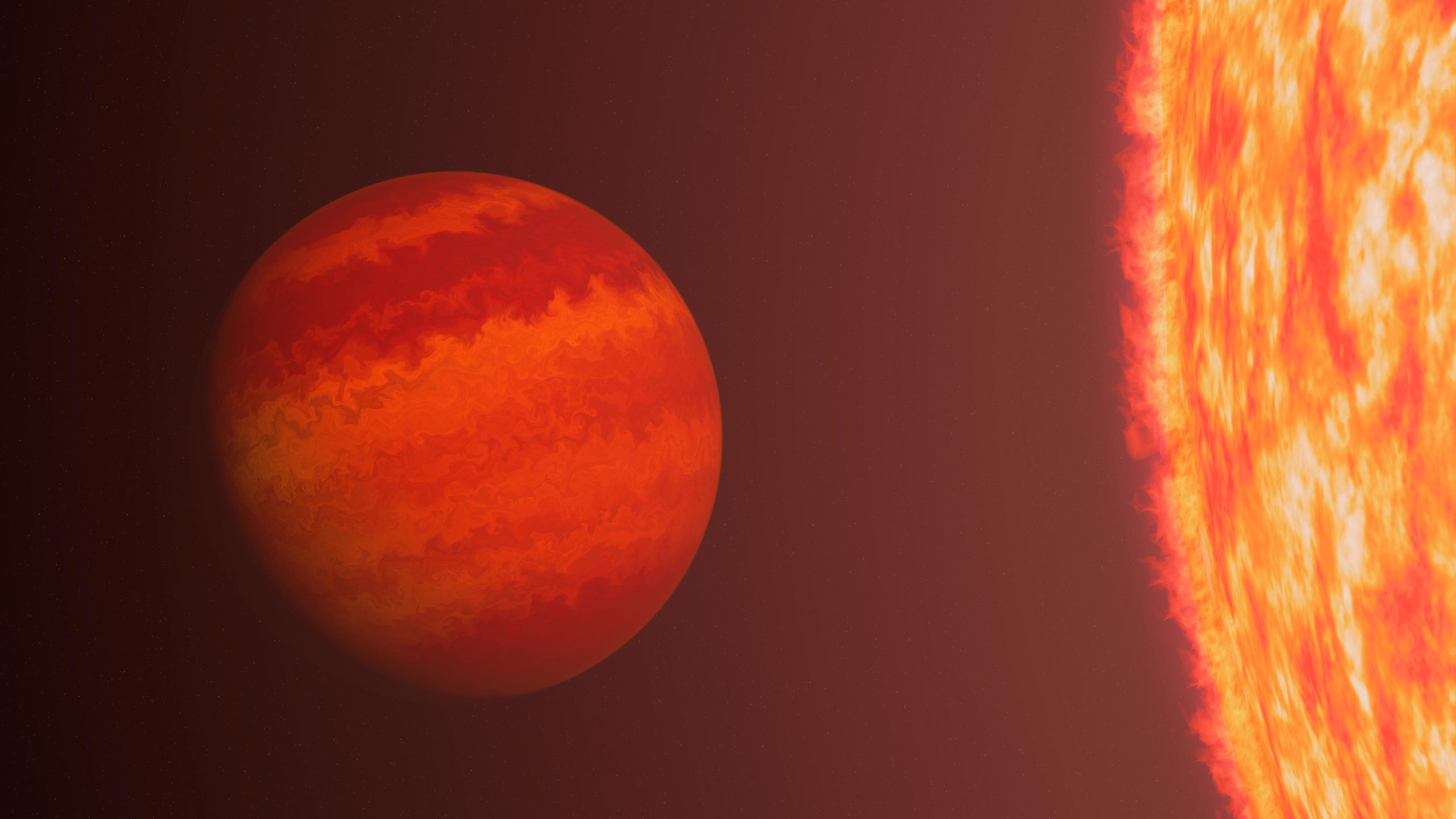
Phoenix, an exoplanet defying usual degradation by its nearby red giant, retains a thick atmosphere, upending assumptions about atmospheric loss and planetary decay in harsh stellar environments.
A unique exoplanet was discovered that should have been stripped down to bare rock by its nearby host star’s intense radiation, but somehow grew a puffy atmosphere instead. This is the latest in a string of discoveries forcing scientists to rethink theories about how planets age and die in extreme environments.
Nicknamed “Phoenix” for its ability to survive the radiant energy from its red giant star, the newly discovered planet illustrates the vast diversity of solar systems and the complexity of planetary evolution—especially at the end of stars’ lives.
The findings were published on June 5 in The Astronomical Journal.
Unusual Atmospheric Retention
“This planet isn’t evolving the way we thought it would, it appears to have a much bigger, less dense atmosphere than we expected for these systems,” said Sam Grunblatt, a Johns Hopkins University astrophysicist who led the research. “How it held on to that atmosphere despite being so close to such a large host star is the big question.”
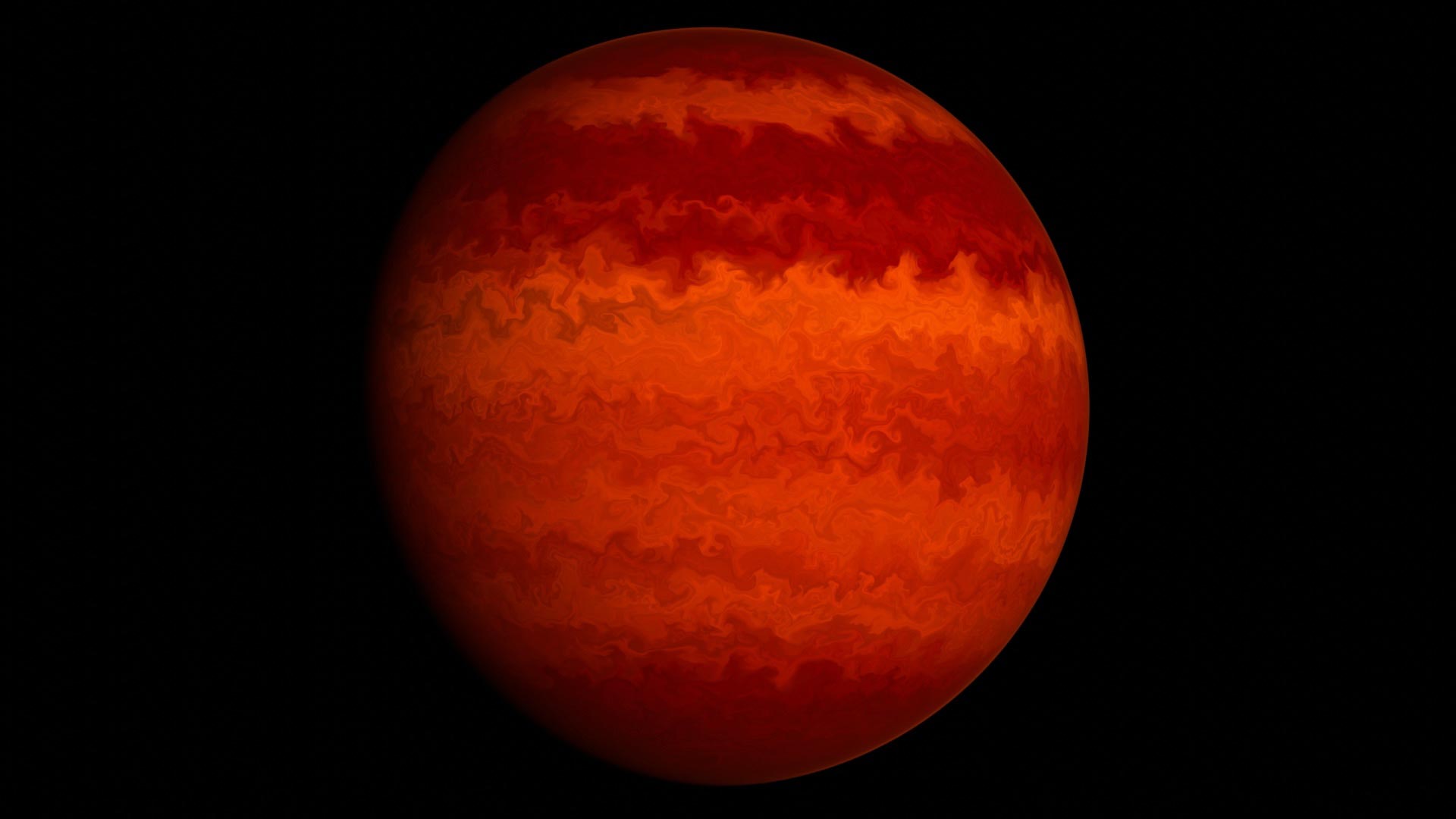
The new planet belongs to a category of rare worlds called “hot Neptunes” because they share many similarities with the solar system’s outermost, frozen giant despite being far closer to their host stars and far hotter. Officially named TIC365102760 b, the latest puffy planet is surprisingly smaller, older, and hotter than scientists thought possible. It is 6.2 times bigger than Earth, completes an orbit around its parent star every 4.2 days, and is about 6 times closer to its star than Mercury is to the Sun.
Slow Atmospheric Stripping and Longevity
Because of Phoenix’s age and scorching temperatures, coupled with its unexpectedly low density, the process of stripping its atmosphere must have occurred at a slower pace than scientists thought possible, the scientists concluded. They also estimated that the planet is 60 times less dense than the densest “hot Neptune” discovered to date, and that it won’t survive more than 100 million years before it begins dying by spiraling into its giant star.
“It’s the smallest planet we’ve ever found around one of these red giants, and probably the lowest mass planet orbiting a [red] giant star we’ve ever seen,” Grunblatt said. “That’s why it looks really weird. We don’t know why it still has an atmosphere when other ‘hot Neptunes’ that are much smaller and much denser seem to be losing their atmospheres in much less extreme environments.”
Innovative Research Techniques and Implications
Grunblatt and his team were able to gain such insights by devising a new method for fine-tuning data from NASA’s Transiting Exoplanet Survey Satellite. The satellite’s telescope can spot low-density planets as they dim the brightness of their host stars when passing in front of them. But Grunblatt’s team filtered out unwanted light in the images and then combined them with additional measurements from the W.M. Keck Observatory on Hawaii’s Maunakea volcano, a facility that tracks the tiny wobbles of stars caused by their orbiting planets.
The findings could help scientists better understand how atmospheres like Earth’s might evolve, Grunblatt said. Scientists predict that in a few billion years the sun will expand into a red giant star that will swell up and engulf Earth and the other inner planets.
“We don’t understand the late-stage evolution of planetary systems very well,” Grunblatt said. “This is telling us that maybe Earth’s atmosphere won’t evolve exactly how we thought it would.”
Potential for Future Discoveries
Puffy planets are often composed of gases, ice, or other lighter materials that make them overall less dense than any planet in the solar system. They are so rare that scientists believe only about 1% of stars have them. Exoplanets like Phoenix are not as commonly discovered because their smaller sizes make them harder to spot than bigger, denser ones, Grunblatt said. That’s why his team is searching for more of these smaller worlds. They already have found a dozen potential candidates with their new technique.
“We still have a long way to go in understanding how planetary atmospheres evolve over time,” Grunblatt said.
Reference: “TESS Giants Transiting Giants. IV. A Low-density Hot Neptune Orbiting a Red Giant Star” by Samuel K. Grunblatt, Nicholas Saunders, Daniel Huber, Daniel Thorngren, Shreyas Vissapragada, Stephanie Yoshida, Kevin C. Schlaufman, Steven Giacalone, Mason Macdougall, Ashley Chontos, Emma Turtelboom, Corey Beard, Joseph M. Akana Murphy, Malena Rice, Howard Isaacson, Ruth Angus and Andrew W. Howard, 5 June 2024, The Astronomical Journal.
DOI: 10.3847/1538-3881/ad4149
Other authors are: Nicholas Saunders, Daniel Huber, and Ashley Chontos of the University of Hawaii at Mãnoa; Daniel Thorngren and Kevin Schlaufman of Johns Hopkins University; Shreyas Vissapragada and Stephanie Yoshida of Harvard University; Steven Giacalone, Emma Turtelboom, and Howard Isaacson of the University of California, Berkeley; Mason Macdougall of the University of California, Los Angeles; Corey Beard of the University of California, Irvine; Joseph M. Akana Murphy of the University of California, Santa Cruz; Malena Rice of Yale University; Ruth Angus of the American Museum of Natural History, Flatiron Institute, and Columbia University; and Andrew W. Howard of the California Institute of Technology.
This work was supported by a NASA Keck PI Data Award, administered by the NASA Exoplanet Science Institute. Data from the Keck Observatory came via telescope time allocated to NASA.
The scientists wish to recognize and acknowledge the significant cultural role and reverence that the summit of Maunakea has within the Indigenous Hawaiian community.
Never miss a breakthrough: Join the SciTechDaily newsletter.
Follow us on Google and Google News.
1 Comment
Grunblatt said. Scientists predict that in a few billion years the sun will expand into a red giant star that will swell up and engulf Earth and the other inner planets.
“We don’t understand the late-stage evolution of planetary systems very well,” Grunblatt said. “This is telling us that maybe Earth’s atmosphere won’t evolve exactly how we thought it would.”
This will be especially true if someone, whether related to us humans or not, decides to move our planet–which might be preferable in less time than that as the sun brightens while still on the Main Sequence.