

The research team has published new results from the MOSAiC project.
Photosynthesis occurs in nature even under very low light conditions, according to a global study focused on Arctic microalgae growth following the polar night. This research was conducted during the MOSAiC expedition near the 88° northern latitude. Findings indicate that microalgae are capable of accumulating biomass through photosynthesis by late March, even in these extreme northern regions.
At this time, the sun is barely above the horizon, so that it is still almost completely dark in the microalgae’s habitat under the snow and ice cover of the Arctic Ocean. The results of the study now published in the journal Nature Communications show that photosynthesis in the ocean is possible under much lower light conditions, and can therefore take place at much greater depths, than previously assumed.
Understanding Photosynthesis in Low Light
Photosynthesis converts sunlight into biologically usable energy and thus forms the basis of all life on our planet. However, previous measurements of the amount of light required for this have always been well above the theoretically possible minimum. A new study in the scientific journal Nature Communications shows that the build-up of biomass can actually take place with a quantity of light that is close to this minimum.
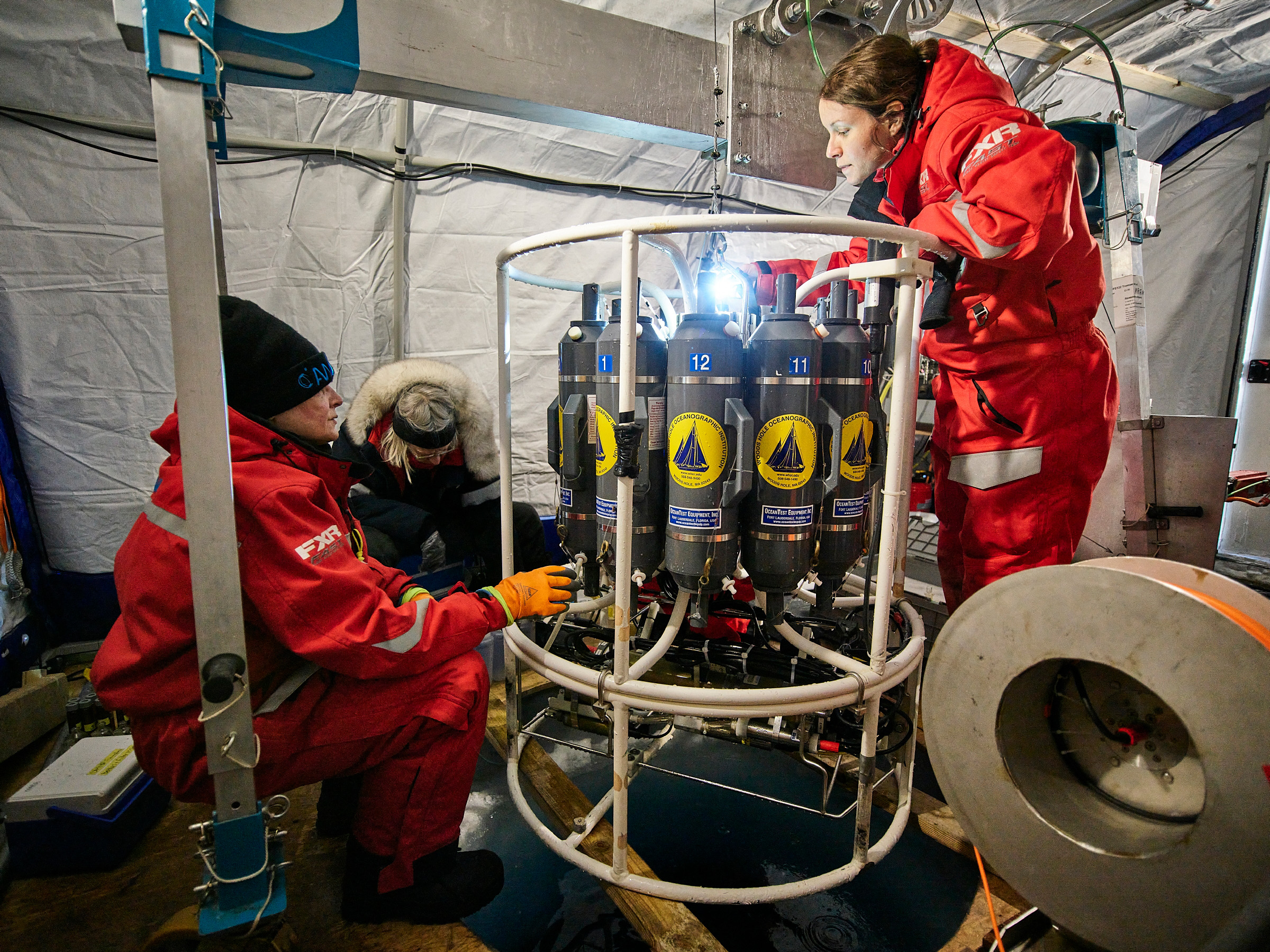
The researchers used data from the international MOSAiC research project for their work. As part of the expedition, they froze the German research icebreaker Polarstern in the icepack of the central Arctic for a year in 2019, in order to investigate the annual cycle of the Arctic climate and ecosystem. The team led by Dr Clara Hoppe from the Alfred Wegener Institute, Helmholtz Centre for Polar and Marine Research (AWI) focused on studying phytoplankton and ice algae.
These are responsible for the majority of photosynthesis in the central Arctic. Unexpectedly, the measurements showed that just a few days after the end of the month-long polar night, plant biomass was built up again, for which photosynthesis is absolutely essential. Extremely sensitive light sensors in the ice and water made it possible to measure the amount of light available.
Innovative Measurements and Implications
The results were particularly surprising because photosynthesis in the Arctic Ocean took place under snow-covered sea ice, which only allows a few photons of incident sunlight to pass through: The microalgae only had about one hundred thousandths of the amount of light of a sunny day on the Earth’s surface available for their growth.
“It is very impressive to see how efficiently the algae can utilize such low amounts of light. This shows once again how well organisms are adapted to their environment,” says Clara Hoppe.
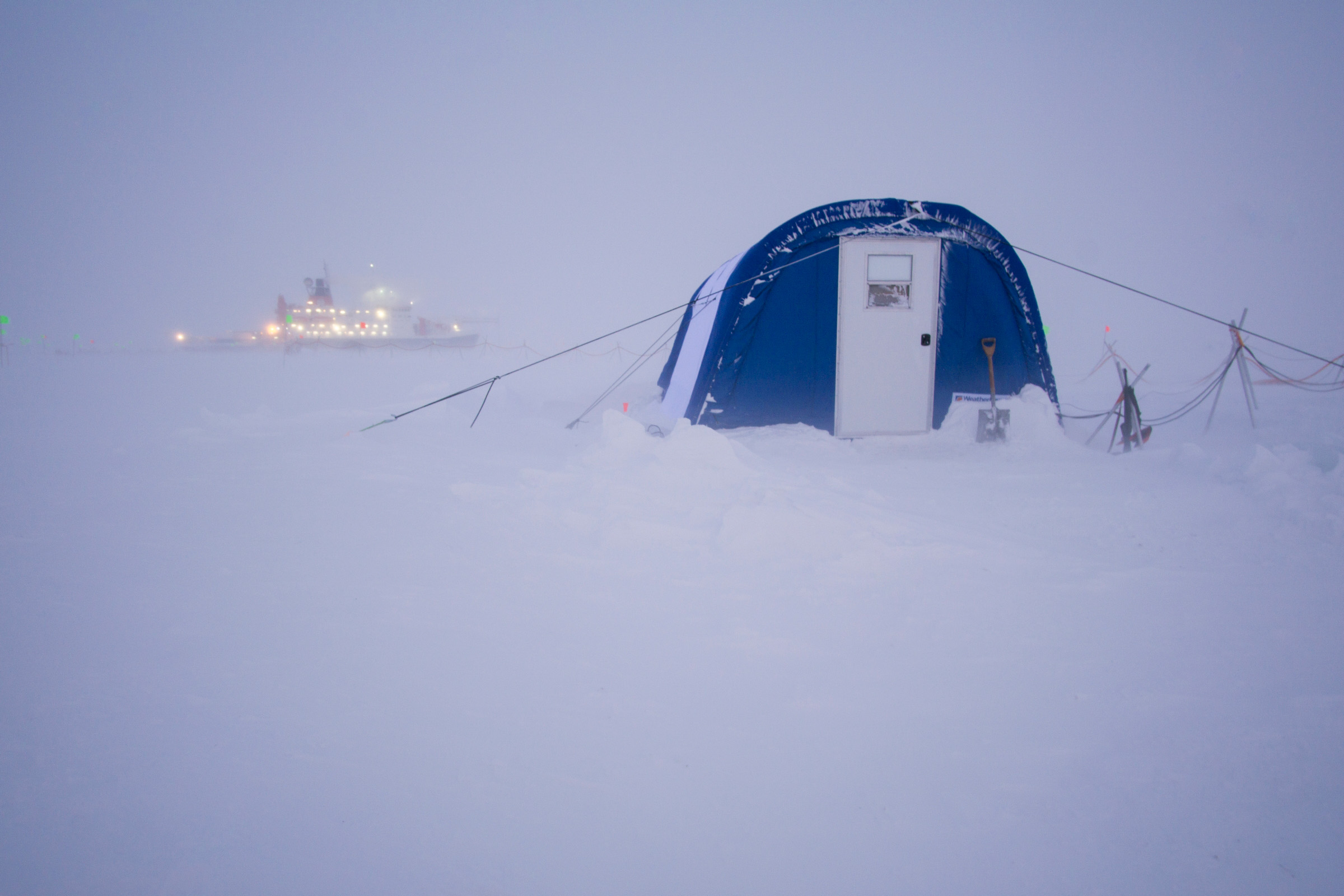
The study was made possible by the close collaboration of researchers from various disciplines. Sea ice researchers Dr Niels Fuchs and Prof Dirk Notz from the Institute of Marine Research at the University of Hamburg were responsible for combining measurements of the light field with the biological measurements.
“To measure such low light levels under the harsh conditions of the Arctic winter, we had to freeze special, newly developed instruments into the ice in the middle of the polar night,” explains Niels Fuchs. His colleague Dirk Notz adds that it was particularly difficult to take into account irregularities in the light field under the ice due to variations in ice thickness and snow: “But in the end, we could be sure: There was just not more light.”
The results of the now published study are important for the entire planet. “Even though our results are specific to the Arctic Ocean, they show what photosynthesis is capable of. If it is so efficient under the challenging conditions of the Arctic, we can assume that organisms in other regions of the oceans have also adapted so well,” says Clara Hoppe, contextualizing the results.
This means that there could also be enough light to produce usable energy and oxygen through photosynthesis in deeper areas of the oceans, which would then be available for fish, for example. The corresponding photosynthetic habitat in the global ocean could therefore be significantly larger than previously assumed.
Reference: “Photosynthetic light requirement near the theoretical minimum detected in Arctic microalgae” by Clara J. M. Hoppe, Niels Fuchs, Dirk Notz, Philip Anderson, Philipp Assmy, Jørgen Berge, Gunnar Bratbak, Gaël Guillou, Alexandra Kraberg, Aud Larsen, Benoit Lebreton, Eva Leu, Magnus Lucassen, Oliver Müller, Laurent Oziel, Björn Rost, Bernhard Schartmüller, Anders Torstensson and Jonas Wloka, 4 September 2024, Nature Communications.
DOI: 10.1038/s41467-024-51636-8
Funding: Ministry of Education and Research, Deutsche Forschungsgemeinschaft, Research Council of Norway, Hanse- Wissenschaftskolleg, Ministry of Education and Research
Never miss a breakthrough: Join the SciTechDaily newsletter.
Follow us on Google and Google News.
1 Comment
“If it is so efficient under the challenging conditions of the Arctic, we can assume that organisms in other regions of the oceans have also adapted so well,”
Assumptions based on poorly supported speculation are always fraught with the danger that the assumption is false. Any pragmatic initial assumptions should be verified before wading too deep into the weeds of reality.