
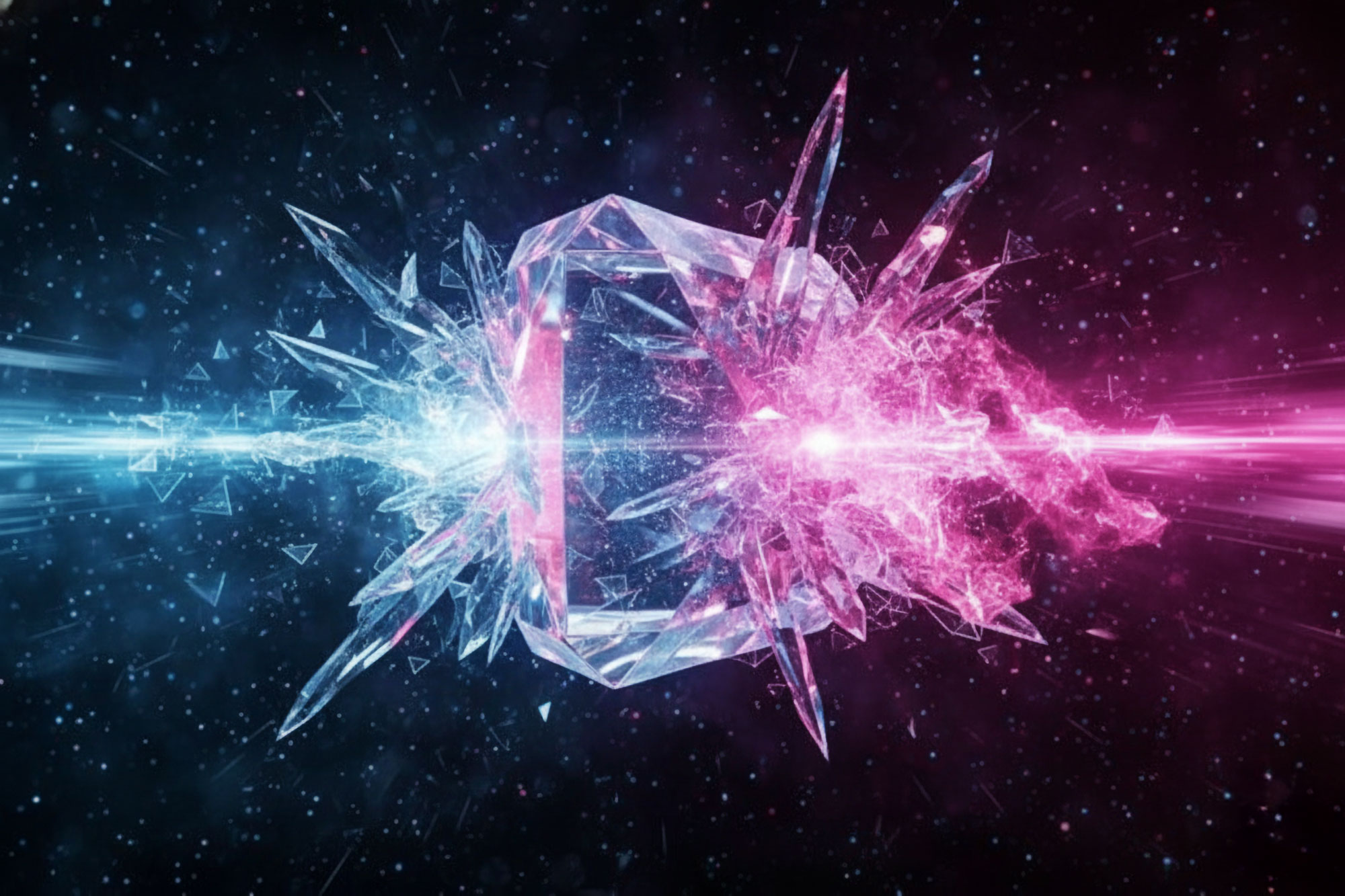
Physicists have discovered how to make electrons “freeze” and “melt” into bizarre quantum patterns, forming a new kind of matter where solid and liquid coexist.
Electricity drives nearly every aspect of modern life, from powering vehicles and smartphones to running computers and countless other devices. Although electrons are invisible to the naked eye, their organized movement through a conductor creates an electric current that behaves much like water flowing through a pipe.
In some special materials, this smooth flow of electrons can become locked into ordered, crystal-like patterns. When that happens, the material shifts from conducting electricity to blocking it, offering scientists an extraordinary view into the collective behavior of electrons. This process plays a key role in developing emerging technologies such as quantum computers, advanced superconductors for energy and medical applications, improved lighting, and ultra-precise atomic clocks.
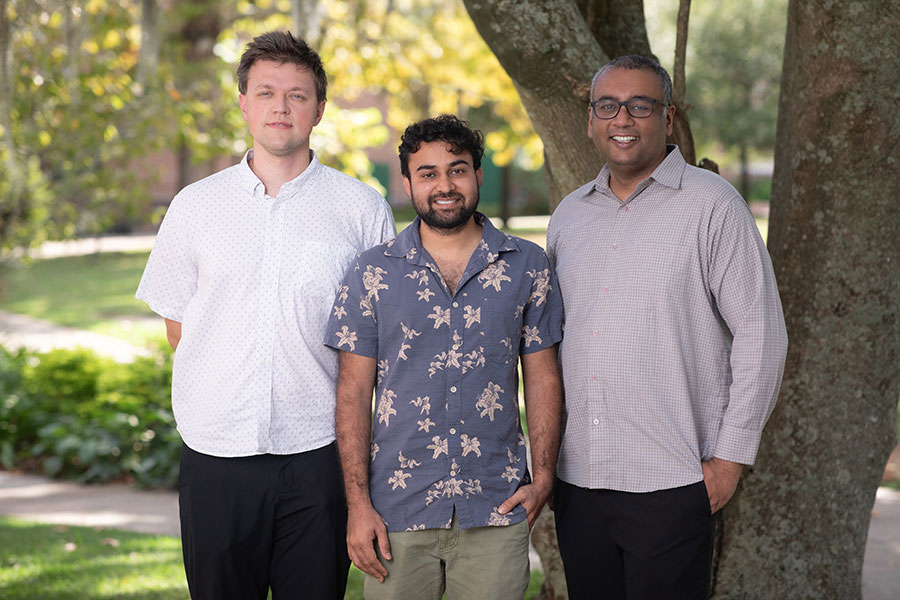
Researchers at Florida State University, including National High Magnetic Field Laboratory Dirac Postdoctoral Fellow Aman Kumar, Associate Professor Hitesh Changlani, and Assistant Professor Cyprian Lewandowski, have identified the specific conditions needed to stabilize a state of matter where electrons form a solid crystalline lattice yet can also “melt” into a liquid-like arrangement. This unusual form, known as a generalized Wigner crystal, is described in their study published in npj Quantum Materials.
How it works
At certain densities, electrons in two-dimensional systems are expected to form Wigner crystals, which were first theorized in 1934. These crystals have been identified in several recent experiments, but it wasn’t clear how these unique states come about when accounting for additional quantum mechanical effects.
“In our study, we determined which ‘quantum knobs’ to turn to trigger this phase transition and achieve a generalized Wigner crystal, which uses a 2D moiré system and allows different crystalline shapes to form, like stripes or honeycomb crystals, unlike traditional Wigner crystals that only show a triangular lattice crystal,” Changlani said.
The researchers used FSU’s Research Computing Center, an academic service unit of Information Technology Services, and the National Science Foundation’s ACCESS, an advanced computing and data resource program under the Office of Advanced Cyberinfrastructure, to conduct calculations and run large-scale simulations using numerical techniques like exact diagonalization, density matrix renormalization group, and Monte Carlo simulations.
In quantum mechanics, there are two pieces of quantum information for every electron. When dealing with hundreds and thousands of electrons, the amount of information becomes overwhelming. The algorithms and numerical techniques used by the team actively simplify this vast amount of information into digestible networks, allowing researchers to draw insights from it.
“We’re able to mimic experimental findings via our theoretical understanding of the state of matter,” Kumar said. “We conduct precise theoretical calculations using state-of-the-art tensor network calculations and exact diagonalization, a powerful numerical technique used in physics to collect details about a quantum Hamiltonian, which represents the total quantum energy in a system. Through this, we can provide a picture for how the crystal states came about and why they’re favored in comparison to other energetically competitive states.”
Quantum pinballs
The team also discovered a new state of matter in which conducting and insulating properties coexist due to unusual electron behaviors. They found that the generalized Wigner crystal can partially “melt” — while some electrons remained frozen, other electrons delocalized and began moving around the system, similar to a ball zooming around fixed pins in a pinball machine.
“This pinball phase is a very exciting phase of matter that we observed while researching the generalized Wigner crystal,” Lewandowski said. “Some electrons want to freeze and others want to float around, which means that some are insulating and some are conducting electricity. This is the first time this unique quantum mechanical effect has been observed and reported for the electron density we studied in our work.”
Why it matters
The research gives scientists a greater understanding of how to manipulate states of matter.
“What causes something to be insulating, conducting, or magnetic? Can we transmute something into a different state?” Lewandowski said. “We’re looking to predict where certain phases of matter exist and how one state can transition to another — when you think of turning a liquid into gas, you picture turning up a heat knob to get water to boil into steam. Here, it turns out there are other quantum knobs we can play with to manipulate states of matter, which can lead to impressive advances in experimental research.”
Tuning these knobs, or energy scales, can drive phase transitions in electrons from solid to liquid. Studying Wigner crystals offers unique insights into quantum phases of matter and has potential applications in powerful quantum computing and in spintronics — a revolutionary new field in condensed-matter physics that can increase the memory and logic processing capability of nano-electronic devices while reducing power consumption and production costs.
The research team hopes to better understand the cooperative behavior of electrons and address theoretical questions that can lead to breakthrough applications in quantum, superconducting, and atomic technologies.
Reference: “Origin and stability of generalized Wigner crystallinity in triangular moiré systems” by Aman Kumar, Cyprian Lewandowski and Hitesh J. Changlani, 28 August 2025, npj Quantum Materials.
DOI: 10.1038/s41535-025-00792-1
Funding: U.S. National Science Foundation
Never miss a breakthrough: Join the SciTechDaily newsletter.
Follow us on Google and Google News.
1 Comment
Studying Wigner crystals offers unique insights into quantum phases of matter and has potential applications in spintronics — a revolutionary new field in condensed-matter physics that can increase the memory and logic processing capability of nano-electronic devices while reducing power consumption and production costs.
VERY GOOD!
Please ask researchers to think deeply:
1. What is the physical essence of spin?
2. How do you understand quantum?
3. Is quantum a cat that is both dead and alive?
4. Is quantum related to topological spin?
5. Is quantum mechanics mathematics or physical reality?