
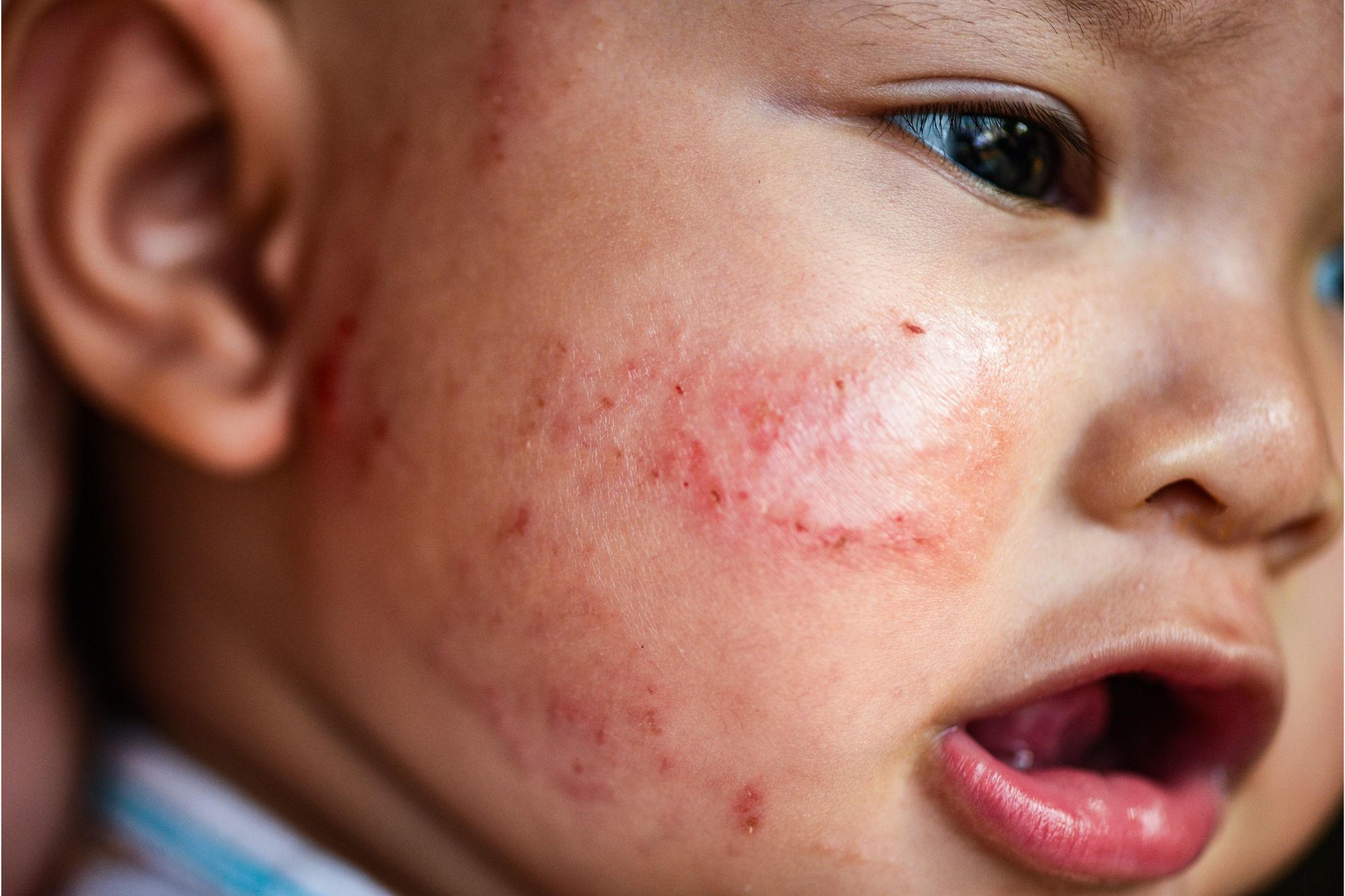
New research from a multi-disciplinary team at Trinity College Dublin suggests a “tailored vaccine” might hold the key to treating bacteria-driven flares of eczema in children.
The team has taken several leaps forward in understanding how the immune response works in cases of eczema driven by the common, troublesome Staphylococcus aureus bacterium, and in doing so they have identified new cellular targets for a vaccine.
Eczema’s Impact and Current Treatment Limitations
Eczema, also known as atopic dermatitis, affects up to one in four children in Ireland. Common symptoms include itchy, dry skin, and – when bacteria are involved – weeping wounds that can progress to more severe infections and have a detrimental effect on the quality of life of patients and their families. Although very rare, life-threatening systemic infections such as septicaemia may arise.
“There is a real need for new options to treat and prevent infected flares of eczema in children. Current strategies are limited in their success and – even when they do provide relief – the effects may be short-term as symptoms often return. Although antibiotics are needed in some cases, scientists are trying hard to deliver alternative options due to the growing problems posed by antimicrobial resistance,” said Dr. Julianne Clowry, Consultant Dermatologist, Visiting Research Fellow at Trinity, and lead author of the study.
“In combination, these factors make a tailored vaccine a very attractive target as it could limit the severity of eczema, lead to better longer-lasting outcomes, and reduce the need for antibiotics – all while also reducing the risk of complications and potentially the development of other atopic diseases, such as hayfever and asthma.”
Advancements in Vaccine Targeting
The researchers, from Trinity’s Schools of Medicine, Computer Science and Statistics, as well as from Biochemistry and Immunology, uncovered important “immune signatures” in children with infected flares of eczema. Pinpointing these signatures provides them with specific new targets, which is helpful from a theoretical vaccine design perspective.
Working with 93 children between 0 and 16, the researchers compared immune responses between 3 groups of patients: eczema and a confirmed S. aureus skin infection, eczema but no S. aureus skin infection, and a healthy group of volunteers.
Key Findings in Immune Responses
The key discovery was that the proportions of certain immune cells known as “T cells,” as well as other biomarkers, varied considerably in the different groups. There are many different types of T cells in our bodies but they all play unique roles in our immune response, helping to regulate the way we respond to infections.
This main result highlights that the immune response was impacted in those with infected flares of eczema – with the suppression of some of the important T cells that drive an effective immune response. These findings provide an early blueprint in developing future therapies that could provide targeted effective relief from recurrent flares of eczema.
Expert Insights
Alan Irvine, Professor of Dermatology at Trinity, said: “While an interaction between the Staphylococcus aureus bug and eczema has been known for many decades, novel scientific approaches are continuing to make key discoveries about the complex relationship between these bacteria and human responses to it. Our work outlines new discoveries about how children with eczema respond immunologically to infection with this common bacterium.”
Rachel McLoughlin, Professor in Immunology at Trinity and senior author on the study, added: “This work has identified an overall pattern of immune suppression associated with infected flares of eczema, which results in the suppression of specific T cells that are vital to help initiate an effective immune response. Further work is now required to broaden the scope of these results, by expanding to a larger number of people. This will help confirm if the patterns identified are consistent among different age groups, and in sub-groups with greater ethnic diversity.
“We believe that a more comprehensive understanding of the immune response to this bacteria S. aureus in eczema, has significant potential to revolutionise treatment approaches and make a major translational impact in the management of eczema.”
Reference: “Distinct T cell signatures are associated with Staphylococcus aureus skin infection in pediatric atopic dermatitis” by Julianne Clowry, Daniel J. Dempsey, Tracey J. Claxton, Aisling M. Towell, Mary B. Turley, Martin Sutton, Joan A. Geoghegan, Sanja Kezic, Ivone Jakasa, Arthur White, Alan D. Irvine and Rachel M. McLoughlin, 8 May 2024, JCI Insight.
DOI: 10.1172/jci.insight.178789
Never miss a breakthrough: Join the SciTechDaily newsletter.
Follow us on Google and Google News.