
nbs
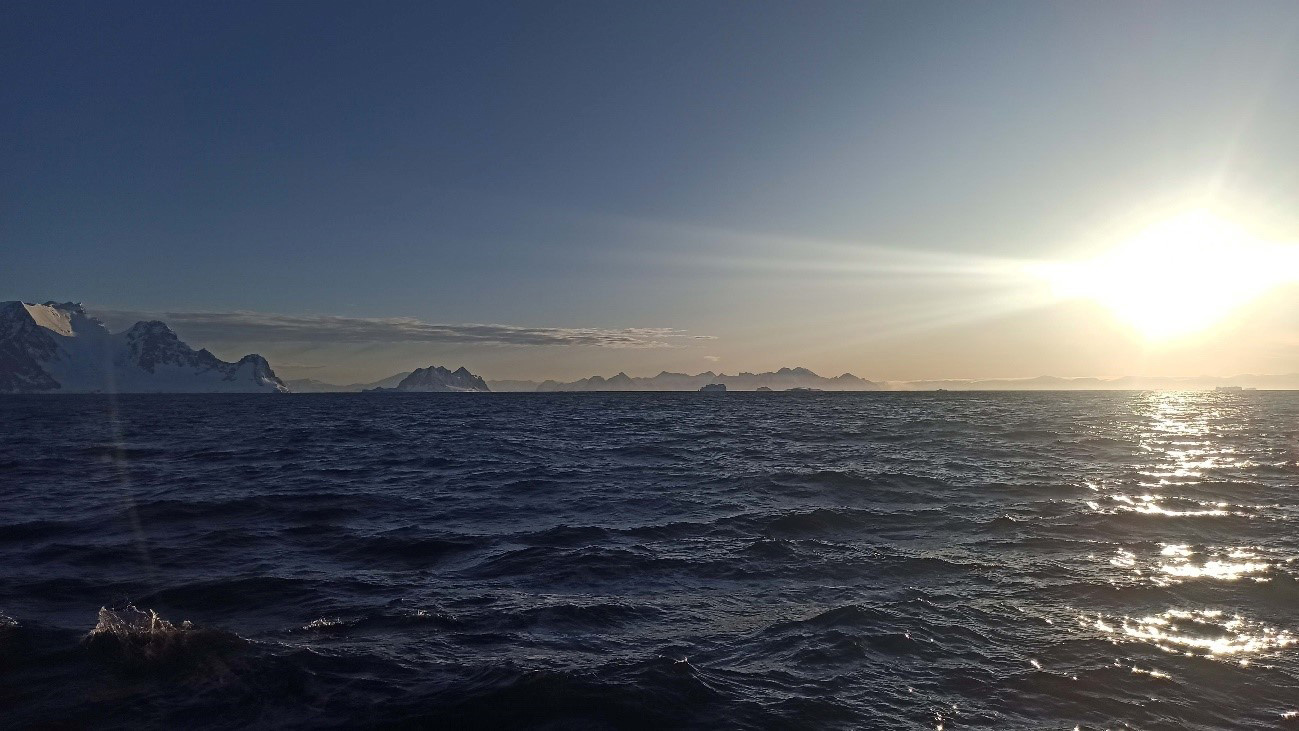
Methanethiol, a marine sulfur gas, enhances climate cooling by boosting aerosol formation and reflecting sunlight, especially over the Southern Ocean. Its emissions increase marine sulfur output by 25%, improving climate models and highlighting the oceans’ critical role in regulating global temperatures.
For the first time, researchers have measured the global emissions of a sulfur gas produced by marine life, discovering that it has a greater cooling effect on the climate than previously understood, particularly over the Southern Ocean.
The study, published in the journal Science Advances, shows that the oceans not only capture and redistribute the sun’s heat, but produce gases that make particles with immediate climatic effects, for example through the brightening of clouds that reflect this heat.
It broadens the climatic impact of marine sulfur because it adds a new compound, methanethiol, that had previously gone unnoticed. Researchers only detected the gas recently, because it used to be notoriously hard to measure and earlier work focussed on warmer oceans, whereas the polar oceans are the emission hotspots.
The research was led by a team of scientists from the Institute of Marine Sciences (ICM-CSIC) and the Blas Cabrera Institute of Physical Chemistry (IQF-CSIC) in Spain. They included Dr Charel Wohl, previously at ICM-CSIC and now at the University of East Anglia (UEA) in the UK.
Advancing Climate Models with Methanethiol Data
Their findings represent a major advance on one of the most groundbreaking theories proposed 40 years ago about the role of the ocean in regulating the Earth’s climate.
This suggested that microscopic plankton living on the surface of the seas produce sulfur in the form of a gas, dimethyl sulfide, that once in the atmosphere, oxidizes and forms small particles called aerosols.
Aerosols reflect part of the solar radiation back into space and therefore reduce the heat retained by the Earth. Their cooling effect is magnified when they become involved in making clouds, with an effect opposite to, but of the same magnitude as, that of the well-known warming greenhouse gases, such as carbon dioxide or methane.
The researchers argue that this new work improves our understanding of how the climate of the planet is regulated by adding a previously overlooked component and illustrates the crucial importance of sulfur aerosols. They also highlight the magnitude of the impact of human activity on the climate and that the planet will continue to warm if no action is taken.
Dr Wohl, of UEA’s Centre for Ocean and Atmospheric Sciences and one of the lead authors, said: “This is the climatic element with the greatest cooling capacity, but also the least understood. We knew methanethiol was coming out of the ocean, but we had no idea about how much and where. We also did not know it had such an impact on climate.
“Climate models have greatly overestimated the solar radiation actually reaching the Southern Ocean, largely because they are not capable of correctly simulating clouds. The work done here partially closes the longstanding knowledge gap between models and observations.”
With this discovery, scientists can now represent the climate more accurately in models that are used to make predictions of +1.5 ºC or +2 ºC warming, a huge contribution to policymaking.
“Until now we thought that the oceans emitted sulfur into the atmosphere only in the form of dimethyl sulfide, a residue of plankton that is mainly responsible for the evocative smell of shellfish,” said Dr Martí Galí, a researcher at the ICM-CSIC and another of the main study authors.
Dr Wohl added: “Today, thanks to the evolution of measurement techniques, we know that plankton also emit methanethiol, and we have found a way to quantify, on a global scale, where, when, and in what quantity this emission occurs.
“Knowing the emissions of this compound will help us to more accurately represent clouds over the Southern Ocean and calculate more realistically their cooling effect.”
Quantifying Methanethiol’s Impact
The researchers gathered all the available measurements of methanethiol in seawater, added those they had made in the Southern Ocean and the Mediterranean coast, and statistically related them to seawater temperature, obtained from satellites.
This allowed them to conclude that, annually and on a global average, methanethiol increases known marine sulfur emissions by 25%.
“It may not seem like much, but methanethiol is more efficient at oxidizing and forming aerosols than dimethyl sulfide and, therefore, its climate impact is magnified,” said co-lead Dr Julián Villamayor, a researcher at IQF-CSIC.
The team also incorporated the marine emissions of methanethiol into a state-of-the-art climate model to assess their effects on the planet’s radiation balance.
It showed the impacts are much more visible in the Southern Hemisphere, where there is more ocean and less human activity, and therefore the presence of sulfur from the burning of fossil fuels is lower.
Reference: “Marine emissions of methanethiol increase aerosol cooling in the Southern Ocean” by Charel Wohl, Julián Villamayor, Martí Galí, Anoop S. Mahajan, Rafael P. Fernández, Carlos A. Cuevas, Adriana Bossolasco, Qinyi Li, Anthony J. Kettle, Tara Williams, Roland Sarda-Esteve, Valérie Gros, Rafel Simó and Alfonso Saiz-Lopez, 27 November 2024, Science Advances.
DOI: 10.1126/sciadv.adq2465
The work was supported by funding from organizations including the European Research Council and the Spanish Ministry of Science and Innovation.
Never miss a breakthrough: Join the SciTechDaily newsletter.
Follow us on Google and Google News.
2 Comments
This article is about a former underestimation of methanethiol, and it claims that a “major advance” leading to an estimate of the cooling aerosols derived from organic sulfides being 25% larger than previously estimated. More importantly, they then say, “Their cooling effect is magnified when they become involved in making clouds, with an effect opposite to, but of the SAME magnitude as, that of the well-known warming greenhouse gases, such as carbon dioxide or methane.” They are basically saying that the models are wrong because of a significant cooling influence of that poorly-known methanethiol.
They follow that up with what seems to be the obligatory negative spin by saying, “They also highlight the magnitude of the impact of human activity on the climate and that the planet will continue to warm if no action is taken.’ Where is the support for this claim, let alone a quantitative estimate?
I’m reminded of the famous line by Sgt. Joe Friday: “Just the facts, ma’m. Just the facts.”
Incidentally, the university press release says: “This allowed them to conclude that, annually and on a global average, methanethiol increases known marine sulfur emissions by 25%.”
I was unable to find that claim in the actual peer-reviewed article. However, what I did find was, “The results reveal that adding MeSH emissions to the model increases the annual global mean VMS [volatile methylated sulfur] atmospheric burden by 34% (Fig. 2). This enhancement is particularly pronounced in the Southern Ocean …, where the annual mean VMS burden increases by a remarkable 51% when MeSH emission is considered.”
It appears that the press release significantly understates what the actual journal article says!