
Close Menu
    Facebook X (Twitter) Instagram
    SciTechDaily
    • Biology
    • Chemistry
    • Earth
    • Health
    • Physics
    • Science
    • Space
    • Technology
    Facebook X (Twitter) Pinterest YouTube RSS
    SciTechDaily
    Home»Biology»“Pokemonas” – New Bacteria Related to Lung Parasites Discovered, Named After Pokémon
    Biology

    “Pokemonas” – New Bacteria Related to Lung Parasites Discovered, Named After Pokémon

    By University of CologneMay 4, 2021No Comments3 Mins Read
    Facebook Twitter Pinterest Telegram LinkedIn WhatsApp Email Reddit
    Share
    Facebook Twitter LinkedIn Pinterest Telegram Email Reddit
    Thecofilosea Amoeba
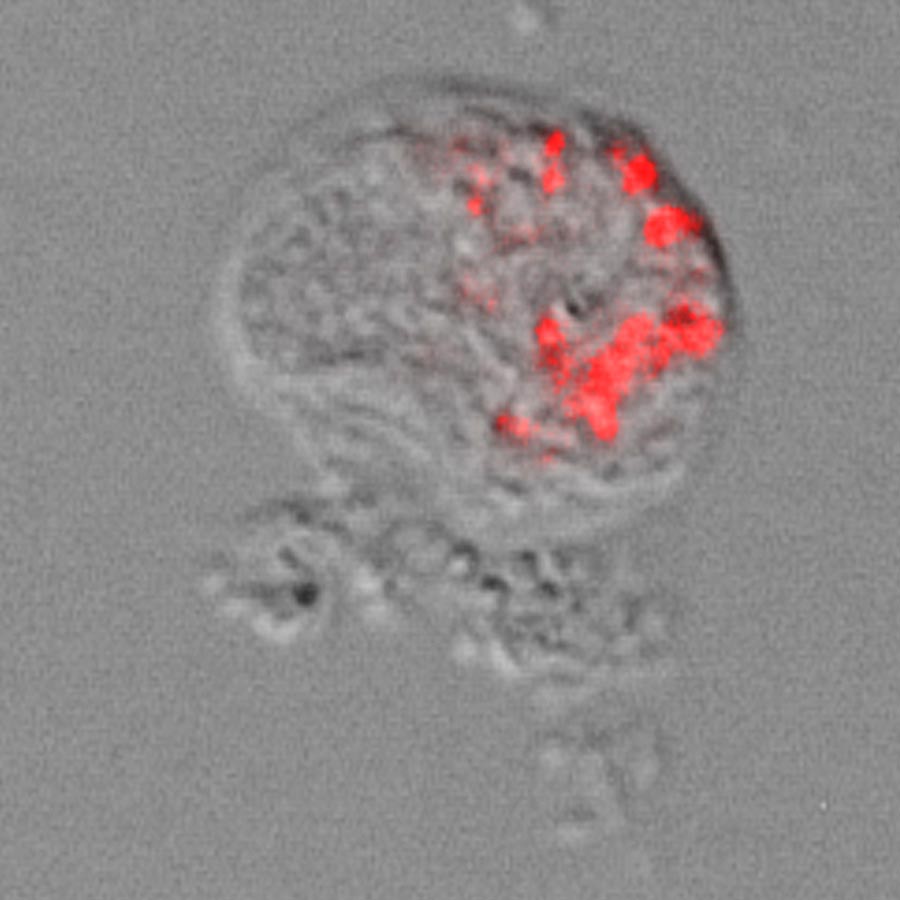
    Light microscope image of a Thecofilosea amoeba with intracellular Legionellales bacteria (‘Ca. Pokemonas kadabra’). The bacteria were stained red by so-called “fluorescence in situ hybridization.” Credit: Marcel Dominik Solbach

    New Legionella-related bacteria, including one named “Pokemonas,” have been found in spherical amoebae, possibly expanding known disease vectors.

    A research team at the University of Cologne has discovered previously undescribed bacteria in amoebae that are related to Legionella and may even cause disease. The researchers from Professor Dr. Michael Bonkowski’s working group at the Institute of Zoology have named one of the newly discovered bacteria “Pokemonas” because they live in spherical amoebae, comparable to Pokémon in the video game, which are caught in balls. The results of their research have been published in the journal Frontiers in Cellular and Infection Microbiology.

    Bacteria of the order Legionellales have long been of scientific interest because some of these bacteria are known to cause lung disease in humans and animals — such as Legionnaires’ disease, which is caused by the species Legionella pneumophila and can sometimes be fatal. Legionellales bacteria live and multiply as intracellular parasites in the cells of organisms as hosts. In particular, the hosts of Legionellales are amoebae. The term “amoeba” is used to describe a variety of microorganisms that are not closely related, but share a variable shape and crawling locomotion by means of pseudopods.

    ‘We wanted to screen amoebae for Legionellales and chose a group of amoebae for our research that had no close relationship to the hosts that were previously studied. The choice fell on the amoeba group Thecofilosea, which is often overlooked by researchers,’ explains Marcel Dominik Solbach.
    Thecofilosea Amoeba Illustration
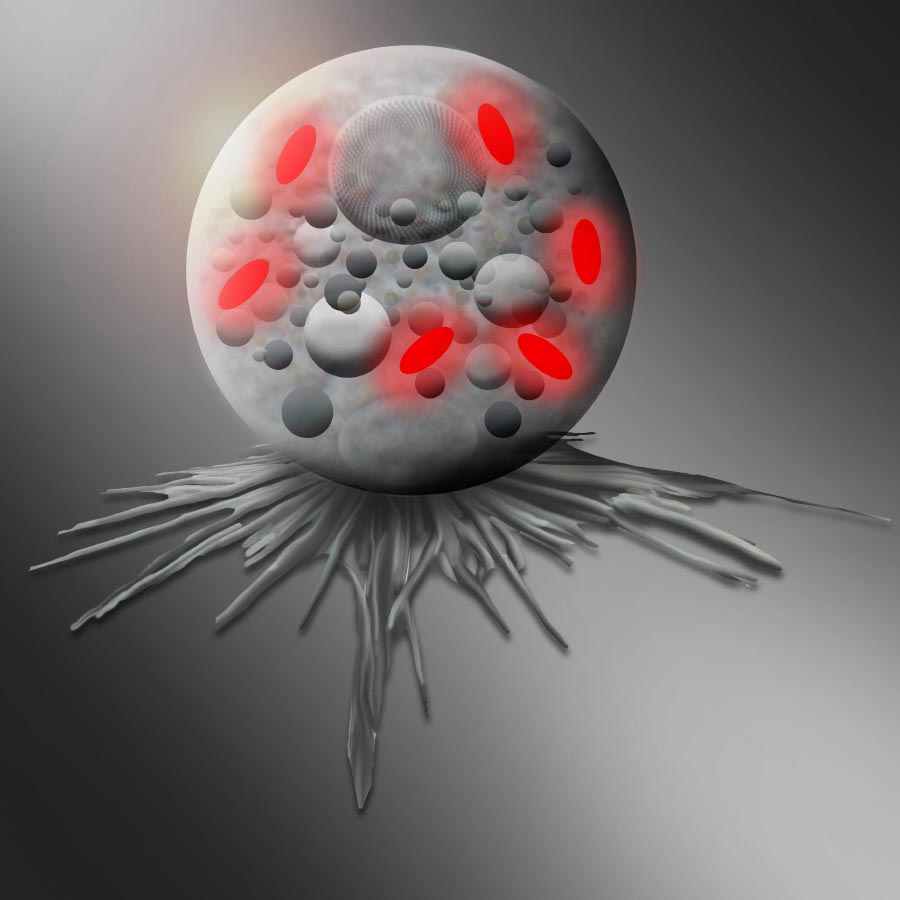
    Illustration of a Thecofilosea amoeba with intracellular Legionellales bacteria (‘Ca. Pokemonas kadabra’). Credit: Marcel Dominik Solbach

    Unexpected Hosts and Expanding Bacterial Diversity

    And indeed, the spherical Thecofilosea serve as host organisms for Legionellales. In Thecofilosea amoebae from environmental samples, the scientists were able to detect various Legionellales species, including two previously undescribed genera and one undescribed species from the genus Legionella. “The results show that the range of known host organisms of these bacteria is considerably wider than previously thought. In addition, these findings suggest that many more amoebae may serve as hosts for Legionellales — and thus potentially as vectors of disease. To investigate this further, we are now sequencing the complete genome of these bacteria,” said Dr. Kenneth Dumack, who led the project.

    In the future, these new findings should help to better understand how Legionellales bacteria are related to each other, and clarify their interactions with their hosts as well as the routes of infection in order to prevent outbreaks of the diseases in humans.

    The researchers named one of the genera of bacteria they discovered “Pokemonas.” The genus name “Pokemonas” is a play on words based on the video game franchise Pokémon, which celebrates its 25th anniversary this year and which most schoolchildren, students, and their parents should be familiar with. The name alludes to the intracellular lifestyle of the bacteria in the ball-shaped Thecofilosea amoebae, because in the Pokémon series games, little monsters are caught in balls, much like “Pokemonas” in the Thecofilosea.

    Reference: “Novel Endosymbionts in Rhizarian Amoebae Imply Universal Infection of Unrelated Free-Living Amoebae by Legionellales” by Marcel Dominik Solbach, Michael Bonkowski and Kenneth Dumack, 8 March 2021, Frontiers in Cellular and Infection Microbiology.
    DOI: 10.3389/fcimb.2021.642216

    Never miss a breakthrough: Join the SciTechDaily newsletter.
    Follow us on Google and Google News.

    Bacteria New Species University of Cologne
    Share. Facebook Twitter Pinterest LinkedIn Email Reddit

    Related Articles

    In Search for the Origins of Antibiotic Resistance – Scientists Discover 18 Never-Before-Seen Species of Gut Microbes

    Unique New Species of Marine Bacteria Discovered in Deep-Sea Cold Seep

    Genetically Modified Mosquitoes to Fight Diseases

    Antibiotic-Free Meat Might Still Be Contaminated with Drug Resistant Bacteria

    NDM-1 Super Bacteria Scares Medical Community in India

    Viruses Use Bacteria for Reproduction

    Autistic Children Have Different Gastrointestinal Bacteria

    1,000 Hidden Species Found in Australian Outback

    Two New Frog Species are World’s Smallest

    Leave A Reply Cancel Reply

    • Facebook
    • Twitter
    • Pinterest
    • YouTube

    Don't Miss a Discovery

    Subscribe for the Latest in Science & Tech!

    Trending News

    Breakthrough Bowel Cancer Trial Leaves Patients Cancer-Free for Nearly 3 Years

    Natural Compound Shows Powerful Potential Against Rheumatoid Arthritis

    100,000-Year-Old Neanderthal Fossils in Poland Reveal Unexpected Genetic Connections

    Simple “Gut Reset” May Prevent Weight Gain After Ozempic or Wegovy

    2.8 Days to Disaster: Scientists Warn Low Earth Orbit Could Suddenly Collapse

    Common Food Compound Shows Surprising Power Against Superbugs

    5 Simple Ways To Remember More and Forget Less

    The Atomic Gap That Could Cost the Semiconductor Industry Billions

    Follow SciTechDaily
    • Facebook
    • Twitter
    • YouTube
    • Pinterest
    • Newsletter
    • RSS
    SciTech News
    • Biology News
    • Chemistry News
    • Earth News
    • Health News
    • Physics News
    • Science News
    • Space News
    • Technology News
    Recent Posts
    • After 37 Years, the World’s Longest-Running Soil Warming Experiment Uncovers a Startling Climate Secret
    • NASA Satellite Captures First-Ever High-Res View of Massive Pacific Tsunami
    • ADHD Isn’t Just a Deficit: Study Reveals Powerful Hidden Strengths
    • Scientists Uncover “Astonishing” Hidden Property of Light
    • Scientists Discover Stem Cells That Could Regrow Teeth and Bone
    Copyright © 1998 - 2026 SciTechDaily. All Rights Reserved.
    • Science News
    • About
    • Contact
    • Editorial Board
    • Privacy Policy
    • Terms of Use

    Type above and press Enter to search. Press Esc to cancel.