
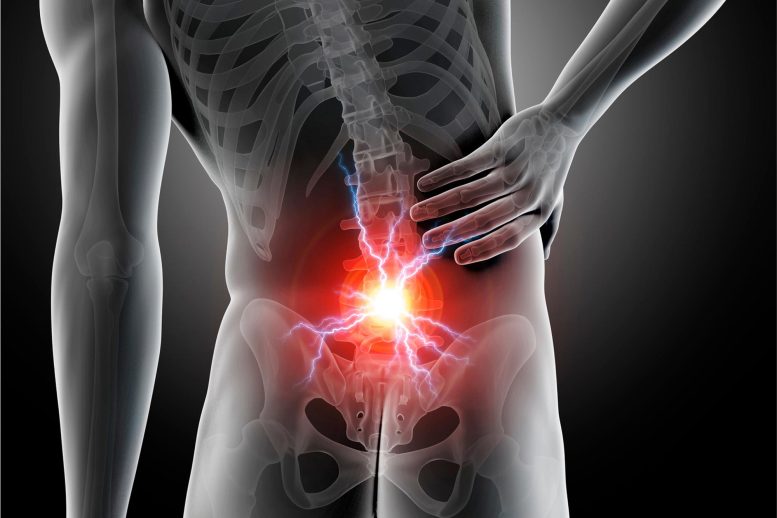
The absence of sufficient evidence raises doubts about the benefits.
According to a recently published Cochrane Review, spinal cord stimulation, a medical technology proposed as a treatment option for individuals suffering from chronic back pain, may not offer sustained relief and may even have harmful effects.
Spinal cord stimulation operates on the principle of inserting a device that emits electrical impulses to the spinal cord, thereby disrupting nerve signals before they reach the brain.
The study reviewed published clinical data on spinal cord stimulation. This included randomized controlled trials, considered to be the most robust method to measure the effectiveness of a treatment in medical research.
The researchers analyzed the results of 13 clinical trials, looking at data from 699 participants, comparing spinal cord stimulation treatment with placebo or no treatment for low back pain.
Cochrane reviews are trusted by researchers, medical professionals, and policymakers because they use robust methodologies to combine evidence from multiple sources, reducing the impact of bias and random error that can make individual studies less reliable.
The review concluded that spinal cord stimulation is no better than a placebo for treating low back pain, with probably little to no benefit for people with low back pain or improvement in their quality of life.
There was little to no clinical data regarding the long-term effectiveness of spinal cord stimulation.
The researchers also found that adverse side effects of the surgery were poorly documented overall, preventing them from concluding the level of risk involved. Harms from spinal cord stimulation could include nerve damage, infection, and the electrical leads moving, all of which may need repeated surgeries.
The review findings have been submitted to the Federal Department of Health and Aged Care prosthesis list review task force. The task force is reviewing the eligibility of current prostheses subsidized by Medicare.
In Australia, the devices’ long-term safety and performance are also being re-assessed by The Therapeutic Goods Administration (TGA), the country’s regulatory authority for therapeutic goods.
“Spinal cord stimulation is invasive and has a great financial cost to people who choose surgery as a last resort to alleviate their pain. Our review found that the long-term benefits and harms are essentially unknown,” said lead researcher Dr. Adrian Traeger from Sydney Musculoskeletal Health, an initiative of the University of Sydney, Sydney Local Health District, and Northern Sydney Local Health District.
“Our review of the clinical data suggests no sustained benefits to the surgery outweigh the costs and risks.
“Low back pain is one of the leading causes of disability worldwide. Our findings further emphasize the urgent need to review funding arrangements for chronic pain care to help patients in their search for relief. There are evidence-based physical and psychological therapies for back pain; ensuring access to these is essential.”
The review team found multiple gaps in clinical data.
There were no studies that investigated the long-term (more than 12 months) impact of spinal cord stimulation on low back pain. The longest was a single six-month trial.
The majority of clinical trials only looked at the immediate impact of the device, which is a time frame of less than a month.
The review team provided a list of recommendations, including that future spinal cord stimulation clinical trials be at least 12 months, clearly document the number of people who experience adverse events, and make comparisons with other pain treatment options.
Professor Chris Maher, Co-Director of Sydney Musculoskeletal Health, said:
“Our review found that the clinical benefit of adding spinal cord stimulation to treat low back pain remains unknown. When coupled with the reality that these devices are very expensive and often break down there is clearly a problem here that should be of concern to regulators.”
A separate Cochrane review, in which the researchers were not involved, examined the effect of spinal cord stimulation versus placebo in people with chronic pain. Similar to this review, it concluded there was a lack of evidence to suggest long-term benefits in treating chronic pain.
Reference: “Spinal cord stimulation for low back pain” by Adrian C Traeger, Stephen E Gilbert, Ian A Harris and Christopher G Maher, 7 March 2023, Cochrane Database of Systematic Reviews.
DOI: 10.1002/14651858.CD014789.pub2
Never miss a breakthrough: Join the SciTechDaily newsletter.
Follow us on Google and Google News.
2 Comments
I am very happy to see this article.
Much of my medical practice dealt with chronic pain.
Neither opioids nor spinal cord stimulation ultimately was very useful over the course of a 35 year practice.
I have had 4 back surgeries over the past 30 years and still have back pain depending on what I do in exercise. One of the pain management companies I used to use kept pushing spinal cord stimulation but I didn’t buy into it.
Periodical epidural shots currently work for me. I am also investigating VIA DISP NP, which is supposed to restore height to dried out, compressed discs, which might help to restore proper spinal alignment that should reduce pain from stenosis and compressed nerves.