
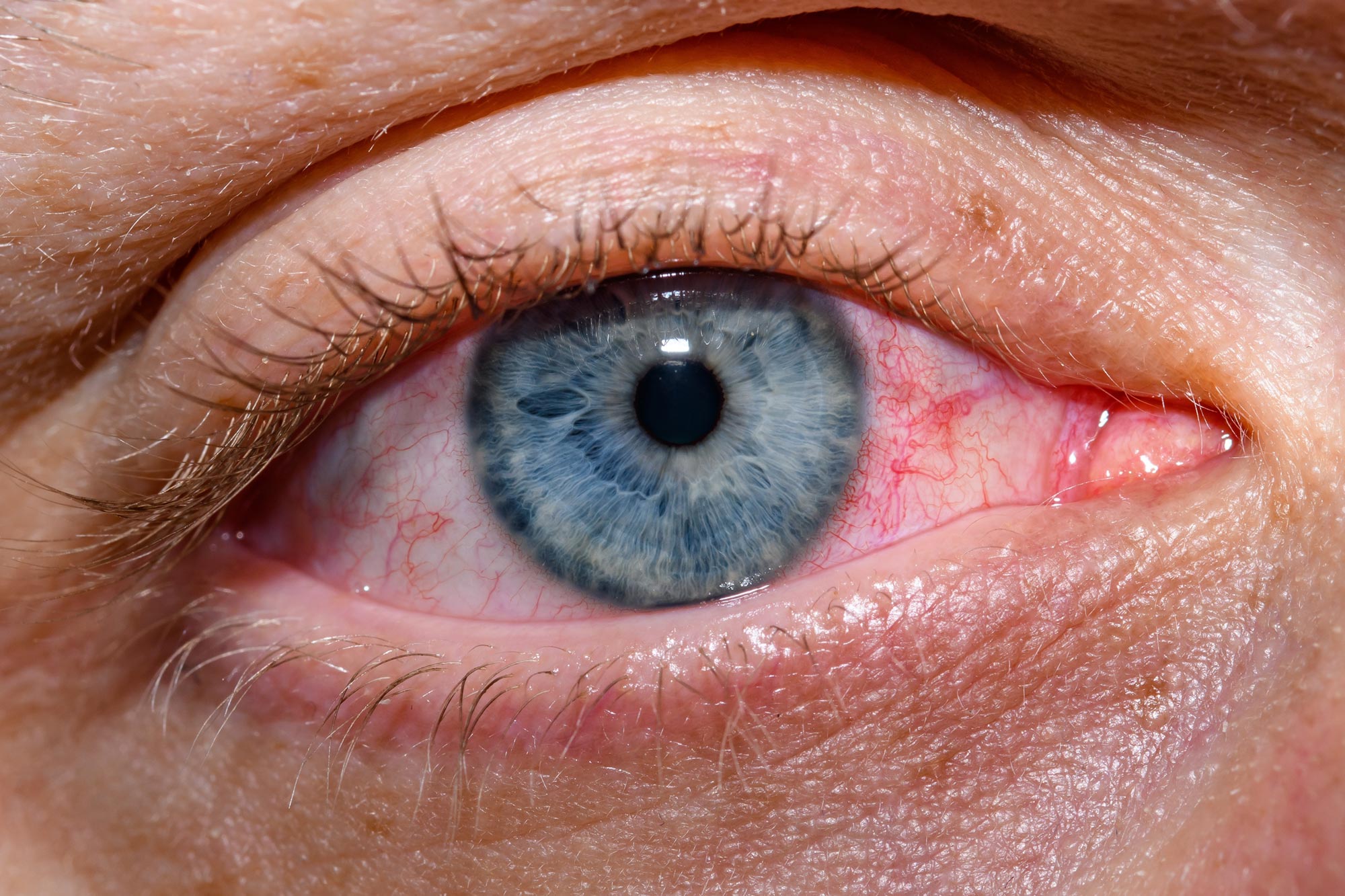
Researchers analyzing millions of safety reports identified a possible link between a popular obesity drug and an increased reporting of “eye stroke,” a condition tied to reduced blood flow to the optic nerve.
Wegovy, a widely used GLP-1 medication for weight loss, may carry a higher risk of sudden vision loss than similar drugs, according to a new analysis of safety reports published in the British Journal of Ophthalmology. The condition, often described as an “eye stroke” (ischemic optic neuropathy), can cause rapid and sometimes permanent vision loss.
Researchers found that reports of this condition were far more strongly linked to Wegovy than to other semaglutide-based treatments. The odds appeared nearly five times higher than with Ozempic, a related drug used for type 2 diabetes, and more than three times higher in men than in women.
Ischemic optic neuropathy (ION) occurs when blood flow to the optic nerve drops suddenly. Without enough oxygen, nerve tissue can be damaged, leading to blurred vision, blind spots, or complete vision loss in one or both eyes. Although rare, the condition is considered a medical emergency.
To explore whether certain medications carry higher risks, the team reviewed reports of harmful and unintended side effects submitted to the US Food and Drug Administration (FDA) Adverse Event Reporting System (FAERS) from December 2017 through December 2024.
Analysis of Adverse Event Reports
The study examined ION cases linked to specific treatments, including weekly Ozempic injections up to 2 mg for type 2 diabetes, weekly Wegovy injections up to 2.4 mg for obesity, and daily Rybelsus tablets for type 2 diabetes.
Researchers also evaluated tirzepatide, a dual GLP-1/GIP drug given as a once weekly injection, looking at it both overall and by use: Mounjaro for type 2 diabetes and Zepbound for obesity.
Out of 30,668,520 total adverse event reports, 31,774 involved semaglutide. The average patient age was 56, and 54% were women.
Among these:
- 3,070 reports were linked to Wegovy, from 6 countries across 3 continents
- 20,608 reports were linked to Ozempic, from 11 countries across 4 continents
Ozempic generated about seven times more reports than Wegovy, likely because it was approved earlier in 2017, while Wegovy entered the market in 2021.
Stronger Association Observed With Wegovy
Even with fewer total reports, Wegovy showed the strongest link to ION:
- Wegovy: 28 reports; odds nearly 75 times higher
- Ozempic: 47 reports; odds nearly 19 times higher
- Generic semaglutide: 85 reports; odds of 21
No ION cases were reported for Rybelsus, and no safety signal was detected for the comparison drugs.
When broken down by sex, the strongest signal appeared in men taking Wegovy, with 116 times higher odds. For Ozempic, the highest signal was in women, with nearly 27 times higher odds.
Overall, the analysis found that ION risk was nearly five times higher with Wegovy than with Ozempic, and more than three times higher in men than in women.
Possible Explanations for Drug Differences
Injectable drugs act faster than oral tablets, and variations in how the drugs are delivered, their dose, and how they are prescribed “may influence prescribing patterns and safety signals, with high-dose Wegovy probably driving the stronger association by predisposing to optic nerve hypoperfusion [low blood supply] through intravascular volume contraction, hypotension [low blood pressure] with nocturnal dips and autonomic instability, although no direct clinical link has been established,” the researchers explain.
“In contrast, the limited absorption and slower uptake of Rybelsus probably explain the absence of a detectable signal,” they add.
The authors also note that media coverage may have influenced reporting rates for Wegovy. The FAERS database cannot determine how often these events actually occur or whether reports increased after regulatory warnings. It also lacks details on patients’ other health conditions or disease severity.
Still, the researchers conclude: “This study provides the first evidence of a formulation-and dose-dependent ION risk, with the strongest association observed for Wegovy.” They add, “These findings highlight a potential dose-dependent safety concern that warrants urgent prospective evaluation to guide prescribing and regulatory policy.”
Broader Implications and Growing Drug Use
A related commentary supports these findings, stating: “These findings add to an emerging body of growing literature reporting ocular complications with [anti-obesity medications] which warrants further scrutiny and urgent clarification for ophthalmologists.”
Interest in GLP-1 drugs has surged in recent years, driven by their effectiveness in weight loss and metabolic health. Beyond obesity and diabetes, studies suggest these medications may reduce the risk of heart disease, stroke, and even neurodegenerative conditions.
But as their use expands, so does the need to understand less common side effects.
The authors note: “The UK has the highest level of obesity in Western Europe (29% of adults are obese, and 64% are overweight or obese).”
“At the same time, the growing use of [anti-obesity medications] in children, typically over the age of 12, has caused considerable debate, likely increasing the risks of ocular complications in later life,” the authors caution.
Recent clinical studies “seem to offer new hope for some conditions, such as age related macular degeneration and uveitis,” they note, “but with potential risks of severe, though rare, ocular complications, such as ION, for others.”
References:
“Ischemic optic neuropathy with semaglutide: global observational analysis of sex- and formulation-specific risk” by Moiz Lakhani, Abdullah Al-Ani, Marko Popovic, Étienne Bénard-Séguin and Edward Margolin, 10 March 2026, British Journal of Ophthalmology.
DOI: 10.1136/bjo-2025-328483
“Effects of anti-obesity medications in the retina: a gathering storm or sunshine ahead?” by Anna-Marie Muir, Helena Lee, Andrew J Lotery and J Arjuna Ratnayaka, 10 March 2026, British Journal of Ophthalmology.
DOI: 10.1136/bjo-2025-329298
Funding: US National Institutes of Mental Health; Swedish Research Council European Union Horizon 2020; European Research Council; NordForsk; American Foundation for Suicide Prevention;Suicide Prevention Institute at the University of North Carolina at Chapel Hill
Never miss a breakthrough: Join the SciTechDaily newsletter.
Follow us on Google and Google News.
1 Comment
Doubt they went blind from the drugs. Probably just jerking off too much.