
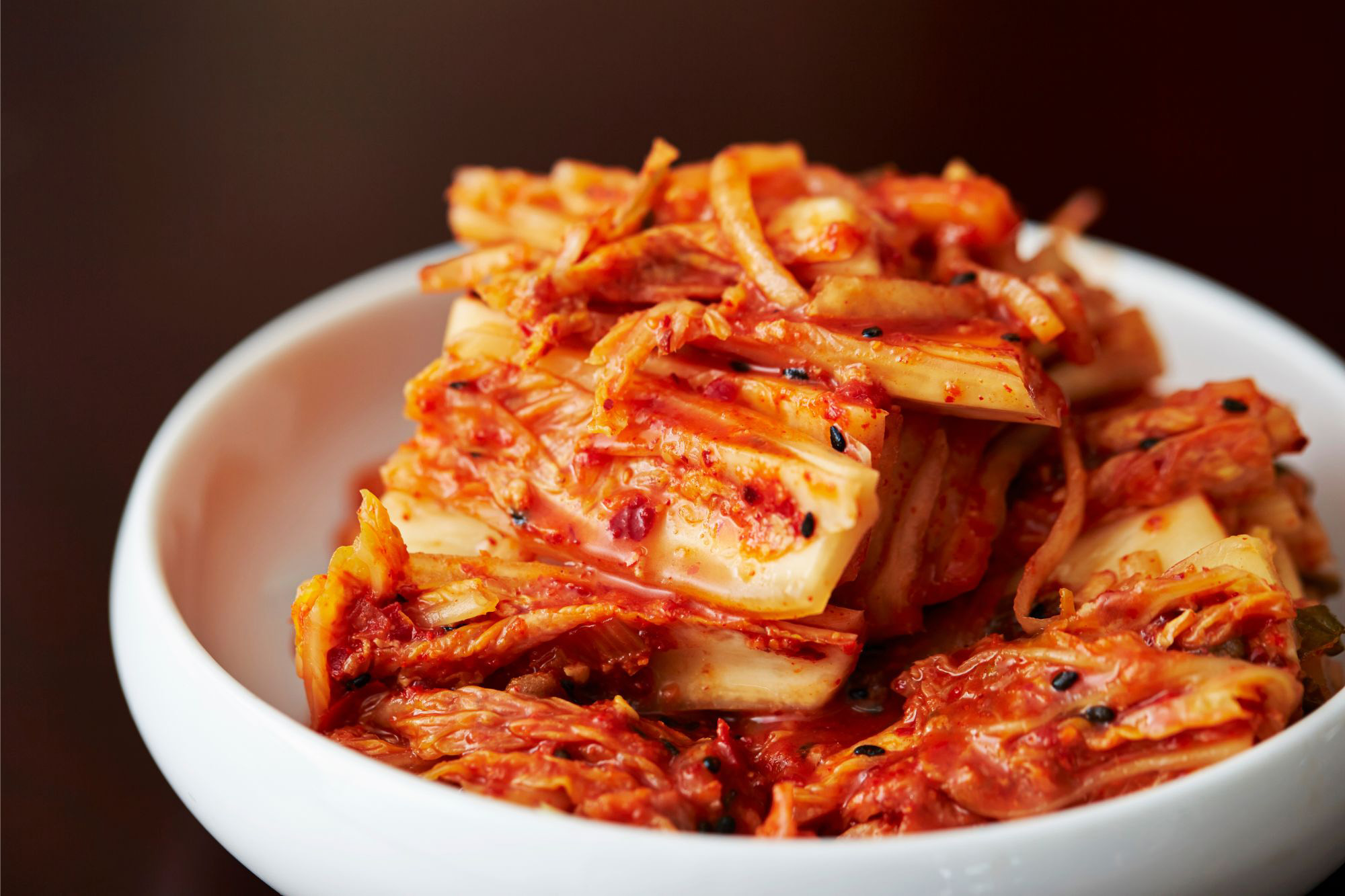
Radish kimchi is associated with a lower prevalence of abdominal fat in both men and women.
Consuming up to three servings of kimchi, a traditional Korean dish, per day could reduce the likelihood of obesity in men, according to a study published in BMJ Open. Additionally, radish kimchi has been linked with a to a lower prevalence of midriff bulge in both sexes.
Kimchi is made by salting and fermenting vegetables with various flavorings and seasonings, such as onion, garlic, and fish sauce.
Cabbage and radish are usually the main vegetables used in kimchi, which contains few calories and is rich in dietary fiber, microbiome-enhancing lactic acid bacteria, vitamins, and polyphenols.
Previously published experimental studies have shown that Lactobacillus brevis and L. plantarum isolated from kimchi had an anti-obesity effect. And the researchers wanted to know if regular consumption might be associated with a reduction in the risk of overall and/or abdominal obesity, which is considered to be particularly harmful to health.
Dietary Assessment and Obesity Measurement
They drew on data from 115,726 participants (36,756 men; 78,970 women; average age 51) taking part in the Health Examinees (HEXA) study.
HEXA is a large, community-based long-term study of the larger Korean Genome and Epidemiology Study, designed to examine environmental and genetic risk factors for common long-term conditions among Korean adults over the age of 40.
Dietary intake for the previous year was assessed using a validated 106-item food frequency questionnaire for which participants were asked to state how often they ate a serving of each foodstuff, from never or seldom, up to 3 times a day.
Total kimchi included baechu (cabbage kimchi); kkakdugi (radish kimchi); nabak and dongchimi (watery kimchi); and others, such as mustard greens kimchi. A portion of baechu or kkahdugi kimchi is 50 g, while a portion of nabak or dongchimi kimchi is 95 g.
Height and weight, for BMI, and waist circumference were measured for each participant. A BMI of 18.5 was defined as underweight; normal weight 18.5 to 25; and obesity as above 25.
Abdominal obesity was defined as a waist circumference of at least 90 cm for men and at least 85 cm for women. Some 36% of the men and 25% of the women were obese.
The results indicated a J-shaped curve, possibly because higher consumption is associated with higher intake of total energy, carbohydrates, protein, fat, sodium, and cooked rice, say the researchers.
Compared with those who ate less than 1 daily serving of total kimchi, participants who ate 5 or more servings weighed more, had a larger waist size, and were more likely to be obese. They were also more likely to not be highly educated, have a low income, and to drink alcohol.
But after accounting for potentially influential factors, eating up to 3 daily servings of total kimchi was associated with an 11% lower prevalence of obesity compared with less than 1 daily serving.
Findings on Kimchi Consumption and Obesity
In men, 3 or more daily servings of baechu kimchi were associated with a 10% lower prevalence of obesity and a 10% lower prevalence of abdominal obesity compared with less than 1 daily serving.
In women, 2-3 daily servings of this type of kimchi were associated with an 8% lower prevalence of obesity, while 1–2 servings/day were associated with a 6% lower prevalence of abdominal obesity.
And eating below-average quantities of kkakdugi kimchi was associated with around a 9% lower prevalence of obesity in both sexes. And consumption of 25 g/day for men and 11 g/day for women was associated with an 8% (men) to 11% (women) lower risk of abdominal obesity compared with no consumption.
This is an observational study, and as such, can’t establish cause. And the researchers acknowledge that food frequency questionnaires can’t always accurately identify quantities, added to which the findings may not be generalizable to populations elsewhere in the world.
They also note concerns that kimchi contains salt, high quantities of which aren’t good for overall health, although the potassium found in the fermented vegetables may help to counteract this, they suggest.
They caution: “Since all results observed a ‘J-shaped’ association, excessive consumption suggests the potential for an increase in obesity prevalence. And as kimchi is one of the major sources of sodium intake, a moderate amount should be recommended for the health benefits of its other components.”
Reference: “Association between kimchi consumption and obesity based on BMI and abdominal obesity in Korean adults: a cross-sectional analysis of the Health Examinees study” by Hyein Jung, Ye-Rang Yun, Sung Wook Hong and Sangah Shin, 1 February 2024, BMJ Open.
DOI: 10.1136/bmjopen-2023-076650
The study was funded by the Ministry of Science and ICT and the Republic of Korea.
Never miss a breakthrough: Join the SciTechDaily newsletter.
Follow us on Google and Google News.