
Close Menu
    Facebook X (Twitter) Instagram
    SciTechDaily
    • Biology
    • Chemistry
    • Earth
    • Health
    • Physics
    • Science
    • Space
    • Technology
    Facebook X (Twitter) Pinterest YouTube RSS
    SciTechDaily
    Home»Science»Prehistoric Cave Art: Neanderthals Indeed Painted Andalusia’s Cueva De Ardales
    Science

    Prehistoric Cave Art: Neanderthals Indeed Painted Andalusia’s Cueva De Ardales

    By CNRSAugust 2, 2021No Comments2 Mins Read
    Facebook Twitter Pinterest Telegram LinkedIn WhatsApp Email Reddit
    Share
    Facebook Twitter LinkedIn Pinterest Telegram Email Reddit
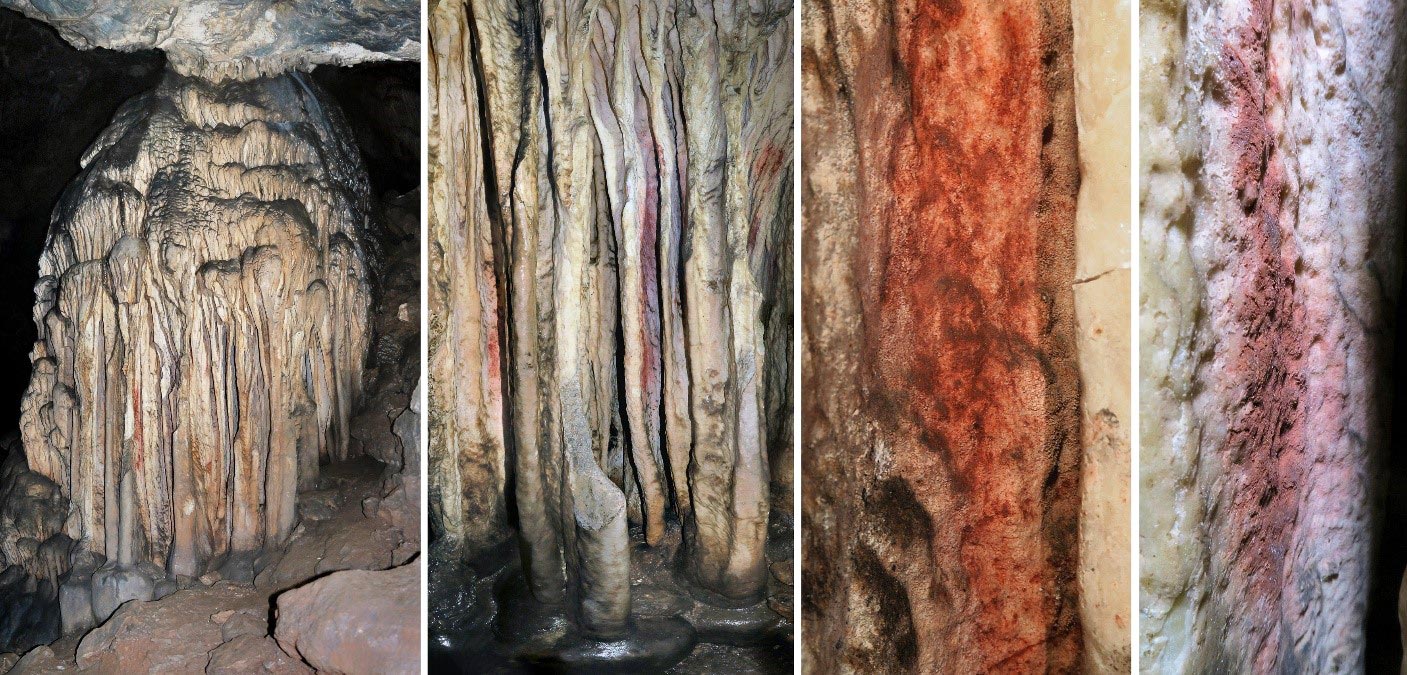
    Flowstone Formation in Sala De Las Estrellas at Cueva De Ardales
    Flowstone formation in the Sala de las Estrellas at Cueva de Ardales (Malaga, Andalusia), with the traces of red pigment analyzed and discussed in the article. Credit: © João Zilhão, ICREA

    Analysis of red pigments in Cueva de Ardales reveals Neanderthals intentionally painted the cave using ochre, marking the site over thousands of years and passing down the practice.

    The origin and date of appearance of prehistoric cave art are the subjects of ongoing debate. Spain’s Cueva de Ardales is one point of discussion.

    There a flowstone formation is stained red in places. This coloring is apparently almost 65,000 years old but until now, a part of the scientific community attributed it to a natural coating of iron oxide deposited by flowing water. However, that hypothesis has just been rejected by the findings of an international team of scientists including a CNRS researcher.

    The team members analyzed samples of red residues collected from the flowstone surface and compared them with iron oxide–rich deposits in the cave. They concluded that the ochre-based pigment was intentionally applied, i.e. painted—by Neanderthals, as modern humans had yet to make their appearance on the European continent—and that, importantly, it had probably been brought to the cave from an external source. 

    Furthermore, variations in pigment composition between samples were detected, corresponding to different dates of application, sometimes many thousands of years apart. Thus, it seems that many generations of Neanderthals visited this cave and colored the draperies of the great flowstone formation with red ochre. This behavior indicates a motivation to return to the cave and symbolically mark the site, and it bears witness to the transmission of a tradition down through the generations. The scientists’ findings have been published in PNAS today (August 2, 2021).

    Reference: “The symbolic role of the underground world among Middle Palaeolithic Neanderthals” by Africa Pitarch Martí, João Zilhão, Francesco d’Errico, Pedro Cantalejo-Duarte, Salvador Domínguez-Bella, Josep M. Fullola, Gerd C. Weniger and José Ramos-Muñoz, 2 August 2021, Proceedings of the National Academy of Sciences.
    DOI: 10.1073/pnas.2021495118

    Never miss a breakthrough: Join the SciTechDaily newsletter.
    Follow us on Google and Google News.

    Anthropology CNRS Neanderthals Popular
    Share. Facebook Twitter Pinterest LinkedIn Email Reddit

    Related Articles

    Ancient Human Discovery: New Fossils Reveal a Mysterious Hominin Lineage From the Levant

    First Neanderthal Family Revealed by DNA From Remote Siberian Cave

    Neanderthal and Early Modern Human Culture Co-existed Alongside Older Traditions for Over 100,000 Years

    Nuclear DNA From Cave Sediments Helps Unlock Ancient Human History

    Oldest Modern Human Genome Reconstructed Using DNA From 45,000-Year-Old Skull

    Archaeologists Discover Neanderthals and Homo sapiens Used Identical Nubian Technology

    Earliest Interbreeding Between Ancient Human Populations Discovered – Evolutionary Puzzle Solved

    What Caused Neanderthal Extinction and Were Our Human Ancestors to Blame?

    New Evidence Shows Humans Mastered Fire Earlier Than Thought

    Leave A Reply Cancel Reply

    • Facebook
    • Twitter
    • Pinterest
    • YouTube

    Don't Miss a Discovery

    Subscribe for the Latest in Science & Tech!

    Trending News

    A Star Near the Milky Way’s Black Hole Is Losing Mass at an Astonishing Rate

    Scientists Solve a Vitamin B12 Mystery With an Unexpected Culprit

    Has the Autism Spectrum Become Too Broad? Leading Scientist Warns of Hidden Consequences

    Rewriting History: Researchers Uncover a Forgotten Amazon Civilization That May Have Housed 3 Million People

    New Research May Change How We Think About Weight Loss Drugs Like Ozempic

    Coffee Drinkers Show Surprising Differences in Fat, Muscle, and Hormones

    New Treatment Targets Gum Disease Without Killing Good Bacteria

    Scientists Discover a 245-Million-Year-Old Reptile With Its Organs Still Preserved

    Follow SciTechDaily
    • Facebook
    • Twitter
    • YouTube
    • Pinterest
    • Newsletter
    • RSS
    SciTech News
    • Biology News
    • Chemistry News
    • Earth News
    • Health News
    • Physics News
    • Science News
    • Space News
    • Technology News
    Recent Posts
    • Why Does an Irregular Heartbeat Strike 40 Years Early in Some People?
    • Scientists Reveal How ADHD Could Fuel Creative Thinking
    • Scientists Find a Surprising Diabetes-Fighting Compound in Turmeric
    • Archaeologists Discover a 10,000-Year Human History Hidden in the Pyrenees
    • Scientists Discover a Surprising Link Between Human Genes and Language
    Copyright © 1998 - 2026 SciTechDaily. All Rights Reserved.
    • Science News
    • About
    • Contact
    • Editorial Board
    • Privacy Policy
    • Terms of Use

    Type above and press Enter to search. Press Esc to cancel.