
Close Menu
    Facebook X (Twitter) Instagram
    SciTechDaily
    • Biology
    • Chemistry
    • Earth
    • Health
    • Physics
    • Science
    • Space
    • Technology
    Facebook X (Twitter) Pinterest YouTube RSS
    SciTechDaily
    Home»Space»Progress 91 Spacecraft Just Delivered Three Tons of Supplies to the ISS
    Space

    Progress 91 Spacecraft Just Delivered Three Tons of Supplies to the ISS

    By NASAMarch 2, 20251 Comment3 Mins Read
    Facebook Twitter Pinterest Telegram LinkedIn WhatsApp Email Reddit
    Share
    Facebook Twitter LinkedIn Pinterest Telegram Email Reddit
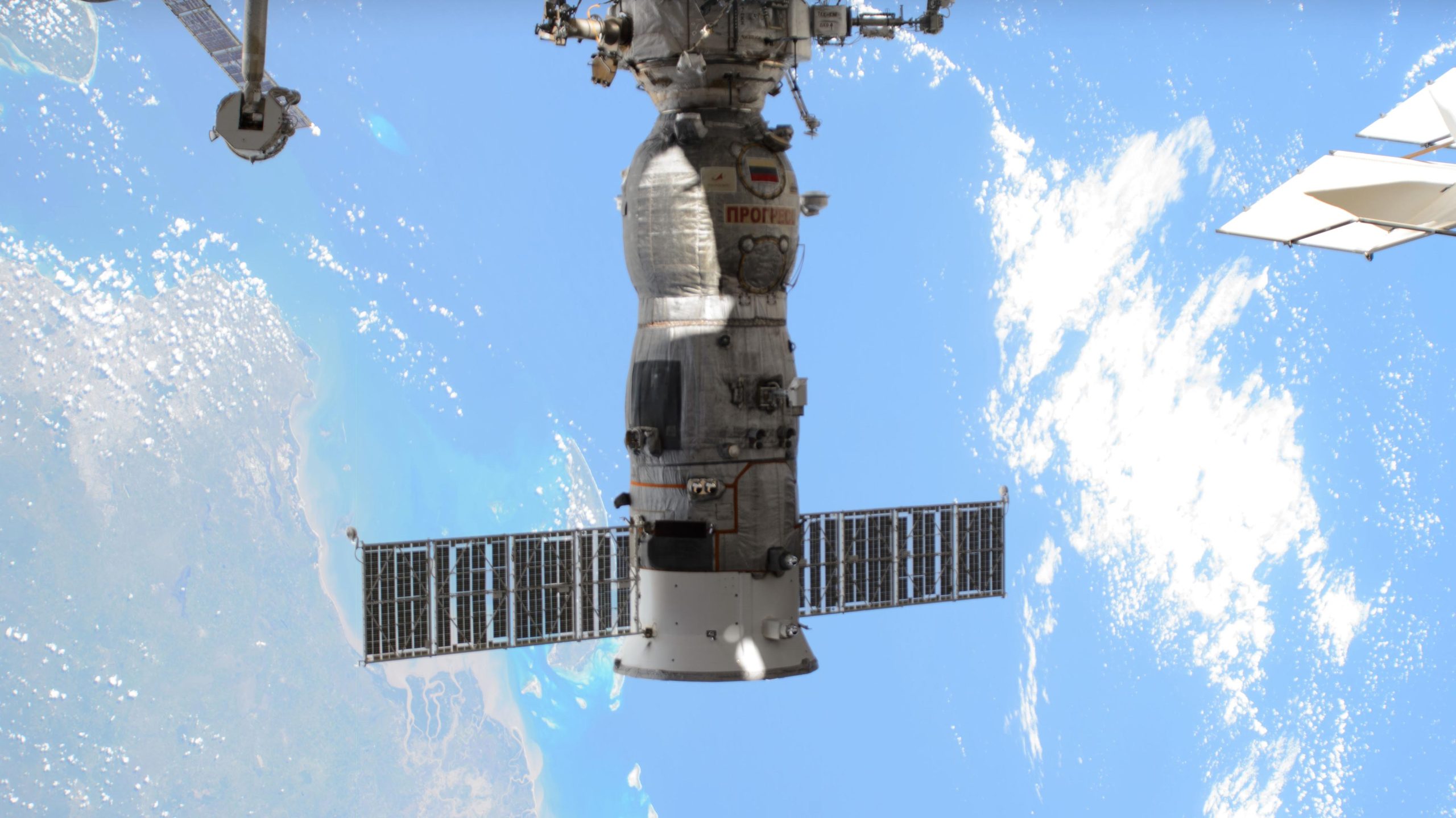
    Progress 86 Cargo Craft Poised to Undock From International Space Station
    The uncrewed Roscosmos Progress 86 cargo craft, packed with trash and obsolete gear, is poised to undock from the International Space Station’s Poisk module, ending a six-month cargo mission in 2024. Credit: NASA

    A crucial cargo mission has successfully reached the International Space Station!

    The uncrewed Progress 91 spacecraft successfully docked with the Zvezda Service Module at the rear of the International Space Station (ISS) on March 1 at 6:02 p.m. EST. It launched on February 27 at 4:24 p.m. EST (2:24 a.m. Baikonur time) aboard a Soyuz rocket from the Baikonur Cosmodrome in Kazakhstan.

    Operated by Roscosmos, Progress 91 delivered about three tons of food, fuel, and supplies to support the Expedition 72 crew. The spacecraft will remain docked for approximately six months before re-entering Earth’s atmosphere, where it will burn up along with trash loaded by the crew.

    ISS Configuration March 1, 2025
    March 1, 2025: International Space Station Configuration. Five spaceships are parked at the space station including the SpaceX Dragon crew spacecraft, the Northrop Grumman Cygnus resupply ship, the Soyuz MS-26 crew ship, and the Progress 90 and 91 resupply ships. Credit: NASA

    Overview of the Progress Spacecraft

    The Progress spacecraft is an uncrewed cargo vehicle developed and operated by Roscosmos, the Russian space agency. Designed to resupply the International Space Station (ISS) and other Soviet/Russian space stations before it, Progress has been a crucial part of space logistics since its first launch in 1978.
    Design and Function

    Progress is based on the crewed Soyuz spacecraft but is modified for cargo transport. Unlike Soyuz, it lacks a heat shield since it is not designed for re-entry with cargo or crew. Instead, it is meant to burn up in Earth’s atmosphere after completing its mission.

    Each Progress spacecraft consists of:

    • Cargo Module – Carries food, fuel, equipment, and other supplies.
    • Refueling Module – Transfers fuel to the ISS or previous Russian space stations.
    • Propulsion Section – Houses thrusters for docking and orbital adjustments.

    Mission Role

    Progress plays a key role in sustaining the ISS crew by delivering food, fuel, and scientific equipment. It also helps adjust the station’s orbit when needed and serves as a waste disposal vehicle, as it is loaded with trash before being deorbited and destroyed upon re-entry.

    Launch and Docking

    Progress launches aboard a Soyuz rocket from Baikonur Cosmodrome in Kazakhstan. It docks autonomously using the Kurs automated docking system, though cosmonauts can manually control it if necessary. Missions typically last several months, with Progress remaining docked to the ISS until it is filled with waste and safely deorbited.

    Never miss a breakthrough: Join the SciTechDaily newsletter.
    Follow us on Google and Google News.

    International Space Station NASA Roscosmos
    Share. Facebook Twitter Pinterest LinkedIn Email Reddit

    Related Articles

    93 Million Miles, 3,520 Orbits, and a 70th Birthday: NASA’s Don Pettit Returns to Earth

    Orbited Earth 3,520 Times – And Home for Cake: NASA Astronaut’s Epic Return

    Russian Spacewalk Ends Early After Battery Power Issue on Spacesuit

    International Space Station Crew Changes Command to Russian Cosmonaut

    Cosmonauts Set Up Robotic Arm’s First Motion During Spacewalk Outside ISS

    Russian Cosmonauts Exit International Space Station To Activate New Robotic Arm

    Russian Cosmonauts Complete Spacewalk To Set Up 37-Foot-Long Robotic Arm

    Russian Soyuz Space Station Crew Launch Set for Friday Following Tuesday’s Successful Spacewalk

    Cosmonauts Complete Spacewalk To Integrate Russian Prichal Module With Space Station

    1 Comment

    1. Jojo on March 2, 2025 2:15 am

      But they don’t weigh 3 tons up there!

      Reply
    Leave A Reply Cancel Reply

    • Facebook
    • Twitter
    • Pinterest
    • YouTube

    Don't Miss a Discovery

    Subscribe for the Latest in Science & Tech!

    Trending News

    Bone-Strengthening Discovery Could Reverse Osteoporosis

    Scientists Uncover Hidden Trigger Behind Stem Cell Aging

    Scientists Find Way to Reverse Fatty Liver Disease Without Changing Diet

    Could Humans Regrow Limbs? New Study Reveals Promising Genetic Pathway

    Scientists Reveal Eating Fruits and Vegetables May Increase Your Risk of Lung Cancer

    Scientists Reverse Brain Aging With Simple Nasal Spray

    Scientists Uncover Potential Brain Risks of Popular Fish Oil Supplements

    Scientists Discover a Surprising Way To Make Bread Healthier and More Nutritious

    Follow SciTechDaily
    • Facebook
    • Twitter
    • YouTube
    • Pinterest
    • Newsletter
    • RSS
    SciTech News
    • Biology News
    • Chemistry News
    • Earth News
    • Health News
    • Physics News
    • Science News
    • Space News
    • Technology News
    Recent Posts
    • Why Are Giant Ants Letting Tiny Ants Crawl All Over Them?
    • Revolutionary Technique Sends Healthy Mitochondria Exactly Where They’re Needed
    • This Student Recreated the Universe in a Bottle. What She Discovered Could Help Reveal How Life Started on Earth
    • Alzheimer’s Symptoms May Start Outside the Brain, Study Finds
    • Cancer’s Secret Weapon? Scientists Reveal How Tumors “Learn” To Survive Treatment
    Copyright © 1998 - 2026 SciTechDaily. All Rights Reserved.
    • Science News
    • About
    • Contact
    • Editorial Board
    • Privacy Policy
    • Terms of Use

    Type above and press Enter to search. Press Esc to cancel.