

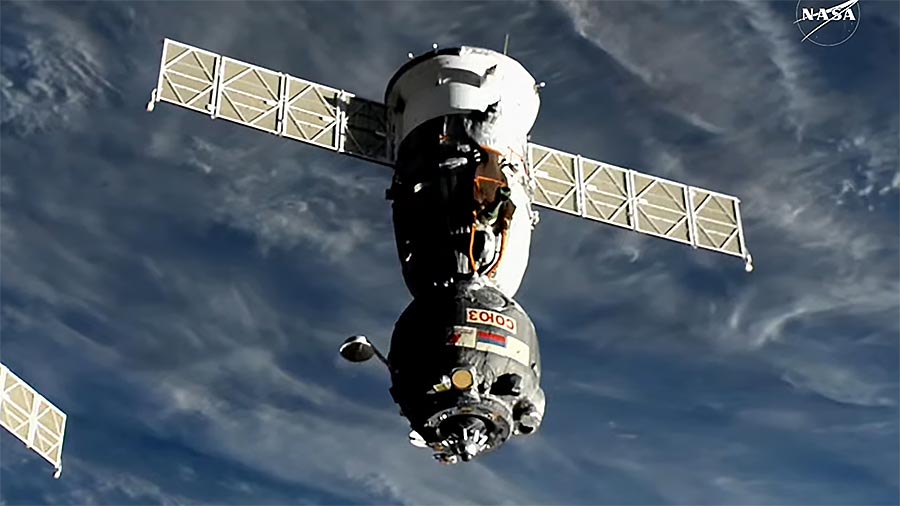
After over seven months in orbit, astronauts Don Pettit, Alexey Ovchinin, and Ivan Vagner have returned to Earth aboard the Soyuz MS-26.
They wrapped up a 220-day mission spanning 93 million miles and over 3,500 Earth orbits. Their dramatic landing on the Kazakhstan steppe marked the end of another milestone in long-duration spaceflight, showcasing incredible endurance and teamwork.
Touchdown in Kazakhstan
At 9:20 p.m. EDT on Saturday, April 19 (6:20 a.m. local time on Sunday, April 20), the Soyuz MS-26 spacecraft safely landed with the help of parachutes on the steppe of Kazakhstan, southeast of the town of Dzhezkazgan. The landing marked a special milestone for NASA astronaut Don Pettit: it took place on his 70th birthday.
NASA astronaut Don Pettit, along with Roscosmos cosmonauts Alexey Ovchinin and Ivan Vagner, spent 220 days in space. During their mission, they orbited Earth 3,520 times and traveled approximately 93.3 million miles. The Soyuz MS-26 launched and docked with the International Space Station (ISS) on September 11, 2024.
Veteran Spacefarers Return
This was Pettit’s fourth spaceflight, serving as a flight engineer for Expeditions 71 and 72. He now has a total of 590 days in space. Ovchinin, also on his fourth mission, has accumulated 595 days in orbit. Vagner, completing his second mission, brings his total to 416 days aboard the station.
The three crew members will fly on a helicopter from the landing site to the recovery staging city of Karaganda, Kazakhstan. Pettit will board a NASA plane and return to Houston, while Ovchinin and Vagner will depart for a training base in Star City, Russia.
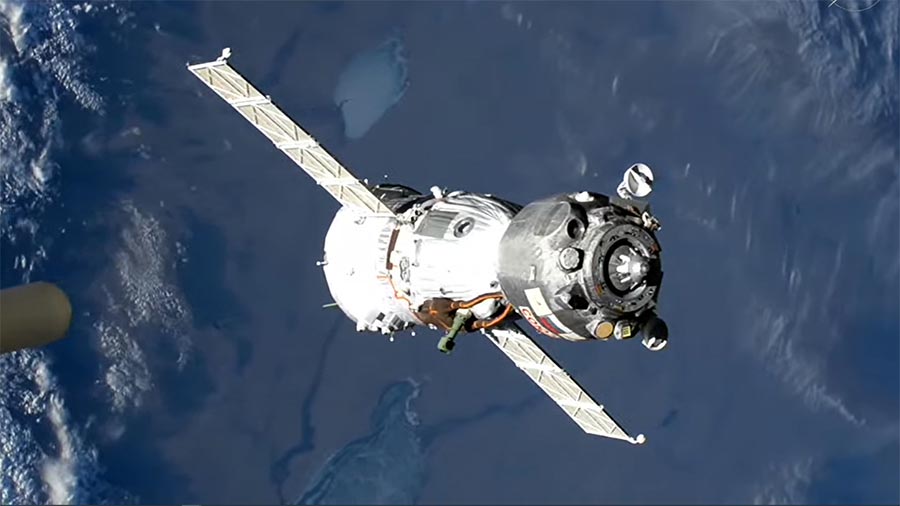
Don Pettit is a veteran NASA astronaut and chemical engineer known for his extensive time aboard the International Space Station and his inventive approach to life in microgravity. Selected by NASA in 1996, Pettit became widely respected for his ability to creatively solve technical problems and for sharing the experience of spaceflight through experiments and photography. His work has left a lasting impact on how astronauts live and work in orbit.
Never miss a breakthrough: Join the SciTechDaily newsletter.
Follow us on Google and Google News.