

Studies on rats provide insight into how microdosing of psychedelic mushrooms may be used for therapeutic treatment in humans.
A new research result from the University of Southern Denmark opens the door to the possibility of using psilocybin, the active compound in mushrooms with psychedelic properties, as a therapeutic tool through microdosing.
Psilocybin has long been recognized as a classic psychedelic substance and has recently been investigated for its potential to assist in the treatment of various psychiatric disorders, primarily depression and addiction, through therapy supplemented with a high dose of psilocybin.
In such therapeutic treatment, the patient takes psilocybin after thorough therapeutic preparation and undergoes a psychedelic experience in a supportive environment with a trained therapist. Subsequently, the experience is integrated over several therapy sessions.
Experiments are being conducted with patients at hospitals, including Bispebjerg Hospital and Rigshospitalet.
About Psilocybin:
Chemical Name: 4-phosphoryloxy-N,N-dimethyltryptamine
Psilocybin is a naturally occurring psychoactive compound found in over 200 different species of mushrooms. In Danish nature, the liberty cap mushroom is the only one containing psilocybin.
Psilocybin has been used in religious and ceremonial contexts by various cultures for centuries, particularly among Native American tribes.
In the body, psilocybin is converted into psilocin, which is responsible for its psychoactive effects.
Psilocybin affects serotonin receptors in the brain, particularly the 5-HT2A receptors, and can thus alter mood, perception, and cognition.
Microdosing in Rats
In the recent study published on October 2 in Nature, Associate Professor of Molecular Psychiatry Mikael Palner and PhD student Kat Kiilerich from the Research Unit for Clinical Physiology and Nuclear Medicine at the University of Southern Denmark examined the effects of small doses of psilocybin on rats.
Their focus was on repeated low doses of psilocybin, which are significantly lower than the doses typically used in therapeutic settings and are commonly referred to as ‘microdosing.’
“Microdosing is a phenomenon popularized within performance culture, notably in areas like Silicon Valley, California, and has subsequently spread through stories and anecdotes on the internet as a form of self-medication for various challenges,” explains Mikael Palner, the last author of the study.
Effective for Stress and Compulsive Behaviors
The study conducted on rats showed that animals tolerated the repeated low doses of psilocybin well and did not exhibit signs of reduced pleasure (anhedonia), anxiety, or altered locomotor activity.
Most notably, repeated low doses of psilocybin increased the rats’ resilience to stress, and they displayed fewer compulsive behaviors.
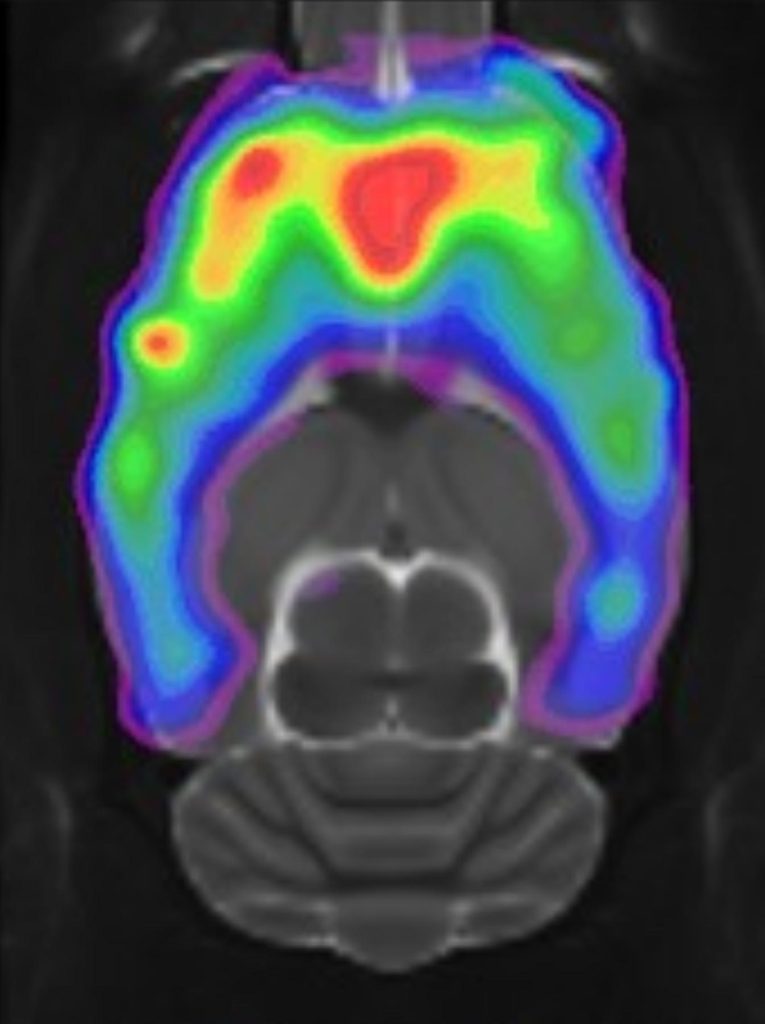
Additionally, an increase in the number of connections to the thalamus region of the brain, which serves as a kind of filter for our decisions and concerns, was observed.
“The change in connectivity to the thalamus may contribute to our enhanced resilience to stress factors and could explain why so many people report positive effects on their well-being from small doses of psychedelic mushrooms.”
A Promising New Approach
Through the new study, the researchers have established a valid method that can be utilized for further research into the effects of repeated low doses of psilocybin. The study also lends support to the numerous anecdotal reports of the benefits of microdosing as a therapeutic intervention.
This paves the way for additional research and potentially entirely new approaches to treating various mental disorders.
“The increased anxiety and stress in society currently have placed a strong focus on microdosing, leading to a surge in the trade of mushrooms. Countries such as the Netherlands, Australia, the USA, and Canada have either legalized or are in the process of legalizing psilocybin for therapeutic treatment,” says Mikael Palner.
“It is, therefore, crucial that we understand the effects and side effects of these substances, which are already widely used by people around the world.”
Enhanced Understanding With Potential
Mikael Palner developed an interest in researching psychedelic substances and psilocybin when he lived in Silicon Valley, California, eleven years ago and witnessed the surge of self-improvement practices that garnered significant media attention and prompted more people to experiment with microdosing.
“Some books were published that popularized the concept of using small doses of psychedelics to address both mental issues and enhance performance. This motivated me to launch the project I’ve been devoted to for the past six years,” says Mikael Palner.
“Now, we can determine the appropriate dosage in rats, enabling us to investigate the effects of microdosing, which could significantly advance our understanding of the brain and mental challenges. This benefits both the field of science and society at large.”
Reference: “Repeated low doses of psilocybin increase resilience to stress, lower compulsive actions, and strengthen cortical connections to the paraventricular thalamic nucleus in rats” by Kat F. Kiilerich, Joe Lorenz, Malthe B. Scharff, Nikolaj Speth, Tobias G. Brandt, Julia Czurylo, Mengfei Xiong, Naja S. Jessen, Agata Casado-Sainz, Vladimir Shalgunov, Celia Kjaerby, Grzegorz Satała, Andrzej J. Bojarski, Anders A. Jensen, Matthias M. Herth, Paul Cumming, Agnete Overgaard and Mikael Palner, 2 October 2023, Molecular Psychiatry.
DOI: 10.1038/s41380-023-02280-z
Mikael Palner is an associate professor affiliated with the Research Unit for Clinical Physiology and Nuclear Medicine at SDU and OUH. He conducts research on the biological understanding of mental illness and treatment with psychedelic substances.
Never miss a breakthrough: Join the SciTechDaily newsletter.
Follow us on Google and Google News.