
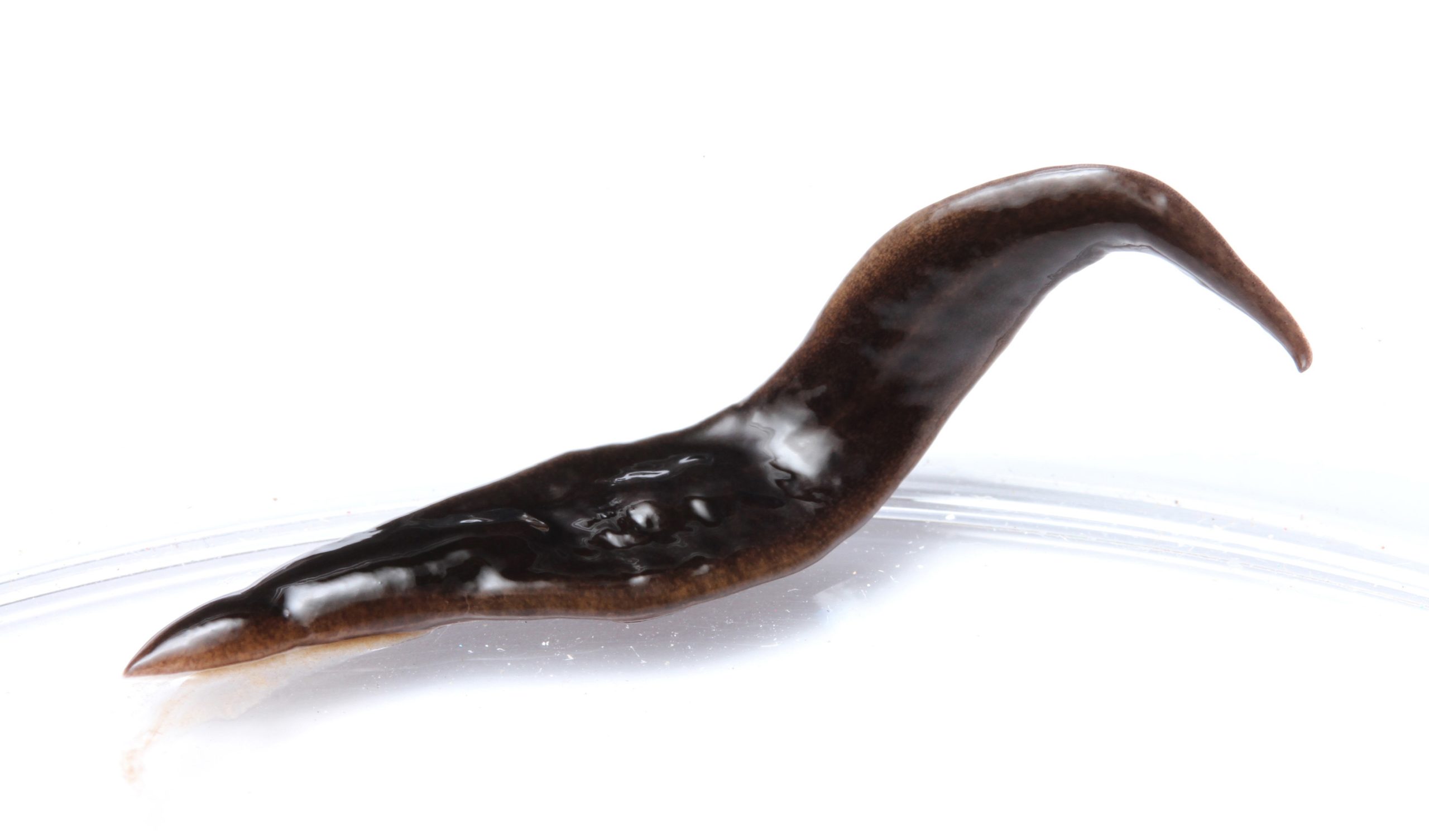
A new species of flatworm, Amaga pseudobama, has been discovered in the southern United States.
A newly discovered species of flatworm has already spread across several southern U.S. states. Notably, this species bears a strong resemblance to Obama nungara, a flatworm that has invaded much of Europe. Due to this similarity, the new species has been named Amaga pseudobama.
An international team reports the discovery of a new species of flatworm. The team includes researchers from National Museum of Natural History in Paris, France, Drexel University and North Carolina State University in the United States, James Cook University in Australia and University of Szczecin in Poland. The new species, first spotted in North Carolina in 2020, is a flatworm, brown in color, a few centimeters in length.
Initial Misidentification and Further Study
The first information received about this species was photos, and the researchers then believed that the specimens belonged to the species Obama nungara, an invasive species native to Brazil and Argentina that has invaded much of Europe. After a molecular study, delayed by the lockdowns of 2020, it became clear that the species was very different from Obama nungara.
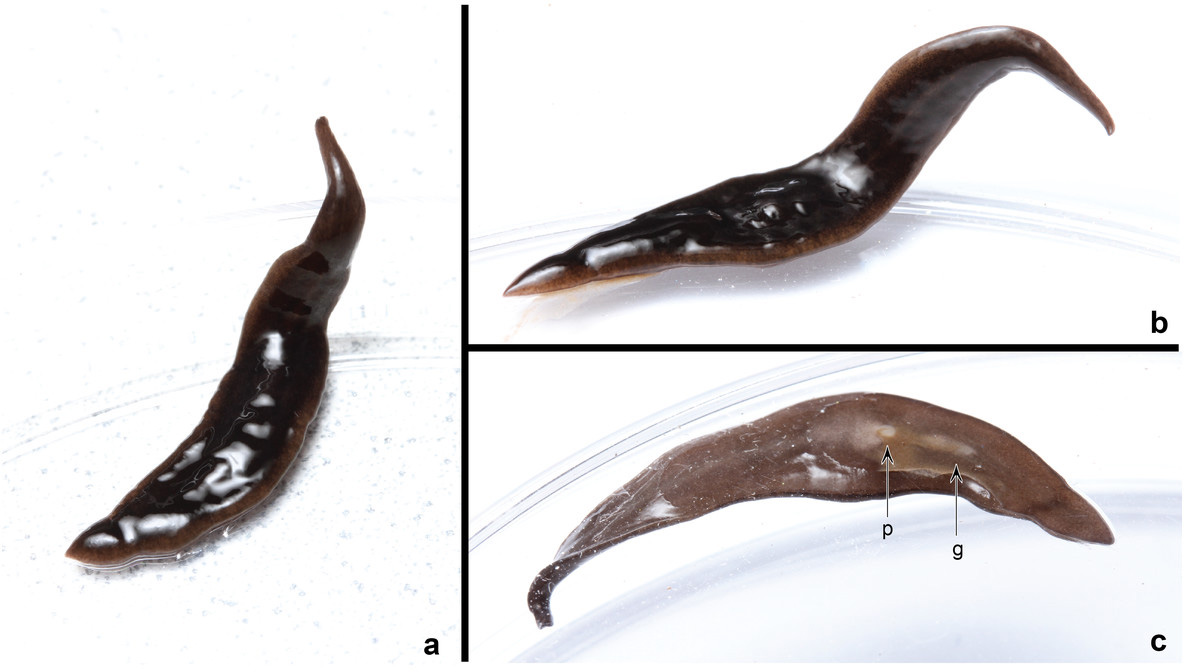
The researchers then carried out a detailed morphological analysis and a molecular study, including the description of the complete mitogenome, and have now described the species found in the United States under the name Amaga pseudobama, to mark its resemblance to Obama nungara. Like Obama nungara, the new species Amaga pseudobama comes from South America; however, it has never been seen or analyzed in South America.
Apart from North Carolina, the species is also present in Florida, Georgia, and may have already invaded other states. This new species joins other invasive flatworm species discovered in the Southern United States, including Platydemus manokwari.
The resemblance of Amaga pseudobama to Obama nungara will be an obstacle to understanding the distribution of the species from citizen science data, which is usually based on photos taken by members of the public, since it will be impossible to distinguish the two species.
Reference: “A new species of alien land flatworm in the Southern United States” by Jean-Lou Justine, Romain Gastineau, Delphine Gey, David G. Robinson, Matthew A. Bertone and Leigh Winsor, 24 September 2024, PeerJ.
DOI: 10.7717/peerj.17904
Never miss a breakthrough: Join the SciTechDaily newsletter.
Follow us on Google and Google News.
7 Comments
So? What are the implications? Why should anyone care? *yawn*
Just wait until it invades the soft tissue parts of your brain…
I don’t understant how this article passed by an editor and was quified published. It is the same 3 bits of info configured into different sentences. It’s giving “highschooler teying to reach minimum word count”. Or AI. Thankfully the link to the paper is shared at the end. Read the abstract yourself to get all the accurate details this article is lacking: Where A. pseudobama was found (infested plant nurseries across SE USA), discovery of misidentification by molecular analysis (which revealed this is a new genus entirely), and acknowledgement that citizen science is is a fallible method that will complicate future identification as this invasion likely began 10 years ago.
Hmm .. we all need to care what’s going in our planet invasive or non invasive..Just my belief .,
Another one of “Gates” genetically altered parasites secretly released to curb population growth/ eliminate entire species (human) so the he & the other so call elites can have it all the themselves?🤔
Just wondering,
Or one of the many new parasitic invaders brought to the U.S by the hoard of illegal parasitic invaders?
Wow!
Nah! I’m betting it fell from the sky
What does the quoted sentence mean? Is there a way to know if anything originated in South America without it ever being seen there? Was one of those tiny “Made in Peru” stickers found attached to the flatworm’s backside?
“Like Obama nungara, the new species Amaga pseudobama comes from South America; however, it has never been seen or analyzed in South America.”
I don’t understant how this article passed by an editor’s desk and was approved to be published. It is the same 3 bits of info configured into different sentences. It’s giving “highschooler trying to reach minimum word count”. Or AI.
Thankfully the link to the paper is shared at the end. Read the abstract yourself to get all the accurate details this article is lacking, such as: Where A. pseudobama was found (infested plant nurseries across SE USA), discovery of misidentification by molecular analysis (revealed this is a new subspecies in an existing genus from the Caribbean Sea, NOT South America), and acknowledgement that citizen science is is a fallible method that will complicate future identification as this invasion likely began 6 years before the study in 2020.
Now THIS information is newsworthy and can lead to further discussion about how these predators (of worms, not brains) are traveling and how to improve reporting. We don’t need sensationalized headlines to get there.