
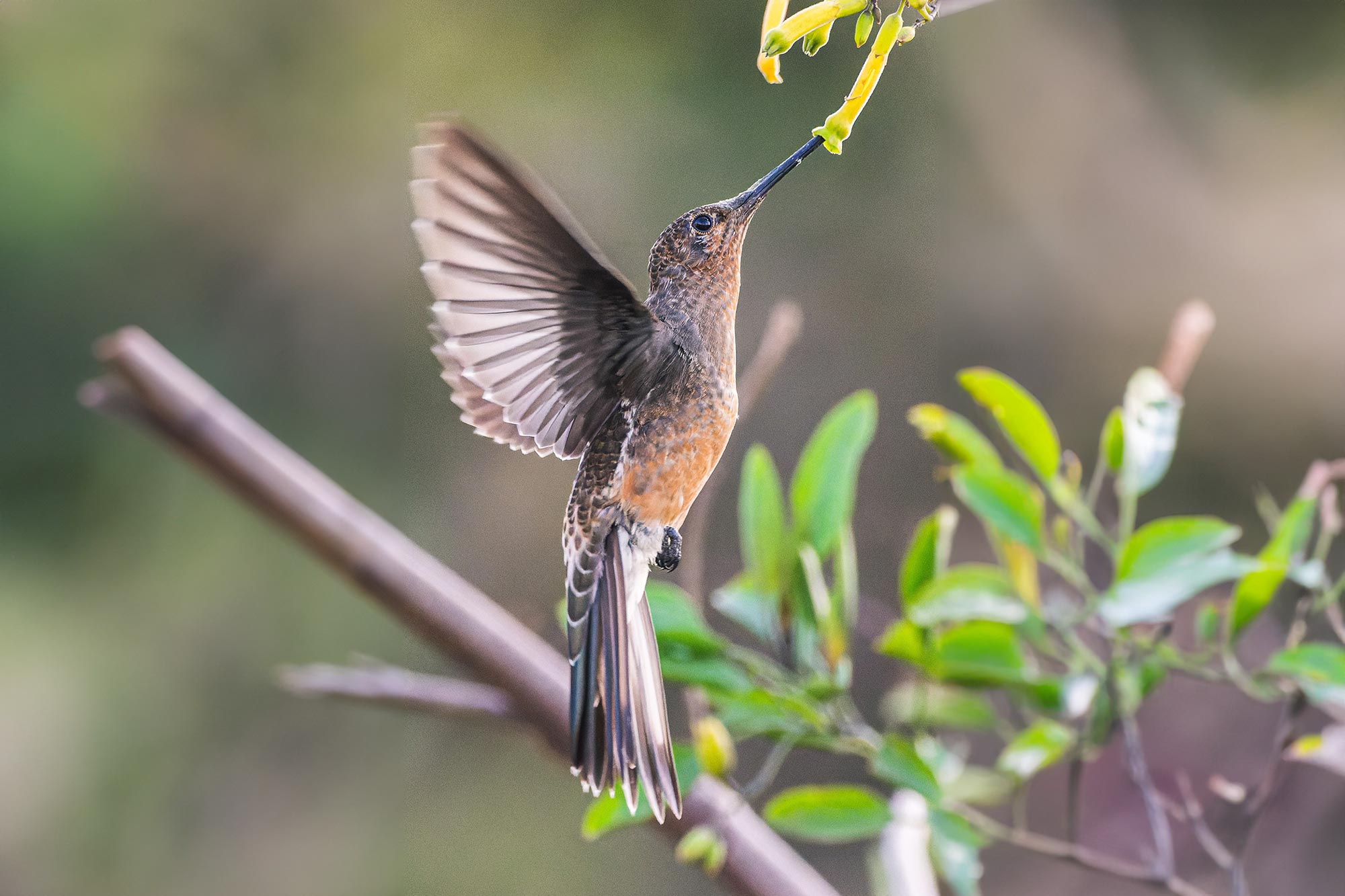
Researchers at UNM identified a new species of giant hummingbird that migrates between Chile and Peru, revealing its migration routes and genetic distinctiveness through innovative tracking and genome sequencing.
Researchers from the University of New Mexico’s Museum of Southwestern Biology (MSB) have uncovered the giant hummingbird’s extreme long-distance migration for the first time. Their eight-year study, “Extreme elevational migration spurred cryptic speciation in giant hummingbirds,” published this week in Proceedings of the National Academy of Sciences, led them to another important discovery: The world’s largest hummingbird is a new species.
The team, led by Jessie Williamson, UNM Ph.D., 2022, included the Museum of Southwestern Biology at UNM, Pontificia Universidad Católica de Chile in Chile, and Centro de Ornitología y Biodiversidad in Peru. Initially the researchers wanted to figure out where these migratory giant hummingbirds spend the winter. The birds, which are about eight times the size of a Black-chinned hummingbird, breed along the Pacific Coasts of central Chile but ‘vanish’ after breeding.
This mystery had remained unsolved since the 19th century when Charles Darwin observed the migratory giant hummingbirds during his voyage on The Beagle. At that time, Darwin speculated that the hummingbirds migrated to the Atacama Desert region of northern Chile.
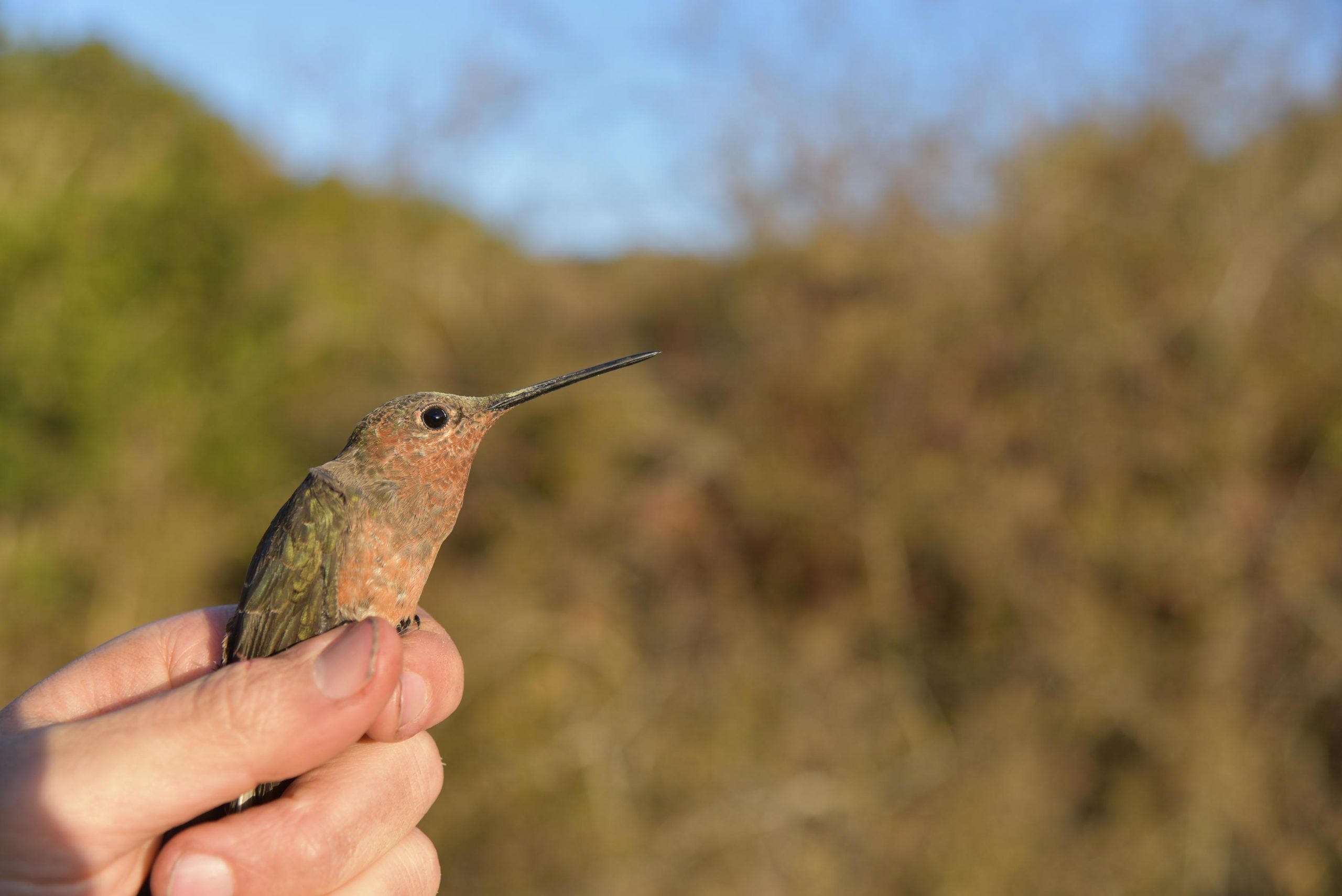
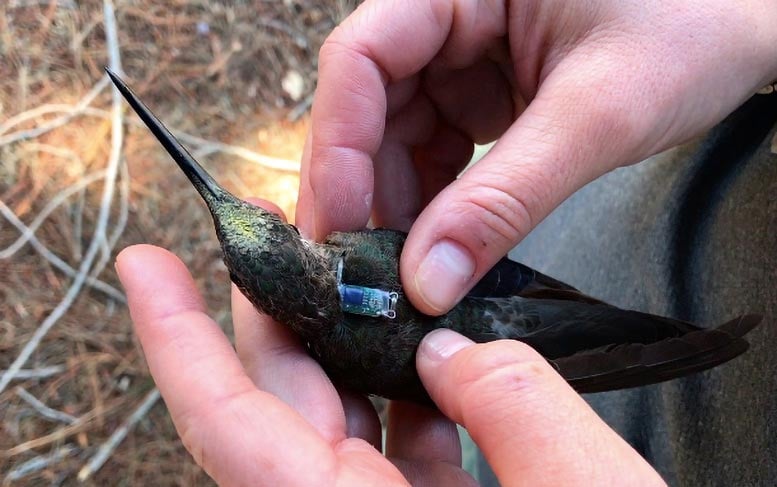
By affixing miniature backpack tracking devices to hummingbirds, Williamson and her UNM-led team of international collaborators discovered that migratory giant hummingbirds ascend over 13,000 feet in elevation to the high Andes, flying as far north as the mountains of Peru. This roundtrip migratory journey covers more than 5,200 miles – about the distance between New York City and Buenos Aires.
Innovative Tracking Technology Unveils Migration Secrets
To make the discovery, Williamson developed a method for attaching miniature ‘backpack’ tracking devices that were small and light enough for hummingbirds and did not interfere with their hovering style of flight. She published a paper describing this method in the Journal of Avian Biology in 2021.
“It took a lot of trial and error to come up with a suitable harness design,” said Williamson. “Hummingbirds are challenging to work with because they are lightweight with long wings and short legs. They’re nature’s tiny acrobats.”
One of the research team’s novel discoveries was that migratory giant hummingbirds don’t just fly straight up to high altitudes–they pause their upward climb for periods of days to allow their blood and lungs to acclimate. In this way, the giant hummingbirds employ the same acclimatization strategy used by human mountaineers.
“Nobody had figured out where migratory giant hummingbirds go because they were hiding among the non-migratory giant hummingbirds,” said Professor and Director of the Museum of Southwestern Biology Christopher Witt, who advised Williamson’s dissertation work. “The two forms of giant hummingbird look almost identical — for centuries, ornithologists and birders never noticed that they were different. “We couldn’t have figured this out without the miniaturized trackers.”
A New Species Emerges Through Genetic Research
Genome sequencing of museum specimens allowed the team to distinguish the two forms of giant hummingbirds for the first time.
“Natural history collections were absolutely essential to this work,” said co-author Ethan Gyllenhaal, a current Ph.D. candidate at UNM. “Including DNA from 154-year-old type specimens was key to solving this evolutionary puzzle.”
In fact, these valuable historic specimens led the team to the groundbreaking finding that the migratory and high-elevation resident giant hummingbirds had been evolving separately for about three million years, more than enough time to make them distinct species.
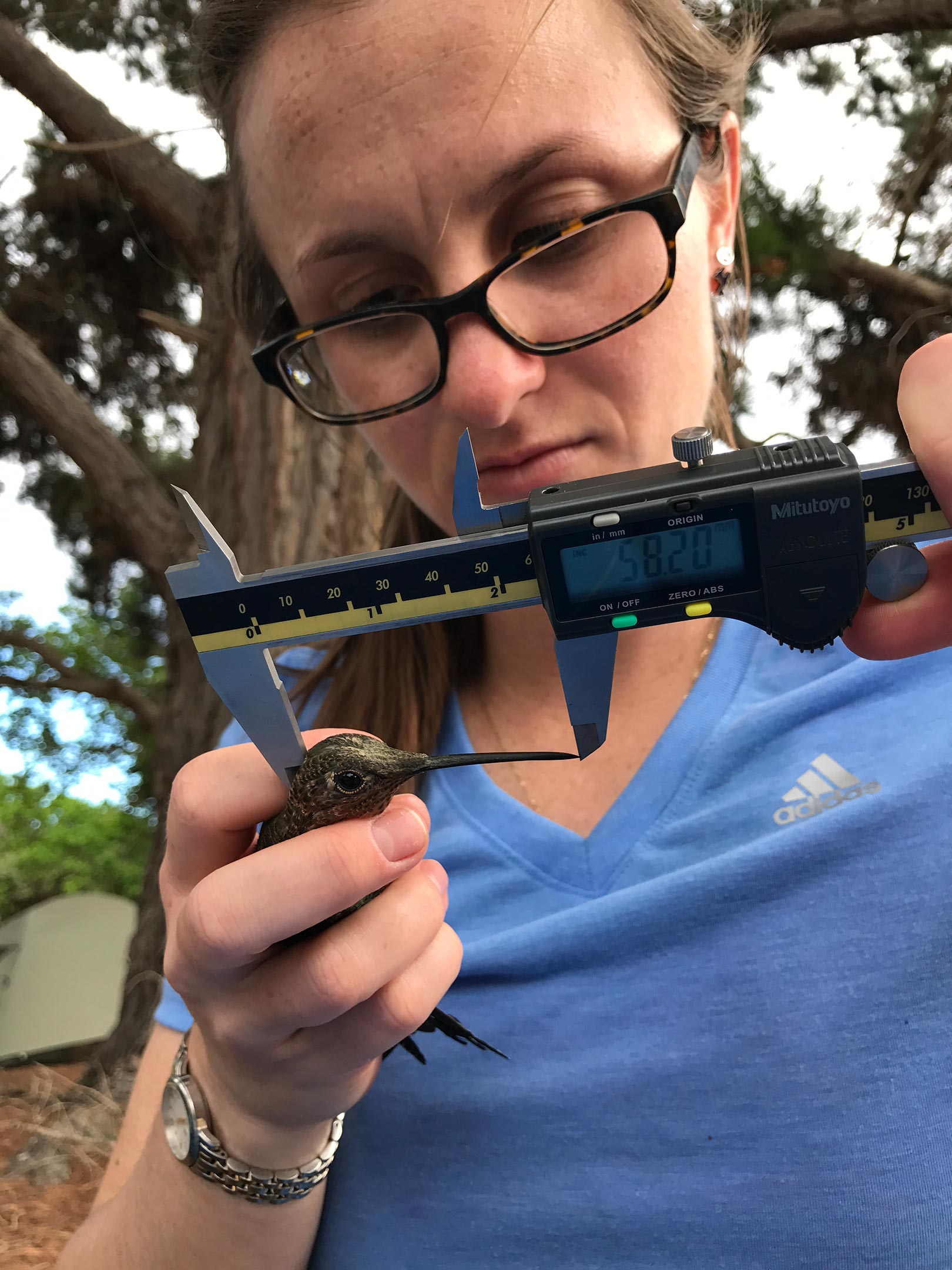
The giant hummingbird population that lives year-round in the high Andes is larger and has notably different blood and lungs than the migratory form. As a previously unrecognized species (Patagona sp. nov.), it needed a name. After consulting with scholars, the team proposed the name Patagona chaski to recognize the shared characteristics between giant hummingbirds and the high-altitude adapted, fleet-footed chaski messengers of the Inka empire.
This work was made possible through international collaborations among institutions in the United States, Chile, and Peru and supported by generous landowners in Chile and rural communities in Peru. The team of authors, students, and field assistants, conducted dedicated fieldwork from sea level to high Andean peaks. In Chile, the team succeeded in capturing a giant hummingbird only once every 146 net hours. Field crews camped and worked on steep, cactus-laden Andean slopes with no electricity or running water for weeks at a time.
“This effort is just the beginning,” said Williamson, “Combining migration tracking with genomics has opened up research opportunities that could fill a lifetime.”
Reference: “Extreme elevational migration spurred cryptic speciation in giant hummingbirds” by Jessie L. Williamson, Ethan F. Gyllenhaal, Selina M. Bauernfeind, Emil Bautista, Matthew J. Baumann, Chauncey R. Gadek, Peter P. Marra, Natalia Ricote, Thomas Valqui, Francisco Bozinovic, Nadia D. Singh and Christopher C. Witt, 13 May 2024, Proceedings of the National Academy of Sciences.
DOI: 10.1073/pnas.2313599121
UNM Research Team: The team from UNM’s Museum of Southwestern Biology included Dr. Jessie Williamson (UNM Ph.D., 2022), who led this work as part of her dissertation, and her advisor, Dr. Christopher C. Witt. Dr. Williamson is currently a National Science Foundation Postdoctoral Fellow and Rose Fellow at the Cornell Lab of Ornithology; she also continues as a Research Associate at the Museum of Southwestern Biology; in August, 2025, she will be an Assistant Professor of Zoology and Physiology at the University of Wyoming. Other team members included Selina Bauernfeind (UNM B.S. 2016, M.S. 2022), Matthew Baumann (UNM B.S., 2010, M.S. 2014), Chauncey Gadek (UNM B.S., 2016, M.S., 2019), and Ethan Gyllenhaal (UNM Ph.D., 2024).
Other collaborating institutions: Universidad Pontificia Católica de Chile, Centro de Ornitología y Biodiversidad, George Washington University, University of Oregon, and Cornell University & Lab of Ornithology.
Funding: National Science Foundation, Dr. Mike Hartshorne and Dr. Lida Crooks, American Philosophical Society, Explorers Club, Society of Systematic Biologists, American Ornithological Society, Wilson Ornithological Society, Nuttall Ornithological Club, American Museum of Natural History, UNM Biology Graduate Student Association, UNM Latin American and Iberian Institute, and UNM Department of Biology Scholarships.
Never miss a breakthrough: Join the SciTechDaily newsletter.
Follow us on Google and Google News.
1 Comment
Species, shmecies! What tune are they humming? 😉