
Close Menu
    Facebook X (Twitter) Instagram
    SciTechDaily
    • Biology
    • Chemistry
    • Earth
    • Health
    • Physics
    • Science
    • Space
    • Technology
    Facebook X (Twitter) Pinterest YouTube RSS
    SciTechDaily
    Home»Biology»Feeling Disconnected? Loneliness Alters Your Brain’s Social Network
    Biology

    Feeling Disconnected? Loneliness Alters Your Brain’s Social Network

    By Society for NeuroscienceJune 15, 20201 Comment2 Mins Read
    Facebook Twitter Pinterest Telegram LinkedIn WhatsApp Email Reddit
    Share
    Facebook Twitter LinkedIn Pinterest Telegram Email Reddit
    Brain Network Concept
    A brain region maintains a map of a person’s social circles based on closeness. 

    Feeling disconnected from others is reflected by how the brain represents relationships.

    Social media sites aren’t the only things that keep track of your social network — your brain does, too. But loneliness alters how the brain represents relationships, according to new research published in JNeurosci.

    A brain region called the medial prefrontal cortex (mPFC) maintains a structured map of a person’s social circles, based on closeness. People that struggle with loneliness often perceive a gap between themselves and others. This gap is reflected by the activity patterns of the mPFC.
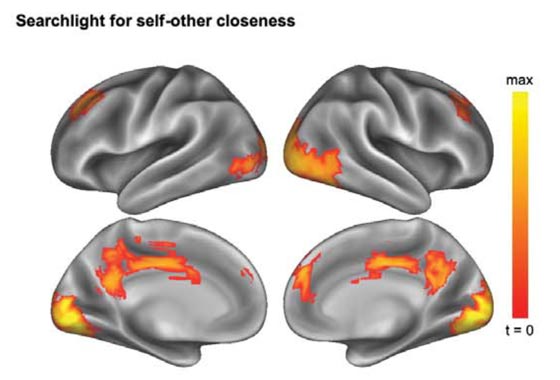
    Brain Activity Patterns Feeling Closeness
    The activity patterns of these brain regions reflect self-other closeness: the closer the relationship, the more the patterns resemble each other. Credit: Courtney and Meyer, JNeurosci 2020

    Courtney and Meyer used functional magnetic resonance imaging to examine participants’ brain activity while they thought about the self, close friends, acquaintances, and celebrities. Thinking about someone from each category corresponded to a different activity pattern in the mPFC: one for the self, one for the social network (both friends and acquaintances), and one for celebrities. The closer the relationship, the more the pattern resembled the pattern seen when thinking about the self.

    These brain patterns differed for lonelier individuals. Activity related to thinking about the self was more different from activity related to thinking about others, while the activity from thinking about others was more similar across social categories. In other words, lonelier people have a “lonelier” neural representation of their relationships.

    Reference: “Self-Other Representation in the Social Brain Reflects Social Connection” by Andrea L. Courtney and Meghan L. Meyer, 15 June 2020, JNeurosci.
    DOI: 10.1523/JNEUROSCI.2826-19.2020

    Never miss a breakthrough: Join the SciTechDaily newsletter.
    Follow us on Google and Google News.

    Behavioral Science Brain Neuroscience Society for Neuroscience
    Share. Facebook Twitter Pinterest LinkedIn Email Reddit

    Related Articles

    Deep Inside the Brain: Neuroscientists Discover the Missing Piece of the Brain’s Multitasking Network

    A Child’s Unique Brain Activity Reveals Their Memory Ability

    Unlocking the Neuroscience of How Experiencing Traumatic Stress Leads to Aggression

    Researchers Discover How Stress Restructures the Brain

    Scientists Can See the Bias in Your Brain – Even Before You Make Your Decision

    Functional Magnetic Resonance Imaging Shows How the Brain Repurposes Unused Regions

    The Secret of Motivation: How Neural Circuits Drive Hungry Individuals to Peak Performance

    Odor Processing Function of Fly Resembles Mammalian Brain

    Sex Deprived Fruit Flies Consume More Alcohol

    1 Comment

    1. John-Paul Hunt on June 15, 2020 10:02 am

      not lonely as nobody home right now but free from my chains being alone for once feeling like the muzzle is off and can say things i truly feel about being joyless and loveless.

      Reply
    Leave A Reply Cancel Reply

    • Facebook
    • Twitter
    • Pinterest
    • YouTube

    Don't Miss a Discovery

    Subscribe for the Latest in Science & Tech!

    Trending News

    Scientists Uncover Potential Brain Risks of Popular Fish Oil Supplements

    Scientists Discover a Surprising Way To Make Bread Healthier and More Nutritious

    After 60 Years, Scientists Uncover Unexpected Brain Effects of Popular Diabetes Drug Metformin

    New Research Uncovers Hidden Side Effects of Popular Weight-Loss Drugs

    Scientists Rethink Extreme Warming After Surprising Ocean Discovery

    Landmark Study Links Never Marrying to Significantly Higher Cancer Risk

    Researchers Discover Unknown Beetle Species Just Steps From Their Lab

    Largest-Ever Study Finds Medicinal Cannabis Ineffective for Anxiety, Depression, PTSD

    Follow SciTechDaily
    • Facebook
    • Twitter
    • YouTube
    • Pinterest
    • Newsletter
    • RSS
    SciTech News
    • Biology News
    • Chemistry News
    • Earth News
    • Health News
    • Physics News
    • Science News
    • Space News
    • Technology News
    Recent Posts
    • Common Blood Pressure Drug Shows Surprising Power Against Deadly Antibiotic-Resistant Superbug
    • Students Build Dark Matter Detector and Set New Experimental Limits
    • Scientists Discover Caffeine Can Repair Key Memory Circuits After Sleep Loss
    • Strange 65-Foot Dinosaur Discovered in Argentina
    • Researchers Uncover Source of Strange Deformation in Earth’s Largest Continental Rift
    Copyright © 1998 - 2026 SciTechDaily. All Rights Reserved.
    • Science News
    • About
    • Contact
    • Editorial Board
    • Privacy Policy
    • Terms of Use

    Type above and press Enter to search. Press Esc to cancel.