
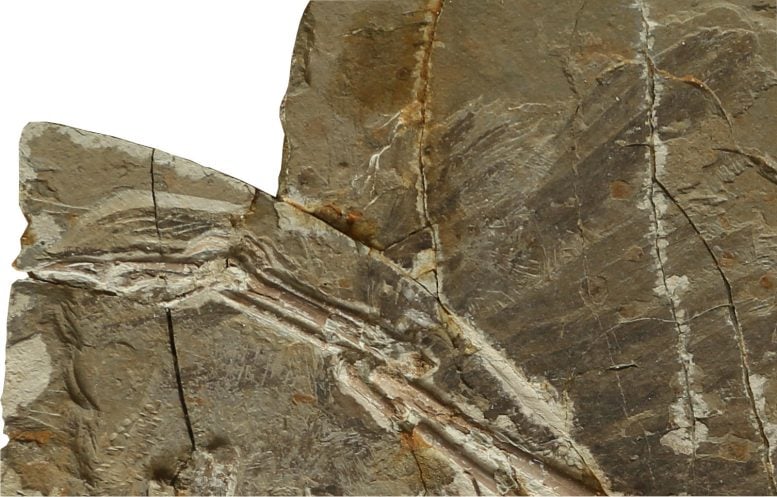
The early Cretaceous bird fossils hold key information about the ancient ecosystem of Jehol Biota.
Jehol Biota in China is renowned for its exceptional fossils that retain soft tissue such as skin, feathers, organs, and fur. These fossils offer a unique perspective on the evolution of traits like flight, but require careful interpretation to understand the appearance and behavior of the soft tissue in life and the effects of decomposition. A study in Frontiers in Earth Science analyzed five fossils of the early Cretaceous bird Sapeornis chaoyangensis to examine the impact of the burial environment on the preservation of soft tissue.
“Jehol Biota provides the most informative source for understanding Mesozoic ecology,” said corresponding author Dr. Yan Zhao, based at the Institute of Geology and Paleontology, Linyi University. “Better understanding of the diverse taphonomy of Jehol terrestrial vertebrates can help us finally understand more about the past and future of biological evolution.”
Why Does Deposition Matter?
Even at Jehol Biota, not all fossils are equally well preserved — and understanding the paleoenvironment is crucial to understanding the differences. Without this information, it’s difficult for scientists to gauge the preservation of the soft tissue, which limits interpretation of the evidence. But at Jehol Biota, because of the range of specimens excavated, individuals of the same species can be compared to understand the taphonomic effects – the effects of the processes that happened between death and excavation – of the environment on the soft tissue.
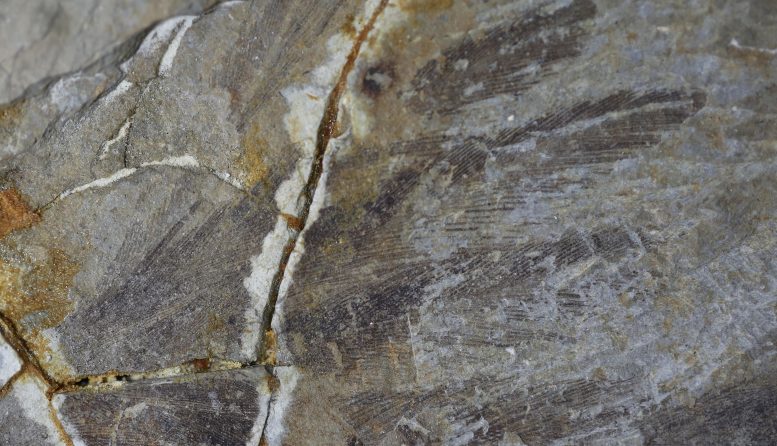
“An exceptionally well-preserved set of soft tissues are reported for myriad taxa from Jehol Biota, which contain irreplaceable information for understanding the early evolution of biological and ecological characteristics,” said Zhao. “We’d like to probe the factors that influence their preservation.”
The specimens the scientists used were chosen from the archives of the Shandong Tianyu Museum of Natural History and matched to sediment samples for analysis. All of them were fully articulated — fossilized with all the joints still connected — but the preservation of the soft tissue varied. STM 15-36 was the stand-out, as it preserved a complete coat of feathers in astonishing detail.
Swift Lake Burial Preserved Feathers
The team analyzed the sediments to determine what kind of organic material the birds were surrounded by when they were buried and how the sediments were deposited. STM 15-36 was associated with the coarsest sediment grain as well as the best preservation, and the surrounding organic material came mainly from terrestrial plants rather than from lake algae like the other four birds. The climate when STM 15-36 was deposited was warmer and wetter, and the environment it was deposited in was more anoxic, which prevented the decay of the feathers before they were fossilized.
There were two possible options to explain STM 15-36’s rapid burial: volcanic activity or a powerful rainstorm washing it away and burying it under other debris. Since fossils in pyroclastic flows don’t preserve soft tissue well, the most likely explanation is that the bird was swept away by a rainstorm and rapidly buried at the bottom of a lake, where a restricted burial environment ensured it wasn’t disturbed. This combination of circumstances meant that millions of years later, its beautiful plumage would still be preserved in stone.
“This find provides a valuable case study of the taphonomy of Jehol terrestrial vertebrates and the nature of Mesozoic ecosystems,” said Zhao. She added that she looked forward to future studies focusing on the chemical features and microstructure of the feathers themselves, which would expand scientists’ understanding of the way these birds lived and died.
Reference: “Taphonomic analysis of the exceptional preservation of early bird feathers during the early Cretaceous period in Northeast China” by Yan Zhao, Qian Tian, Guang-Ying Ren, Ying Guo and Xiao-Ting Zheng, 17 January 2023, Frontiers in Earth Science.
DOI: 10.3389/feart.2022.1020594
The study was funded by the National Natural Sciences Foundation of China, the Shandong Provincial Natural Sciences Foundation, and the Shandong Provincial Training Program of Innovation and Entrepreneurship for Undergraduates.
Never miss a breakthrough: Join the SciTechDaily newsletter.
Follow us on Google and Google News.