
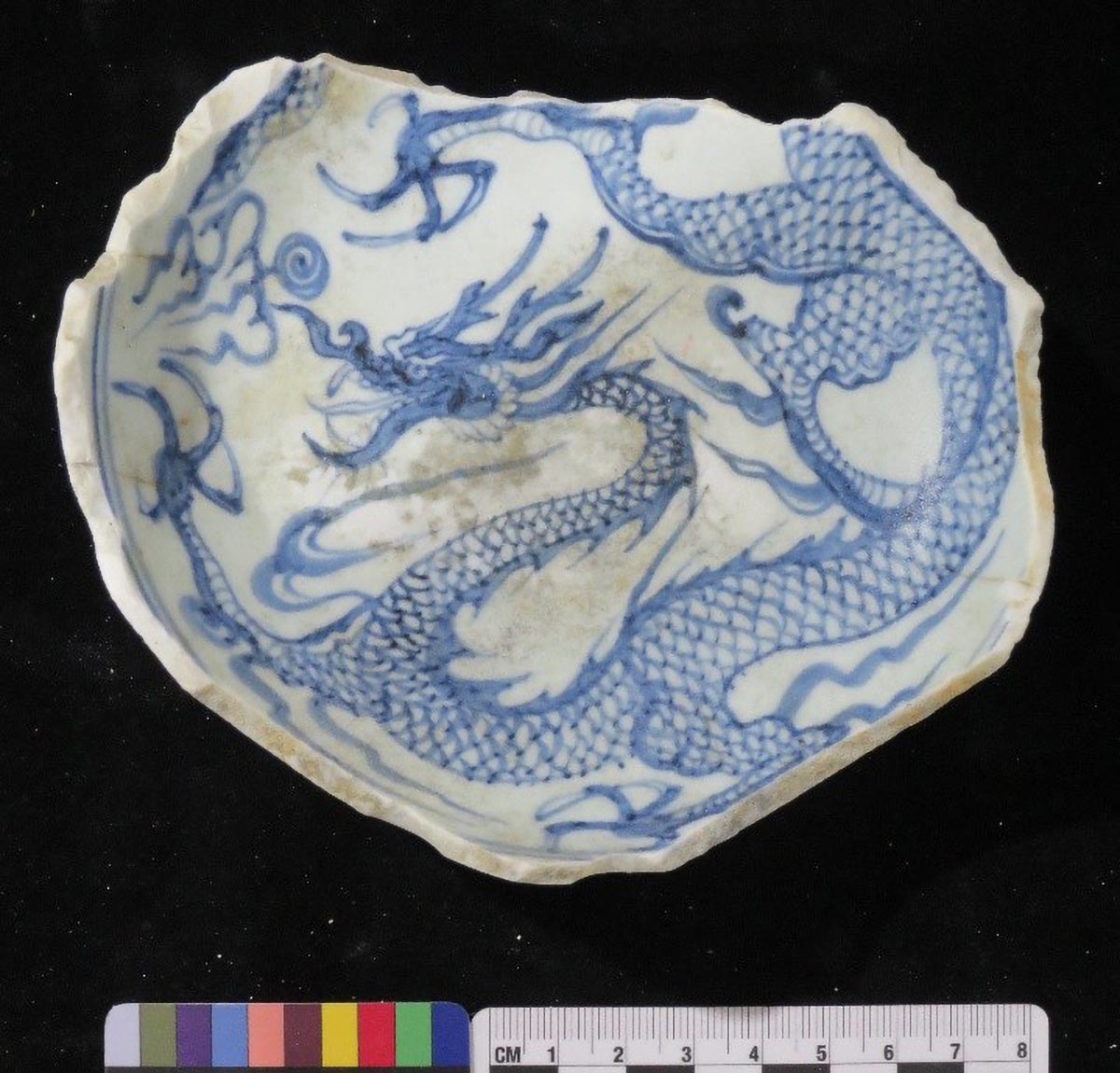
A shipwreck beneath Singapore’s waters is reshaping what is known about Yuan-era trade.
A maritime dig in Singapore’s waters has revealed the Temasek Wreck, a discovery that is both unprecedented locally and important worldwide for Yuan dynasty ceramics. Excavations carried out between 2016 and 2019 recovered about 3.5 tons (approximately 7,700 pounds) of ceramic fragments, along with a small number of intact or nearly intact pieces.
One of the most notable aspects is the sheer volume of Yuan blue-and-white porcelain. According to Dr. Michael Flecker of HeritageSG, part of the Singapore National Heritage Board, the site is “the first ancient shipwreck ever found in Singapore waters.” He also reports that the amount of blue-and-white porcelain surpasses that found in any other known shipwreck.
Diversity of Ceramic Cargo
The blue-and-white ceramics alone weigh about 136 kg (approximately 300 pounds). This includes more than 2,350 fragments and several intact or nearly intact objects, accounting for about 3.9% of the total ceramic cargo by weight.
In addition to Jingdezhen blue-and-white wares, the cargo contains a broad mix of ceramics. These include Longquan celadon, Jingdezhen qingbai (bluish-white glazed) and shufu (“Privy Council”) wares, Dehua whiteware, greenwares likely produced in Fujian, and Fujian Cizao storage jars and small-mouth jars. Jingdezhen is especially known for ceramic production, which later reached its peak during the Ming and Qing dynasties.
Dr. Flecker notes that even though relatively few pieces remain intact, the overall quality of the ceramics is often “superlative.” This is particularly true for Jingdezhen blue-and-white and qingbai/shufu wares, as well as Longquan celadon.
Insights Into Trade and Maritime Routes
The research also sheds light on the ship and its journey. Although no part of the hull has survived, available evidence suggests it was a Chinese junk. Flecker proposes that the vessel was loaded in Quanzhou, Fujian, in the mid-14th century.
It was likely traveling to the busy trading port of Temasek (port that preceded modern Singapore). Because the cargo can be dated so precisely, the wreck serves as an important reference point for comparing other archaeological finds with less certain origins.
Reference: “The Temasek Wreck ceramics cargo: Yuan blue-and-white porcelain, celadon and other ceramics found in Singapore waters” by Michael Flecker, 18 July 2025, Journal of International Ceramic Studies.
DOI: 10.1016/j.joics.2025.100013
Funding: National Heritage Board of Singapore
Never miss a breakthrough: Join the SciTechDaily newsletter.
Follow us on Google and Google News.