
Close Menu
    Facebook X (Twitter) Instagram
    SciTechDaily
    • Biology
    • Chemistry
    • Earth
    • Health
    • Physics
    • Science
    • Space
    • Technology
    Facebook X (Twitter) Pinterest YouTube RSS
    SciTechDaily
    Home»Chemistry»Researchers Develop Magnetic Soap to Clean Up Oil Spills
    Chemistry

    Researchers Develop Magnetic Soap to Clean Up Oil Spills

    By SciTechDailyJanuary 24, 2012No Comments2 Mins Read
    Facebook Twitter Pinterest Telegram LinkedIn WhatsApp Email Reddit
    Share
    Facebook Twitter LinkedIn Pinterest Telegram Email Reddit
    magnetic-soap-close-up
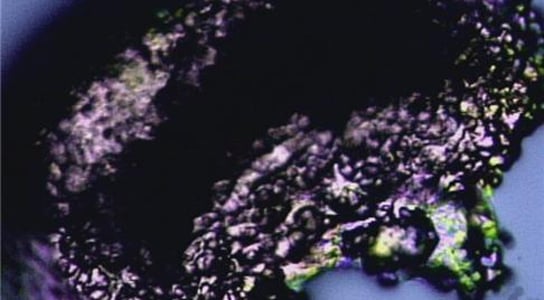
    Scientists developed a magnetic soap composed of iron-rich salts in water, with potential applications for more effective oil spill clean-ups.

    Scientists from the University of Bristol have developed a new kind of soap, composed of iron-rich salts that were dissolved in water, that responds to magnetic fields when placed in a solution. The soap’s magnetic properties were demonstrated at the Institut Laue-Langevin and were caused by tiny, iron-rich clumps that sit in the watery solution. This functional soap could revolutionize the clean-ups of oil spills.

    Researchers have been looking for ways to control surfactants once they are in solution, in order to increase their ability to dissolve oils and remove them. The team had previously worked with soaps that were sensitive to light, carbon dioxide, changes in pH, temperature or pressure. This last breakthrough was reported in Angewandte Chemie and is the world’s first magnetic soap.

    oil-spill-clean-up

    Ionic liquid surfactants have been suggested to be potentially controllable by magnets for some time, but scientists had assumed that their metallic centers, iron bound to halides such as bromine or chlorine, would prevent the long-range interactions required of them.

    The team lead by Professor Julian Eastoe produced their variant of magnetic soap by dissolving inert surfactant materials, similar to those found in mouthwash or fabric softener. The soap has been able to overcome both gravity and surface tension. Once they developed the surfactant, they took it to the Institut Laue-Langevin, the flagship center for neutron science thanks to the world’s most intense neutron source.

    There are many applications for magnetic soaps in industrial settings, but one of the most interesting is that they might be able to help clean up oil spills.

    Reference: “Magnetic Control over Liquid Surface Properties with Responsive Surfactants” by Paul Brown, Alexey Bushmelev, Dr. Craig P. Butts, Dr. Jing Cheng, Prof. Julian Eastoe, Dr. Isabelle Grillo, Dr. Richard K. Heenan and Prof. Annette M. Schmidt, 20 January 2012, Angewandte Chemie.
    DOI: 10.1002/anie.201108010

    Never miss a breakthrough: Join the SciTechDaily newsletter.
    Follow us on Google and Google News.

    Oil University of Bristol
    Share. Facebook Twitter Pinterest LinkedIn Email Reddit

    Related Articles

    What Do Mummies Smell Like? Scientists Unlock 2,000-Year-Old Secrets

    Major Breakthrough: Non-Toxic Alternative to “Forever Chemicals” Discovered

    Updated Periodic Table: Russian Scientists Propose New Way of Ordering the Elements

    Future Energy Source: Scientists Build Tiny Microbial Factories That Produce Hydrogen by Photosynthesis

    Research Breakthrough: Fast, Safe Way to Clean Up Oil Spills [Video]

    “Hydrate-Phobic” Surfaces Could Improve Deep-Sea Oil Well Safety

    Leave A Reply Cancel Reply

    • Facebook
    • Twitter
    • Pinterest
    • YouTube

    Don't Miss a Discovery

    Subscribe for the Latest in Science & Tech!

    Trending News

    Giant Crocodylians Ruled South America’s Ancient Food Chain

    Breakthrough in a Bizarre Galaxy Could Help Unlock the Mystery of Dark Matter

    Just 4 Minutes of Daily Strength Training Can Quadruple Fitness in Older Adults

    Almost All Plant-Based Meat Alternatives Contain Mycotoxins, Study Finds

    Astronomers Detect a Record-Breaking “Cosmic Laser” From 8 Billion Light-Years Away

    A 47-Year-Old Scientist Tracked Himself for Months – His Biological Age Fell to 32

    Construction Crew Uncovers Giant 20-Meter Dinosaur in Brazil

    30 Years of Hurricane Data Reveal 4 Warning Signs Before Storms Strengthen

    Follow SciTechDaily
    • Facebook
    • Twitter
    • YouTube
    • Pinterest
    • Newsletter
    • RSS
    SciTech News
    • Biology News
    • Chemistry News
    • Earth News
    • Health News
    • Physics News
    • Science News
    • Space News
    • Technology News
    Recent Posts
    • Hurricane Forecast Maps Are Getting Better – but One Big Problem Remains
    • Blackbirds Somehow Know When a Snake Is Too Dangerous To Attack
    • Scientists Find a Clue to Making Brain Stimulation More Reliable
    • A Hidden Gut Reaction May Explain Why Vegetables Are So Good for You
    • New “Invisible” Cell Therapy Could Provide Side-Effect-Free Diabetes Treatment
    Copyright © 1998 - 2026 SciTechDaily. All Rights Reserved.
    • Science News
    • About
    • Contact
    • Editorial Board
    • Privacy Policy
    • Terms of Use

    Type above and press Enter to search. Press Esc to cancel.