
Close Menu
    Facebook X (Twitter) Instagram
    SciTechDaily
    • Biology
    • Chemistry
    • Earth
    • Health
    • Physics
    • Science
    • Space
    • Technology
    Facebook X (Twitter) Pinterest YouTube RSS
    SciTechDaily
    Home»Technology»Researchers Develop Spaser Made of Graphene and Carbon Nanotubes
    Technology

    Researchers Develop Spaser Made of Graphene and Carbon Nanotubes

    By Monash UniversityApril 17, 2014No Comments3 Mins Read
    Facebook Twitter Pinterest Telegram LinkedIn WhatsApp Email Reddit
    Share
    Facebook Twitter LinkedIn Pinterest Telegram Email Reddit
    Researchers Develop Spaser Made of Graphene and Carbon Nanotubes
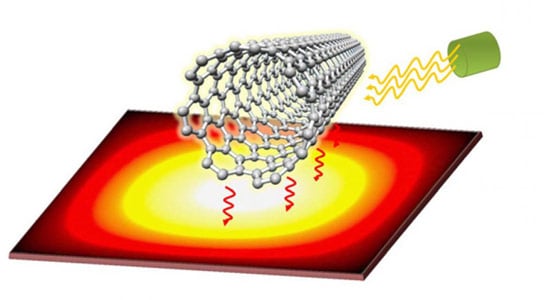
    Monash University researchers used graphene and carbon nanotubes to create a spaser, demonstrating their ability to engage in light-based energy interaction and transfer between one another. Credit: Monash University

    Researchers from Monash University have developed a spaser using graphene and carbon nanotubes, showing that graphene and carbon nanotubes can interact and transfer energy to each other through light.

    A new version of “spaser” technology being investigated could mean that mobile phones become so small, efficient, and flexible that they could be printed on clothing.

    A team of researchers from Monash University’s Department of Electrical and Computer Systems Engineering (ECSE) has modeled the world’s first spaser (surface plasmon amplification by stimulated emission of radiation) to be made completely of carbon.

    A spaser is effectively a nanoscale laser or nanolaser. It emits a beam of light through the vibration of free electrons, rather than the space-consuming electromagnetic wave emission process of a traditional laser.

    PhD student and lead researcher Chanaka Rupasinghe said the modeled spaser design using carbon would offer many advantages.

    “Other spasers designed to date are made of gold or silver nanoparticles and semiconductor quantum dots while our device would be comprised of a graphene resonator and a carbon nanotube gain element,” Chanaka said.

    “The use of carbon means our spaser would be more robust and flexible, would operate at high temperatures, and be eco-friendly.

    “Because of these properties, there is the possibility that in the future an extremely thin mobile phone could be printed on clothing.”

    Spaser-based devices can be used as an alternative to current transistor-based devices such as microprocessors, memory, and displays to overcome current miniaturizing and bandwidth limitations.

    The researchers chose to develop the spaser using graphene and carbon nanotubes. They are more than a hundred times stronger than steel and can conduct heat and electricity much better than copper. They can also withstand high temperatures.

    Their research showed for the first time that graphene and carbon nanotubes can interact and transfer energy to each other through light. These optical interactions are very fast and energy-efficient, and so are suitable for applications such as computer chips.

    “Graphene and carbon nanotubes can be used in applications where you need strong, lightweight, conducting, and thermally stable materials due to their outstanding mechanical, electrical, and optical properties. They have been tested as nanoscale antennas, electric conductors, and waveguides,” Chanaka said.

    Chanaka said a spaser generated high-intensity electric fields concentrated into a nanoscale space. These are much stronger than those generated by illuminating metal nanoparticles by a laser in applications such as cancer therapy.

    “Scientists have already found ways to guide nanoparticles close to cancer cells. We can move graphene and carbon nanotubes following those techniques and use the high concentrate fields generated through the spasing phenomena to destroy individual cancer cells without harming the healthy cells in the body,” Chanaka said.

    Reference: “Spaser Made of Graphene and Carbon Nanotubes” by Chanaka Rupasinghe, Ivan D. Rukhlenko and Malin Premaratne, 23 February 2014, ACS Nano.
    DOI: 10.1021/nn406015d

    Never miss a breakthrough: Join the SciTechDaily newsletter.
    Follow us on Google and Google News.

    Graphene Monash University Nanotechnology Telecommunications
    Share. Facebook Twitter Pinterest LinkedIn Email Reddit

    Related Articles

    Controlling How Fast Graphene Cools for an Unprecedented Level of Control of Optical Properties

    Quantum Tunneling in Graphene Advances the Age of High Speed Terahertz Wireless Communications

    Increasing Optical Data Transmission Speed by a Factor of at Least 10,000

    Graphene Based Composite Being Developed as Rust Proofing Alternative

    Balancing Between Life and Research

    Exploring Graphene-Based THz Devices

    Graphene Center Laboratory is State of the Art “Nano-Factory”

    2-D Boron has Potential Advantages over Carbon Nanotubes

    “Designer Electrons” Have Tunable Properties

    Leave A Reply Cancel Reply

    • Facebook
    • Twitter
    • Pinterest
    • YouTube

    Don't Miss a Discovery

    Subscribe for the Latest in Science & Tech!

    Trending News

    Tea or Coffee? Your Daily Choice Could Affect Osteoporosis Risk

    Vitamin C May Fight Cancer in a Surprising Way

    Hidden Earthquake Threat: Oregon’s Fault May Be Closer to the Surface Than Scientists Thought

    Scientists Discover Hidden Sleep Switch That Boosts Brainpower, Builds Muscle, and Burns Fat

    Ancient Mega-Floods Once Ripped Across Mars and Left This Giant Scar

    Scientists Discover Cheap, Natural Remedy for High Blood Pressure

    Earth’s Upper Atmosphere Is Cooling Fast and Scientists Finally Know Why

    32,000 Olympic Pools of Magma Nearly Erupted Beneath Atlantic Island

    Follow SciTechDaily
    • Facebook
    • Twitter
    • YouTube
    • Pinterest
    • Newsletter
    • RSS
    SciTech News
    • Biology News
    • Chemistry News
    • Earth News
    • Health News
    • Physics News
    • Science News
    • Space News
    • Technology News
    Recent Posts
    • New AI Blood Test Predicts Stroke, Heart Failure, and More up to 15 Years in Advance
    • The Secret to Living Past 100 May Be Hidden in Your Blood
    • Ancient Roman Gold Mines Discovered in Spain’s Pyrenees
    • Ancient DNA Reveals How Farming Spread and Nearly Broke a Civilization
    • 146,000-Year-Old Discovery Rewrites the Story of Human Creativity
    Copyright © 1998 - 2026 SciTechDaily. All Rights Reserved.
    • Science News
    • About
    • Contact
    • Editorial Board
    • Privacy Policy
    • Terms of Use

    Type above and press Enter to search. Press Esc to cancel.