
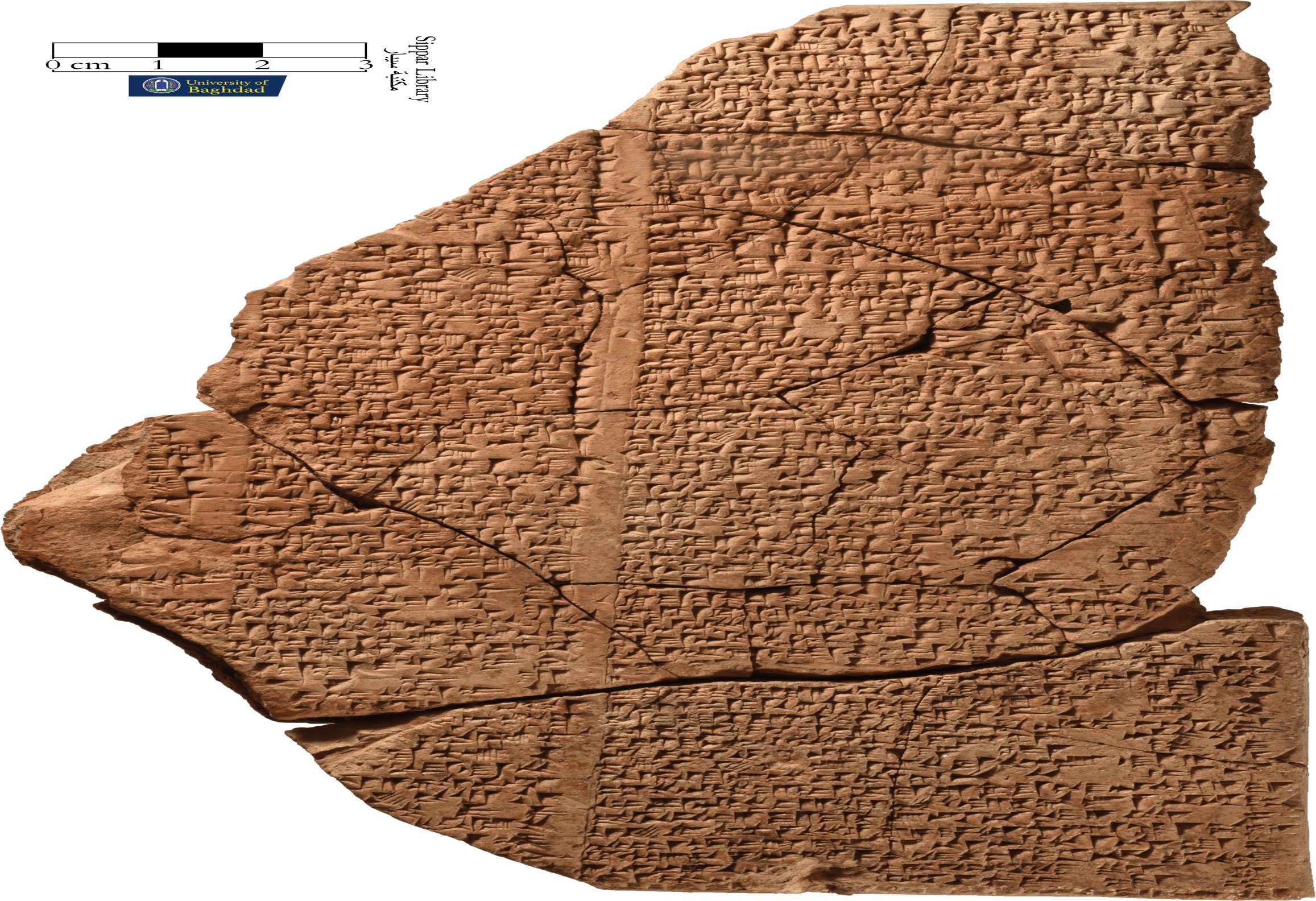
A previously unknown hymn of praise dating to around 1000 BCE was discovered by LMU Professor Enrique Jiménez, who used AI to identify 30 related manuscripts.
During a joint project with the University of Baghdad, LMU Professor Enrique Jiménez uncovered a text that had been missing for a millennium. “It’s a fascinating hymn that describes Babylon in all its majesty and gives insights into the lives of its inhabitants, male and female,” he explains.
Babylon, founded in Mesopotamia around 2000 BCE, was once the largest city on Earth and a thriving center of culture and learning. Many works that originated there remain cornerstones of humanity’s literary tradition.
The people of Babylon wrote their texts in cuneiform on clay tablets, most of which have survived only in fragments. One aim of the collaboration with the University of Baghdad is to study and preserve hundreds of these tablets from the renowned Sippar Library. According to legend, Noah hid them in this library to protect them from the floodwaters before setting out on the ark.
Through the “Electronic Babylonian Library Platform,” Jiménez is working to digitize all known cuneiform fragments from around the world. The project uses artificial intelligence to match and piece together fragments that belong to the same text.
“Using our AI-supported platform, we managed to identify 30 other manuscripts that belong to the rediscovered hymn – a process that would formerly have taken decades,” says Jiménez, Professor of Ancient Near Eastern Literatures at LMU’s Institute of Assyriology.
With the discovery of these additional manuscripts, researchers were able to reconstruct the missing sections and fully decipher the ancient hymn of praise.
“The hymn was copied by children at school. It’s unusual that such a popular text in its day was unknown to us before now,” says Enrique Jiménez, Professor of Ancient Near Eastern Literatures at LMU’s Institute of Assyriology
Hymn offers new insights into Babylonian urban society
These numerous additional copies suggest that the text was very widespread at the time. “The hymn was copied by children at school. It’s unusual that such a popular text in its day was unknown to us before now.” The paean presumably comes from the start of the first millennium before Christ and comprises 250 lines.
“It was written by a Babylonian who wanted to praise his city. The author describes the buildings in the city, but also how the waters of the Euphrates bring the spring and green the fields. This is all the more spectacular as surviving Mesopotamian literature is sparing in its descriptions of natural phenomena,” observes Enrique Jiménez.
The information about the women of Babylon, their role as priestesses and the associated tasks, has also astonished experts, as no texts describing these things were previously known. In addition, the hymns provide insights into coexistence in urban society. For example, the inhabitants are described as being respectful to foreigners.
The ruins of the ancient city of Babylon are located some 85 kilometers south of the Iraqi capital of Baghdad. They are a UNESCO World Heritage Site.
Excerpt from the newly discovered hymn
The following lines are from the newly discovered hymn. They describe the river Euphrates, on whose shore Babylon lay at that time:
The Euphrates is her river – established by wise lord Nudimmud –
It quenches the lea, saturates the canebrake,
Disgorges its waters into lagoon and sea,
Its fields burgeon with herbs and flowers,
Its meadows, in brilliant bloom, sprout barley,
From which, gathered, sheaves are stacked,
Herds and flocks lie on verdant pastures,
Wealth and splendor – what befit mankind –
Are bestowed, multiplied, and regally granted.
Reference: “Literary texts from the Sippar Library V: A hymn in praise of Babylon and the Babylonians” by Anmar A. Fadhil and Enrique Jiménez, 17 March 2025, IRAQ.
DOI: 10.1017/irq.2024.23
Never miss a breakthrough: Join the SciTechDaily newsletter.
Follow us on Google and Google News.
1 Comment
This is so very incredible, and one of the positive results of AI, of which there are many. Like any new and significant tech, there are many negatives, but it’s good to hear about all the positive.
When an ancient city is abandoned, it leaves behind a treasure trove of carved and prepared rock. Over time, those stones are harvested by the surrounding cities and villages and incorporated into their life, many times to build shelters, barns, and walls. I remember a scientific team paying the people living around what was once an ancient temple to computer scan and put an ID number on each rock on their property. The computer then played jigsaw puzzle, which told the researchers to go back out and purchse the rocks it wanted, so they could completely reasemble the temple. It was an amazing story.