
Close Menu
    Facebook X (Twitter) Instagram
    SciTechDaily
    • Biology
    • Chemistry
    • Earth
    • Health
    • Physics
    • Science
    • Space
    • Technology
    Facebook X (Twitter) Pinterest YouTube RSS
    SciTechDaily
    Home»Biology»Researchers Pinpoint Fetal Cells ‘Vulnerable’ to Later Life Stress
    Biology

    Researchers Pinpoint Fetal Cells ‘Vulnerable’ to Later Life Stress

    By Bill Hathaway, Yale UniversityJanuary 24, 2017No Comments3 Mins Read
    Facebook Twitter Pinterest Telegram LinkedIn WhatsApp Email Reddit
    Share
    Facebook Twitter LinkedIn Pinterest Telegram Email Reddit
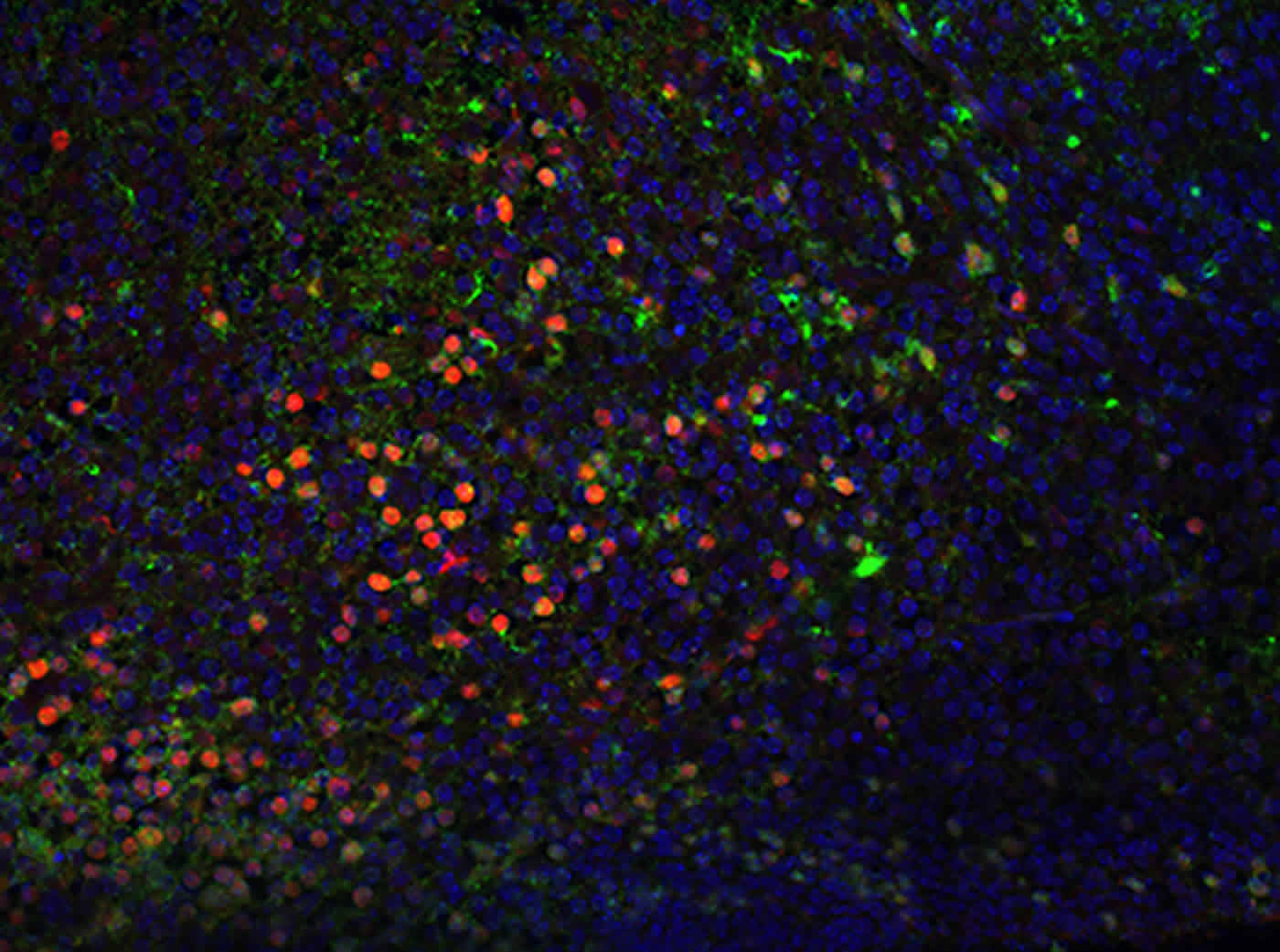
    Neurons In Mouse Cortex Damaged By Prenatal Exposure To Alcohol
    Red fluorescent tag identifies neurons in mouse cortex damaged by prenatal exposure to alcohol which have survived but are more vulnerable to stress after birth.

    A team of scientists has developed a way to identify cells damaged prior to birth by drugs, radiation, or poisons such as mercury that survive but are more vulnerable to stress later in life. This model system can possibly explain the increased risk of some cells in adult onset of psychiatric disorders, liver disease, and other stress-induced diseases.

    Scientists at Yale and colleagues now working at the Children’s National Health System in Washington, D.C., discovered that they could identify at-risk cells by putting fluorescent tags on heat shock factor 1 (HSF1), which is generated in cells of the organs undergoing stress or injury. If too little or too much of this factor is present, cells die. At the right level, cells may survive and appear normal.

    “In the womb, cells exposed to, say, excessive alcohol consumption may look normal, but when exposed to a traumatic event later in life they can be more vulnerable,” said Yale’s Pasko Rakic, the Dorys McConnell Duberg Professor of Neuroscience and professor of neurology, co-senior author of the paper to be published in the Proceedings of the National Academy of Sciences.

    The team developed a transgenic mouse in which this key heat shock factor is tagged by a red fluorescent protein. The tag enabled scientists to distinguish vulnerable from normal cells in organs such as the brain or liver. The labeled cells can be selectively damaged by second exposure to a variety of harmful environmental stressors after birth.

    This ability to identify a subset of cells that become vulnerable because of prenatal damage may one day help identify individuals who are at higher risk of a variety of disorders later in life. For instance, children born to active alcoholic mothers may be at higher risk of brain or liver disease later in life. Cells damaged before birth may also explain the increased risk of late-appearing neuropsychiatric disorders in adolescence or later, when some people appear to be more susceptible to traumatic stress disorders.

    The first author, Masaaki Torii, and Kazue Hashimoto-Torii, co-senior author of the paper, are former members of Rakic’s laboratory and are presently at Children’s National. The research was funded by the National Institutes of Health and the Kavli Institute for Neuroscience at Yale.

    Publication: In press

    Never miss a breakthrough: Join the SciTechDaily newsletter.
    Follow us on Google and Google News.

    Medicine Neurology Neuroscience Yale University
    Share. Facebook Twitter Pinterest LinkedIn Email Reddit

    Related Articles

    Scientists Restore Partial Brain Function Hours After Death

    Mesenchymal Stem Cell-Derived Exosomes Aid Spinal Cord Recovery

    Yale Research Shows Immune Cells Are an Ally, Not Enemy, in Battle Against Alzheimer’s

    New Research Identifies Enzyme Crucial to the Shaping and Division of Brain Cells

    Neurobiologists Block the Effects of Stress

    Study Shows Human Brain Development is Divided into Three Major Phases

    Suppressing NgR1 Returns Brain to Adolescent Levels of Plasticity

    Neurologists Repair Neurons Associated With Traumatic Nerve Injury Pain

    GATA1 Plays a Role in the Loss of Connections Between Neurons and in Symptoms of Depression

    Leave A Reply Cancel Reply

    • Facebook
    • Twitter
    • Pinterest
    • YouTube

    Don't Miss a Discovery

    Subscribe for the Latest in Science & Tech!

    Trending News

    New Research Shows Vitamin B12 May Hold the Key to Healthy Aging

    These Simple Daily Habits Can Quickly Improve Blood Pressure and Heart Risk Factors

    A Common Nutrient May Play a Surprising Role in Anxiety

    Doing This After 9 p.m. Could Double Your Risk of Gut Issues

    Scientists Discover How Coffee Impacts Memory, Mood, and Gut Health

    Why Did the Neanderthals Disappear? Scientists Reveal Humans Had a Hidden Advantage

    Physicists Propose Strange Experiment Where Time Goes Quantum

    Magnesium Magic: New Drug Melts Fat Even on a High-Fat, High-Sugar Diet

    Follow SciTechDaily
    • Facebook
    • Twitter
    • YouTube
    • Pinterest
    • Newsletter
    • RSS
    SciTech News
    • Biology News
    • Chemistry News
    • Earth News
    • Health News
    • Physics News
    • Science News
    • Space News
    • Technology News
    Recent Posts
    • This New Memory Technology Could Make Devices Last Months on One Charge
    • Scientists Turn Cancer’s Own Bacteria Against It in Breakthrough Therapy
    • Cannabis Can Make You Remember Things That Never Happened
    • Doctors Are Surprised by What This Vaccine Is Doing to the Heart
    • Quantum Breakthrough Turns Simple Forces Into Powerful New Interactions
    Copyright © 1998 - 2026 SciTechDaily. All Rights Reserved.
    • Science News
    • About
    • Contact
    • Editorial Board
    • Privacy Policy
    • Terms of Use

    Type above and press Enter to search. Press Esc to cancel.