
Close Menu
    Facebook X (Twitter) Instagram
    SciTechDaily
    • Biology
    • Chemistry
    • Earth
    • Health
    • Physics
    • Science
    • Space
    • Technology
    Facebook X (Twitter) Pinterest YouTube RSS
    SciTechDaily
    Home»Health»Researchers Reveal Potentially Game-Changing New Approach for Prostate Cancer Treatment
    Health

    Researchers Reveal Potentially Game-Changing New Approach for Prostate Cancer Treatment

    By Umea UniversityDecember 5, 2024No Comments4 Mins Read
    Facebook Twitter Pinterest Telegram LinkedIn WhatsApp Email Reddit
    Share
    Facebook Twitter LinkedIn Pinterest Telegram Email Reddit
    Prostate Cancer Cell Illustration
    An international research team led by Umeå University discovered that activating, rather than blocking, the protein GP130 and its signaling pathway can slow prostate tumor growth and stimulate the immune system to combat cancer. The study, which challenges prior assumptions, suggests a potential new treatment approach for aggressive prostate cancer.

    Activating the GP130 protein slows prostate cancer growth and enhances immune response, offering a potential treatment for aggressive cases.

    An international research team, led by Umeå University in Sweden, has demonstrated that a special protein could be pivotal in combating certain types of prostate cancer. Traditionally, treatments have focused on blocking this protein, which is integral to a signaling pathway. However, the researchers now reveal that activating the protein and its associated signaling pathway, rather than inhibiting it, can effectively counteract the cancer.

    Lukas Kenner
    Lukas Kenner, Guest Professor at the Department of Molecular Biology, Umeå University, Sweden. Credit: Medizinische Universität Wien

    “Our results show that by activating the signaling pathway, not only does the growth of the tumor be slowed down, but the immune system is then stimulated to actively fight tumor cells,” says Lukas Kenner, visiting professor at the Department of Molecular Biology at Umeå University.

    The protein in question is called glycoprotein 130, GP130. It acts as a receptor on the surface of cells. When the GP130 is activated, it sends signals inside the cell via a chain of events, a signaling pathway, that controls how certain genes are expressed.

    A special molecule that is activated by this signaling pathway is called STAT3. It is a so-called transcription factor; It acts as a switch that turns genes on or off, and it thus affects how the cell behaves. The STAT3 molecule plays a critical role in the development and spread of tumor cells. Consequently, research has hypothesized that blocking GP130, thereby disrupting the associated signaling pathway, would inhibit STAT3 activity and, in turn, suppress cancer growth.

    A Paradigm Shift in Cancer Research

    Surprisingly, the current study shows the exact opposite. The researchers instead activated GP130 and with it the signaling pathway in the prostate of genetically modified mice. They could then see that the result was that the growth of the tumor was clearly slowed down in the mice due to the activation of Stat3. Studies of tissue samples from prostate cancer patients also supported these results. There it was possible to see that those high levels of GP130 positively correlated with better survival.
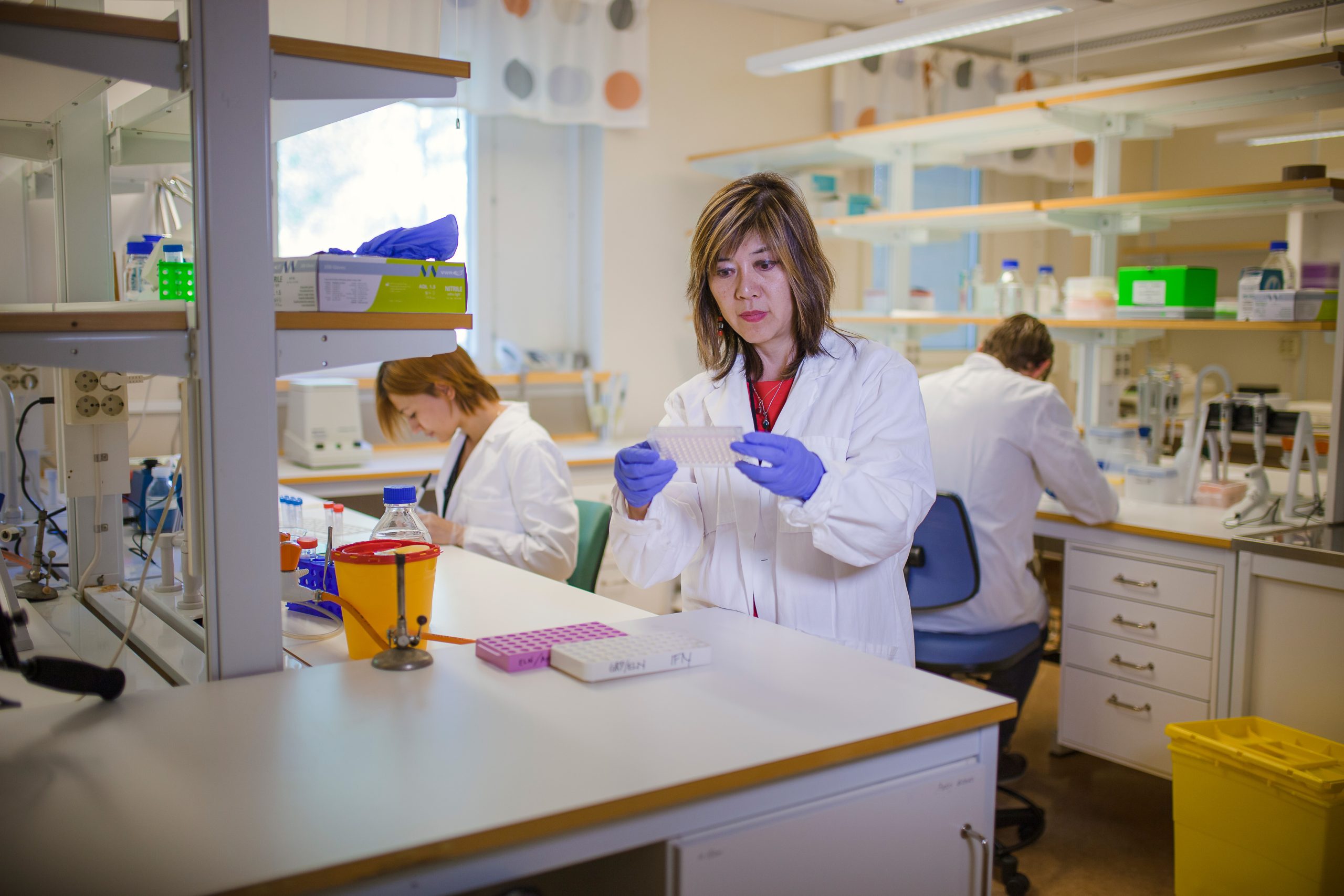
    Jenny Persson
    Jenny Persson, Professor at the Department of Molecular Biology, Umeå University, Sweden. Credit: Mattias Pettersson

    “In the long term, this opens up the possibility for a promising new treatment option for mainly certain forms of aggressive prostate cancer that are currently difficult to treat,” says Lukas Kenner.

    The researchers are now proceeding with more studies to be able to confirm the results. More research is needed before we can test the method in studies on patients. The study has been led by Lukas Kenner, a visiting professor at Umeå University, together with Stefan Rose-John, at the University of Kiel, Germany. The Swedish part of the research group has also been led by Jenny Persson, a professor at the Department of Molecular Biology at Umeå University.

    Reference: “Cell-autonomous IL6ST activation suppresses prostate cancer development via STAT3/ARF/p53-driven senescence and confers an immune-active tumor microenvironment” by Christina Sternberg, Martin Raigel, Tanja Limberger, Karolína Trachtová, Michaela Schlederer, Desiree Lindner, Petra Kodajova, Jiaye Yang, Roman Ziegler, Jessica Kalla, Stefan Stoiber, Saptaswa Dey, Daniela Zwolanek, Heidi A. Neubauer, Monika Oberhuber, Torben Redmer, Václav Hejret, Boris Tichy, Martina Tomberger, Nora S. Harbusch, Jan Pencik, Simone Tangermann, Vojtech Bystry, Jenny L. Persson, Gerda Egger, Sarka Pospisilova, Robert Eferl, Peter Wolf, Felix Sternberg, Sandra Högler, Sabine Lagger, Stefan Rose-John and Lukas Kenner, 31 October 2024, Molecular Cancer.
    DOI: 10.1186/s12943-024-02114-8

    Never miss a breakthrough: Join the SciTechDaily newsletter.
    Follow us on Google and Google News.

    Cancer Prostate Cancer Umea University
    Share. Facebook Twitter Pinterest LinkedIn Email Reddit

    Related Articles

    Diabetes Drug Stops Prostate Cancer From Coming Back

    Study Finds Vitamin D Supplements Reduce Risk of Developing Advanced Cancer

    Artificial Intelligence Identifies Prostate Cancer With Near-Perfect Accuracy

    Multinational Consortium Reports “Encouraging News” for Some Cancer Patients With COVID-19

    Blood Test Accurately Detects Over 50 Types of Cancer and Where It Originated, Often Before Any Symptoms

    Destroying Prostate Cancer With Novel Noninvasive MRI-Guided Ultrasound Treatment

    Simple Home Urine Test Could Revolutionize Diagnosis of Prostate Cancer

    Increased Risk of Prostate Cancer for Fathers That Used IVF/ICSI Assisted Reproduction

    Eating Mushrooms May Help Prevent Prostate Cancer

    Leave A Reply Cancel Reply

    • Facebook
    • Twitter
    • Pinterest
    • YouTube

    Don't Miss a Discovery

    Subscribe for the Latest in Science & Tech!

    Trending News

    Scientists Discover Bizarre 100-Million-Year-Old Insect With Giant Claws

    Scientists Discover “Good” Gut Microbes That Could Protect Against Autism and ADHD

    Scientists Reveal That Eating Almonds Every Day Could Transform Your Gut, Metabolism, and Appetite

    Scientists May Have Solved Two of Fusion Energy’s Biggest Problems at Once

    Scientists Discover Hidden “Switch” That Burns Fat and Could Treat Bone Disease

    After 50 Years of Mystery, Researchers Identify New Human Blood Group

    Beyond Pain Relief: Scientists Discover a Protein That Could Stop Osteoarthritis in Its Tracks

    Scientists Discover Why Alcohol Prevents the Liver From Healing, Even After You Quit

    Follow SciTechDaily
    • Facebook
    • Twitter
    • YouTube
    • Pinterest
    • Newsletter
    • RSS
    SciTech News
    • Biology News
    • Chemistry News
    • Earth News
    • Health News
    • Physics News
    • Science News
    • Space News
    • Technology News
    Recent Posts
    • Scientists May Have Found Dark Matter’s Fingerprint in a Black Hole Collision
    • Exercise Changes the Heart in a Way Researchers Never Expected
    • Scientists Warn Ultra-Processed Foods Could Be Hurting Your Brain
    • Your Liver May Be Filling With Plastic – and Scientists Are Alarmed
    • Goodbye Plastic? Scientists Create New Supermaterial That Could Transform Modern Manufacturing
    Copyright © 1998 - 2026 SciTechDaily. All Rights Reserved.
    • Science News
    • About
    • Contact
    • Editorial Board
    • Privacy Policy
    • Terms of Use

    Type above and press Enter to search. Press Esc to cancel.