
Close Menu
    Facebook X (Twitter) Instagram
    SciTechDaily
    • Biology
    • Chemistry
    • Earth
    • Health
    • Physics
    • Science
    • Space
    • Technology
    Facebook X (Twitter) Pinterest YouTube RSS
    SciTechDaily
    Home»Health»Resurgence of Bird Flu – Avian Influenza Virus – Raises Concern With Experts
    Health

    Resurgence of Bird Flu – Avian Influenza Virus – Raises Concern With Experts

    By American Association for the Advancement of Science (AAAS)May 10, 2022No Comments3 Mins Read
    Facebook Twitter Pinterest Telegram LinkedIn WhatsApp Email Reddit
    Share
    Facebook Twitter LinkedIn Pinterest Telegram Email Reddit
    Poultry Farm
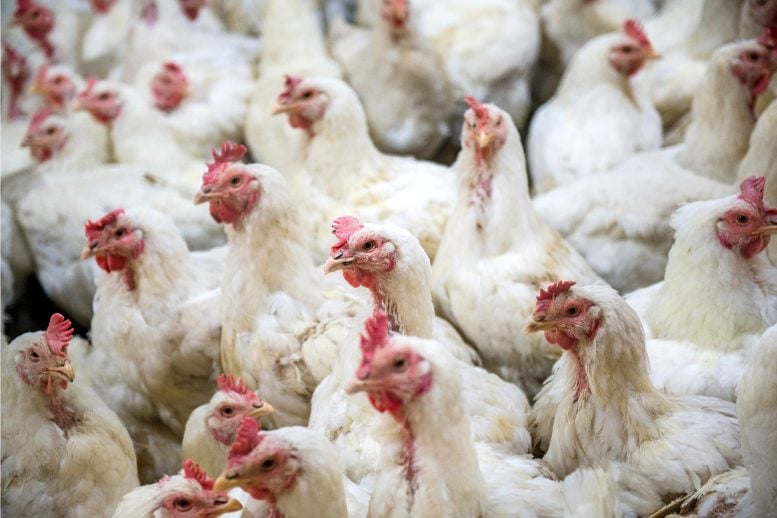
    Avian influenza viruses often emerge on high-density poultry farms. However, they can be deadly in wild bird populations and can even infect humans.

    H5N1 outbreaks are spreading globally, threatening birds and posing a pandemic risk to humans.

    With recent outbreaks identified in Canada and the United States, H5N1 – a highly pathogenic avian influenza virus (HPAIv) strain – is quickly becoming a global concern. Already, the virus has caused widespread outbreaks throughout Asia, Africa, and Europe, resulting in millions of deaths in poultry and wild birds.

    In this Perspective in the journal Science, Michelle Wille, and Ian Barr discuss the factors that have led to global H5N1 HPAIv outbreaks, the consequences of this spread, and what can be done to restrain it.

    “The ongoing 2021-2022 wave of avian influenza H5N1 is unprecedented in its rapid spread and extremely high frequency of outbreaks in poultry and wild birds, and is a continuing potential threat to humans,” the authors write.

    Impact of H5N1 on Wildlife and Poultry

    Highly pathogenic avian influenza viruses have been spreading around the world since 2020. Although such viruses often emerge in high-density poultry production systems, they can also infect wild migratory birds. One particular lineage, H5N1, is responsible for the most recent wave of infections, which have been identified across Eurasia in Africa and North America.

    Influenza A virus subtype H5N1 (A/H5N1) is a subtype of the influenza A virus that can cause illness in humans and many other animal species. A bird-adapted strain of H5N1, called HPAI A(H5N1) for highly pathogenic avian influenza virus of type A of subtype H5N1, is the highly pathogenic causative agent of H5N1 flu, commonly known as avian influenza or “bird flu.”


    The virus can be deadly in bird populations and has already caused mass mortality events in wild birds, threatening whole populations, particularly those already endangered. What’s more, the virus has already had a substantial impact on poultry production. In 2020 and 2021 alone, roughly 15 million poultry have been culled or have died because of HPAIv infections.

    Human Risk and Potential Pandemic Threat

    Perhaps most concerning is the virus’s ability to infect humans. Although bird-to-human infections have been rare in the last two decades, and sustained human-to-human transmission has yet to be documented, highly pathogenic avian influenza viruses pose a potential pandemic risk.

    Further adaption in this current virus could increase its ability to transmit between humans efficiently. To avoid this, Wille and Barr argue that international health and agricultural organizations need to take each avian influenza outbreak seriously, particularly in settings where humans are involved.

    Among other measures, they call for continued investment in the surveillance of wild birds and poultry and of humans at the human-poultry interface. They note that measures such as reduction of flock size and density and avoidance of poultry production in waterbird-rich areas have been proposed to prevent spillovers of HPAIv into wild birds.

    Reference: “Resurgence of avian influenza virus” by Michelle Wille and Ian G. Barr, 26 April 2022, Science.
    DOI: 10.1126/science.abo1232

    Never miss a breakthrough: Join the SciTechDaily newsletter.
    Follow us on Google and Google News.

    American Association for the Advancement of Science Avian Flu Birds Influenza Virology
    Share. Facebook Twitter Pinterest LinkedIn Email Reddit

    Related Articles

    A 30-Year-Old Flu Shot Still Works Today With One Big Problem

    Fever-Proof Bird Flu Variant Could Fuel the Next Pandemic

    This Plant-Based Gum Neutralizes 95% of Flu and Herpes Viruses – And Could Curb the Next Pandemic

    The Bird Flu Virus Is Mutating Fast – And Scientists Say Our Vaccines May Not Be Enough

    Did COVID Lockdowns Drive a Flu Strain to Extinction?

    Highly Pathogenic H5N1 Avian Flu Detected in New York City Wild Birds

    WHO Warning: Ongoing Bird Flu Outbreaks in Animals Pose Risk to Humans

    Highly Pathogenic Avian Influenza Outbreak: Watch Out for These “Super Spreader” Bird Species

    Scientists Create Phage Capsid Nanoparticles That Prevent Viral Infection

    Leave A Reply Cancel Reply

    • Facebook
    • Twitter
    • Pinterest
    • YouTube

    Don't Miss a Discovery

    Subscribe for the Latest in Science & Tech!

    Trending News

    Your Blood Pressure Reading Could Be Wrong Because of One Simple Mistake

    Astronomers Stunned by Ancient Galaxy With No Spin

    Physicists May Be on the Verge of Discovering “New Physics” at CERN

    Scientists Solve 320-Million-Year Mystery of Reptile Skin Armor

    Scientists Say This Daily Walking Habit May Be the Secret to Keeping Weight Off After Dieting

    New Therapy Rewires the Brain To Restore Joy in Depression Patients

    Giant Squid Detected off Western Australia in Stunning Deep-Sea Discovery

    Popular Sugar-Free Sweetener Linked to Liver Disease, Study Warns

    Follow SciTechDaily
    • Facebook
    • Twitter
    • YouTube
    • Pinterest
    • Newsletter
    • RSS
    SciTech News
    • Biology News
    • Chemistry News
    • Earth News
    • Health News
    • Physics News
    • Science News
    • Space News
    • Technology News
    Recent Posts
    • Scientists Say a 40-Year-Old Childhood Obesity Warning May Be Completely Wrong
    • Marijuana Use May Raise Lung Cancer Risk, Researchers Warn
    • This Common Type of Food May Be Raising Your Risk of Heart Disease
    • Fur Seals’ Hearts Suddenly Spike Hours After Returning to Land
    • Scientists Say Cognitive Decline Isn’t Inevitable — Your Brain Can Improve at Any Age
    Copyright © 1998 - 2026 SciTechDaily. All Rights Reserved.
    • Science News
    • About
    • Contact
    • Editorial Board
    • Privacy Policy
    • Terms of Use

    Type above and press Enter to search. Press Esc to cancel.