
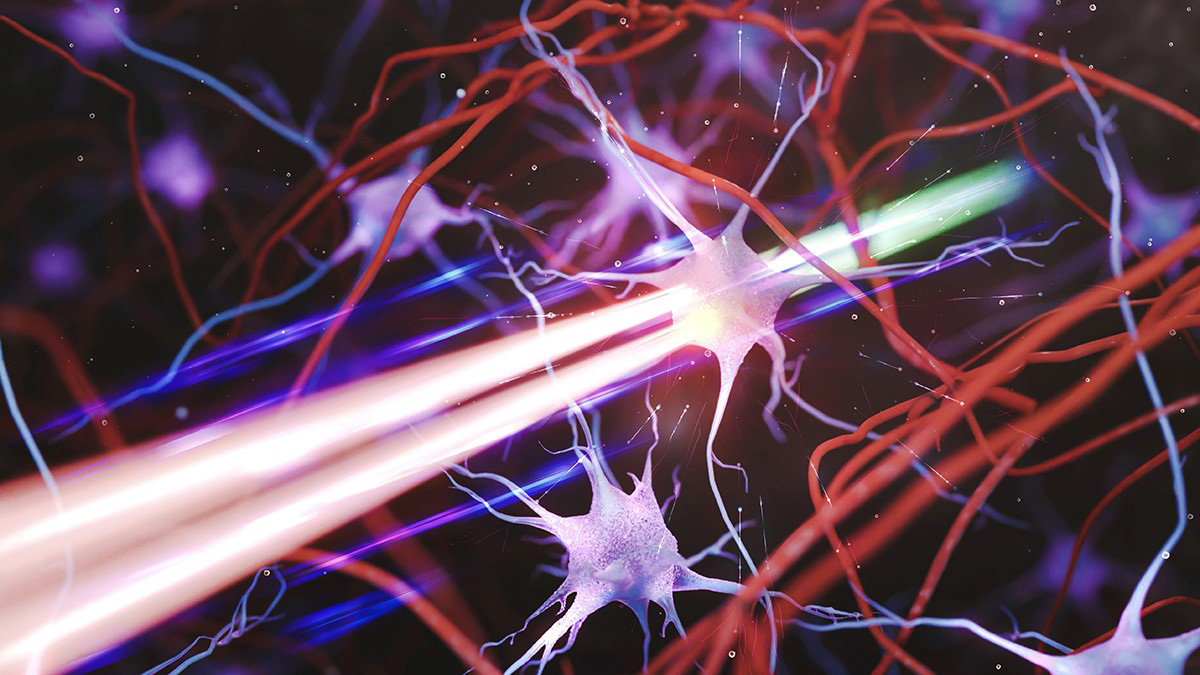
DEEPscope, an innovative microscope from Cornell, enables unprecedented deep and wide-field brain imaging, capturing neural activity with unmatched clarity and scale.
Researchers at Cornell have developed an advanced imaging technology that enables unprecedented deep and wide-field visualization of brain activity at single-cell resolution. This innovative microscope, called DEEPscope, integrates two-photon and three-photon microscopy techniques to capture large-scale neural activity and structural details that were previously beyond reach.
Traditional multiphoton microscopy, a cornerstone for deep-tissue imaging, faces significant limitations in imaging depth and field of view, especially in highly scattering biological tissues like the brain.
To prevent thermal damage, the imaging depth is usually increased at the expense of an exponentially shrinking field of view, making it challenging to observe large-scale neuronal networks. DEEPscope addresses these constraints by integrating a suite of novel techniques, allowing researchers to visualize extensive brain regions at unprecedented depths.
Key Innovations of DEEPscope
Key to this advancement is DEEPscope’s adaptive excitation system and multi-focus polygon scanning scheme, which enable efficient fluorescence generation for large field-of-view imaging.
These innovations make it possible to achieve high-resolution imaging across a 3.23 x 3.23-mm2 field with imaging speed that is sufficient for capturing neuronal activity in the deepest cortical layers of mouse brains. The ability to perform simultaneous two-photon and three-photon imaging further enhances the system’s versatility, allowing detailed exploration of both shallow and deep regions.

In their study, the researchers demonstrated DEEPscope’s capability to image entire cortical columns and subcortical structures with single-cell resolution. They successfully recorded neuronal activities in deep brain regions of transgenic mice, observing over 4,500 neurons in both shallow and deep cortical layers. Moreover, DEEPscope enabled whole-brain imaging of adult zebrafish, capturing structural details at depths greater than 1 mm and across a field wider than 3 mm—a first in the field of neuroscience.
Implications for Neuroscience and Beyond
“DEEPscope represents a significant advancement in brain imaging technology,” said Aaron Mok, the study’s lead author. “For the first time, we can visualize complex neural circuits in living animals at such a large scale and depth, providing insights into brain function and potentially opening new avenues for neurological research.”
The demonstrated techniques can be readily integrated into existing multiphoton microscopes, making it accessible for widespread use in neuroscience and other fields requiring deep-tissue imaging. By overcoming previous limitations, DEEPscope sets a new standard for large-field, high-resolution, deep imaging of living tissues, promising to advance our understanding of the brain’s intricate networks and their role in health and disease.
Reference: “A large field-of-view, single-cell-resolution two- and three-photon microscope for deep and wide imaging” by Aaron T. Mok, Tianyu Wang, Shitong Zhao, Kristine E. Kolkman, Danni Wu, Dimitre G. Ouzounov, Changwoo Seo, Chunyan Wu, Joseph R. Fetcho and Chris Xu, 1 November 2024, eLight.
DOI: 10.1186/s43593-024-00076-4
Never miss a breakthrough: Join the SciTechDaily newsletter.
Follow us on Google and Google News.