
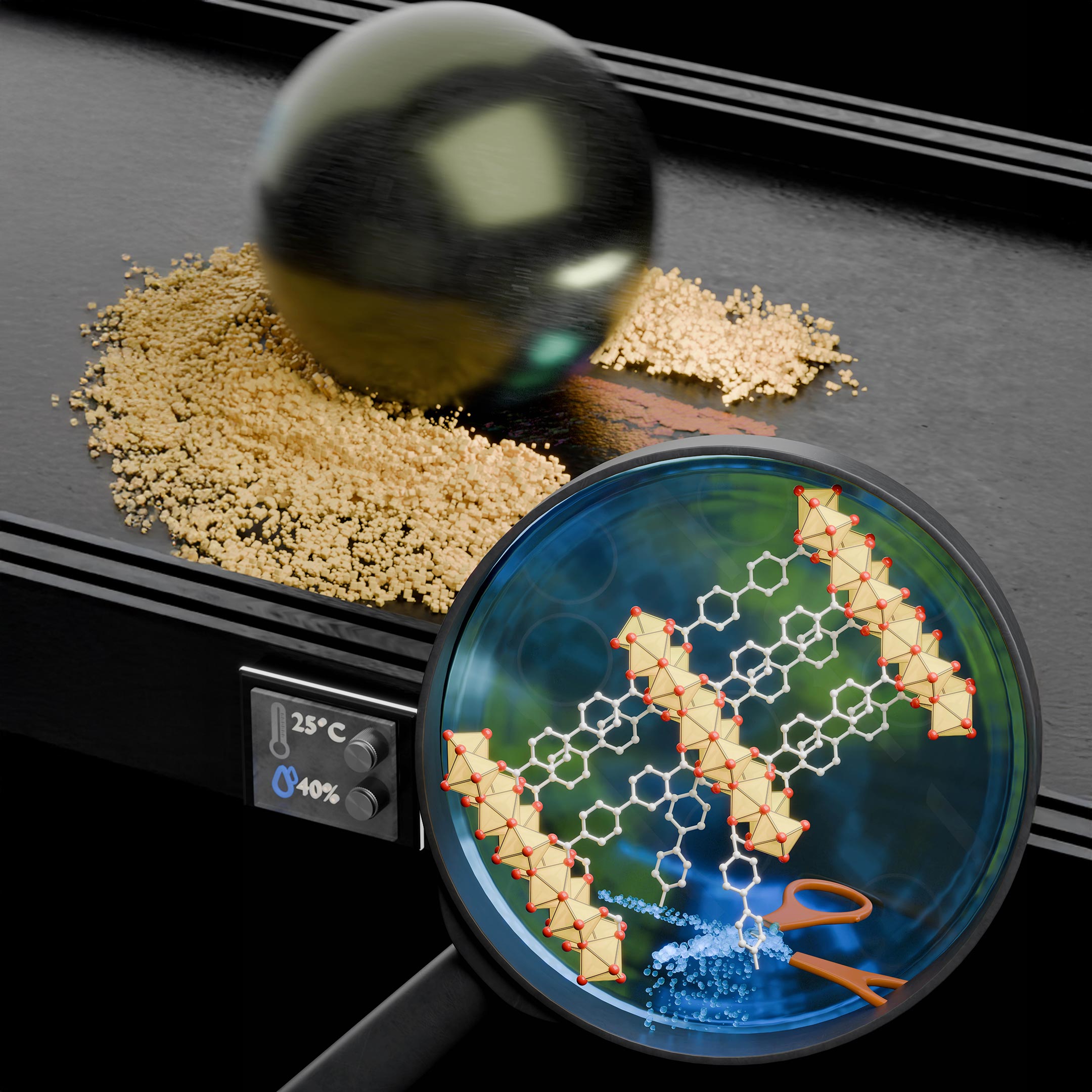
Researchers have developed COK-47, a solid lubricant that outperforms traditional options by leveraging water molecules to reduce friction.
This advanced material consists of ultra-thin titanium oxide sheets that create a low-friction tribofilm in humid conditions, making it highly durable and effective.
Revolutionizing Lubricants with Cutting-Edge Research
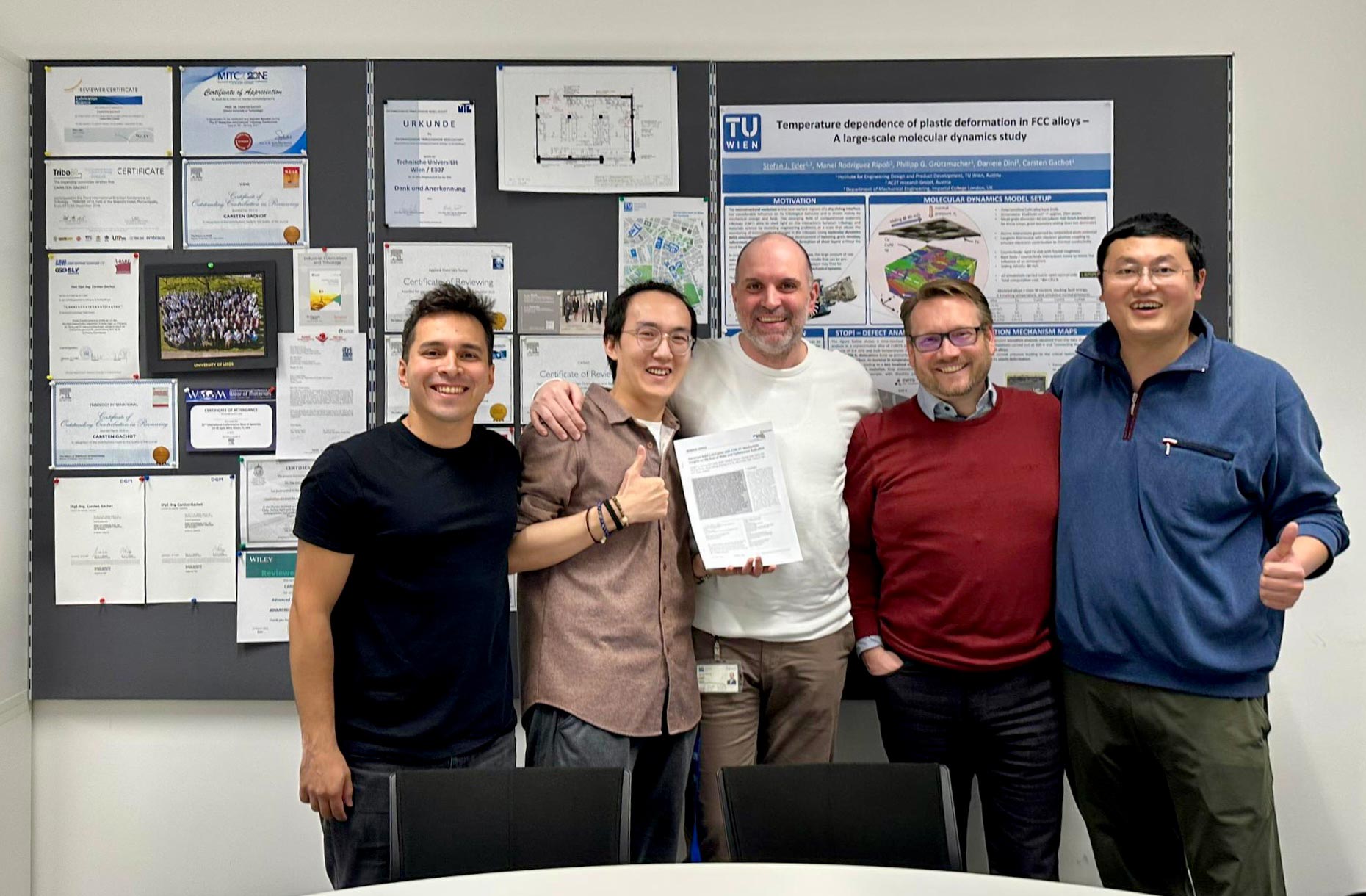
Finding the right lubricant for each application is crucial in many industries. Lubricants help reduce friction, prevent overheating, minimize wear, and improve energy efficiency. At TU Wien, a team of researchers — including Prof. Carsten Gachot (Tribology, Mechanical Engineering) and Prof. Dominik Eder (Chemistry), along with guest researcher Xudong Sui — is working to develop advanced, more effective lubricants.
The team has introduced a groundbreaking new material with unique properties. Unlike traditional liquid lubricants, COK-47 is a solid, powder-like substance. On the nanoscale, it consists of atomically thin layers stacked together, resembling a tiny deck of cards. When exposed to water molecules, these layers slide past each other effortlessly, forming a tribofilm — a thin, lubricating layer that drastically reduces friction. This makes COK-47 particularly effective in humid environments.
Organic Meets Inorganic
For years, the team has been exploring metal-organic frameworks (MOFs) — a new class of materials made from inorganic building blocks connected by organic molecules. These materials can be precisely engineered at the atomic level for various applications. In past research, Dominik Eder’s group has used MOFs as photocatalysts for hydrogen production and water purification.
In most cases, metal-organic framework compounds are nanoparticles that contain clusters of metal atoms, linked by organic compounds. “However, the material COK-47 has an important special feature,” explains chemist Pablo Ayala, co-author of the current study. “The inorganic components of this material are two-dimensional sheets of titanium oxide – and this dramatically influences its behavior.”
How COK-47 Reduces Friction at the Molecular Level
Detailed investigations have now shown that in a humid environment, water molecules separate the bonds between the titanium oxide sheets, allowing the flat structures to slide past each other and thus form a so-called ‘tribofilm’. Such a sliding film can be extremely effective in reducing friction, for example between two moving parts in a machine.
Unmatched Performance
“We compared COK-47 with other lubricants from the class of metal-organic framework compounds that are often used today. COK-47 showed a significantly lower coefficient of friction than the others,” says engineer Hanglin Li, first author of the study. “COK-47 is also significantly more durable compared to other 2D materials – another important criterion in practice.”
With this discovery, the team has opened up a whole new area of research in the field of solid-state lubricants. Now they want to further improve the behavior of the material and investigate how it can be adapted to different, very specific applications.
Reference: “Advanced Solid Lubrication with COK-47: Mechanistic Insights on the Role of Water and Performance Evaluation” by Hanglin Li, Xudong Sui, Pablo Ayala, Edoardo Marquis, Hannah Rabl, Adrian Ertl, Pierluigi Bilotto, Yazhuo Shang, Jiusheng Li, Lu Xu, Maria Clelia Righi, Dominik Eder and Carsten Gachot, 13 January 2025,Advanced Science.
DOI: 10.1002/advs.202415268
Never miss a breakthrough: Join the SciTechDaily newsletter.
Follow us on Google and Google News.