

Researchers have revolutionized quantum technology by achieving long-lasting entanglement between molecules using ‘magic-wavelength optical tweezers.’
This breakthrough enhances the potential for quantum computing, precise sensors, and understanding complex quantum materials, with entanglement fidelity surpassing 92%.
Advancing Quantum Entanglement with Optical Tweezers
Scientists at Durham University have achieved a groundbreaking milestone by demonstrating long-lasting quantum entanglement between molecules. This advancement paves the way for significant progress in quantum computing, sensing, and fundamental physics.
For the first time, scientists utilized precisely calibrated optical traps, called “magic-wavelength optical tweezers,” to establish an exceptionally stable environment that preserves molecular entanglement over extended periods. This capability is a critical step toward developing next-generation quantum technologies.
Quantum entanglement is a remarkable phenomenon where two particles become interconnected, so that the state of one instantly affects the other, no matter how far apart they are. This unique property is a cornerstone of quantum computing and a range of advanced technological applications.
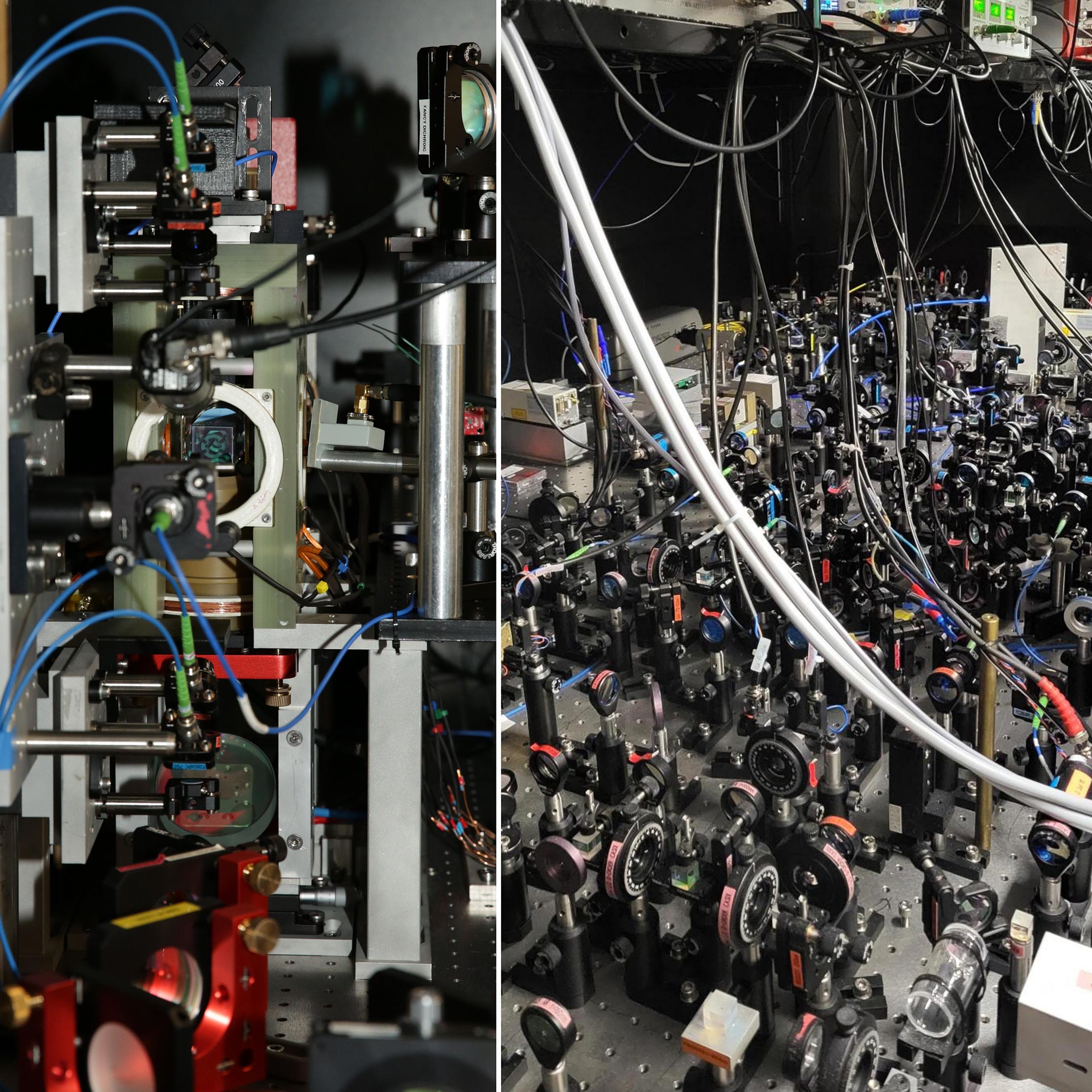
Expanding Quantum Capabilities with Molecules
While entanglement has been achieved with atoms, achieving it with complex molecules is a significant step forward because molecules offer additional structures and properties, such as vibration and rotation, that can be leveraged in advanced quantum applications.
Lead author of the study, Professor Simon Cornish of Durham University, said: “The results highlight the remarkable control we have over individual molecules. Quantum entanglement is very fragile, yet we can entangle two molecules using incredibly weak interactions and then prevent loss of the entanglement for a time approaching one second.”
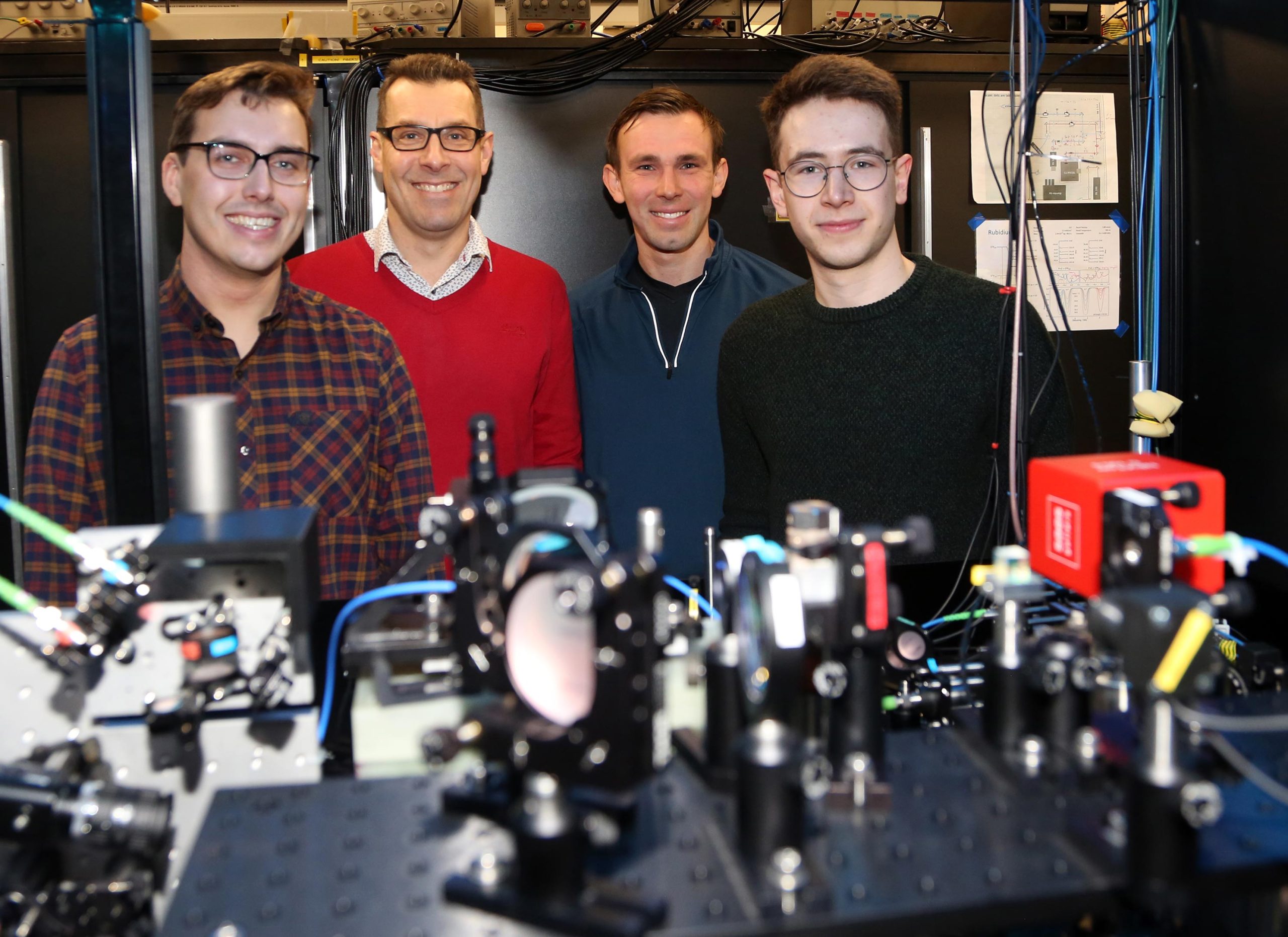
Extending Quantum Coherence
This breakthrough was made possible by the development of a stable environment that maintains coherence in entangled molecules over extended periods.
By using specially tuned laser light in the optical tweezers, the researchers are able to control molecules with unprecedented precision, paving the way for more complex quantum operations.
Co-author of the study, Dr. Daniel Ruttley of Durham University, said: “Our work demonstrates the incredible potential of molecules as building blocks for next-generation quantum technologies. Long-lived molecular entanglement could be exploited to construct quantum computers or precise quantum sensors and to understand the quantum nature of complex materials.”
Quantum Sensing and Computing Applications
The research achieved exceptionally high entanglement fidelity, reaching levels over 92% and even higher when accounting for correctable errors. This stability in molecule entanglement is critical for applications requiring long measurement periods and storage of quantum information.
Long-lived entanglement in molecules could enhance precision measurements in quantum sensing, simulate complex quantum materials, and enable new forms of quantum computation.
Quantum Memory and Network Development
Additionally, this research supports the development of ‘quantum memories’ — devices that store quantum information for longer durations, essential for advanced quantum networks.
The breakthrough is the latest in a series of advancements in quantum science and represents a major leap towards using molecules in complex quantum technology.
Reference: “Long-lived entanglement of molecules in magic-wavelength optical tweezers” by Daniel K. Ruttley, Tom R. Hepworth, Alexander Guttridge and Simon L. Cornish, 15 January 2025, Nature.
DOI: 10.1038/s41586-024-08365-1
Never miss a breakthrough: Join the SciTechDaily newsletter.
Follow us on Google and Google News.
2 Comments
Vibration and rotation can be leveraged in advanced quantum applications.
VERY GOOD!
Ask the researchers:
1. What is the physical reality of quantum?
2. Why is there so much rotation, even spin, in nature?
The physical phenomena we observed in scientific research are often one-sided. Although light is an important way for humans to understand nature, it is definitely not the natural essence of the universe. In the process of exploring nature, there are significant differences between what humans see, hear, and touch. The biggest difference between humans and other animals is the ability to elevate these sensory understandings to rational ones. Scientific research guided by correct theories can enable researchers to think more.
According to the Topological Vortex Theory (TVT), spins create everything, spins shape the world. There are substantial distinctions between Topological Vortex Theory (TVT) and traditional physical theories. Grounded in the inviscid and absolutely incompressible spaces, TVT introduces the concept of topological phase transitions and employs topological principles to elucidate the formation and evolution of matter in the universe, as well as the impact of interactions between topological vortices and anti-vortices on spacetime dynamics and thermodynamics.
Within TVT, low-dimensional spacetime matter serves as the foundation for high-dimensional spacetime matter, and the hierarchical structure of matter and its interaction mechanisms challenge conventional macroscopic and microscopic interpretations. The conflict between Quantum Physics and Classical Physics can be attributed to their differing focuses: Quantum Physics emphasizes low-dimensional spacetime matter, whereas Classical Physics centers on high-dimensional spacetime matter.
Subatomic particles in the quantum world often defy the familiar rules of the physical world. The fact repeatedly suggests that the familiar rules of the physical world are pseudoscience. In the familiar rules of the physical world, two sets of cobalt-60 can form the mirror image of each other by rotating in opposite directions, and can receive heavy rewards.
Please witness the grand performance of physics today. https://scitechdaily.com/microscope-spacecrafts-most-precise-test-of-key-component-of-the-theory-of-general-relativity/#comment-854286.
If the researchers are truly interested in science, please read: The Application of Inviscid and Absolutely Incompressible Spaces in Engineering Simulation (https://scitechdaily.com/microscope-spacecrafts-most-precise-test-of-key-component-of-the-theory-of-general-relativity/#comment-870077).
Like to know more about how the entanglement Fidelity function makes connection better