
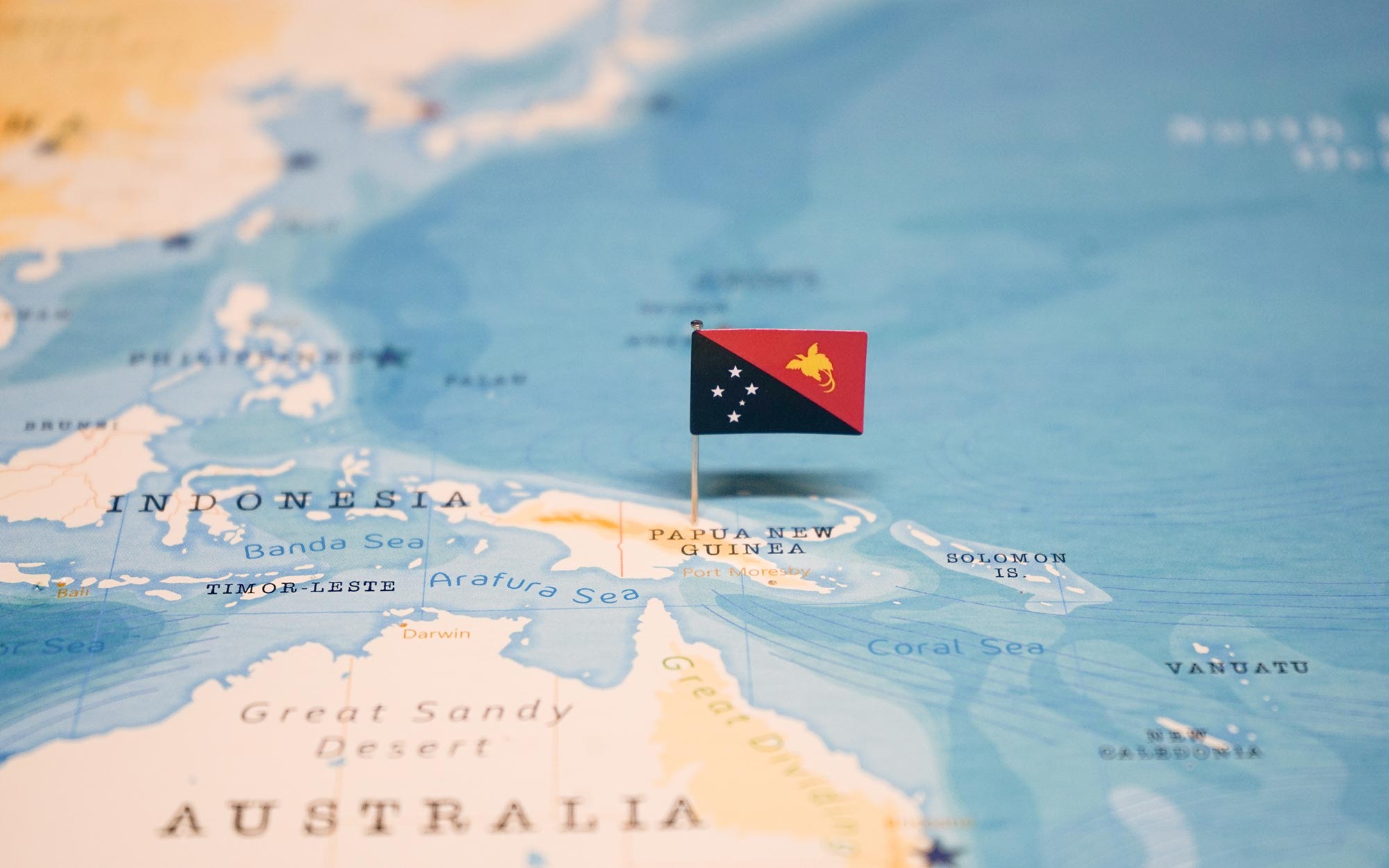
Genomic studies show Papua New Guineans are closely related to Asians, shaped by isolation, adaptation, and Denisovan heritage.
Papua New Guineans are living proof of how isolation, ancient genetic mixing, and life on remote islands can preserve a distinct chapter of human history.
A group of European scientists has recently clarified their genetic origins, applying advanced Artificial Intelligence (AI) methods. Their findings show that Papua New Guineans are genetically close to other Asian populations, tracing back to the same ‘Out of Africa’ migration that gave rise to all non-African groups.
Despite this shared ancestry, Papua New Guineans have a noticeably different appearance from most Asian populations and display certain traits similar to Sub-Saharan Africans. These physical similarities once led to speculation that they might have descended from a separate branch of non-African humans.
According to lead author Dr. Mayukh Mondal, the unique physical features of Papua New Guineans probably come from natural selection: “Perhaps adaptations to tropical climates that make them look more like Sub-Saharan African groups, even though their genetics clearly link them to other Asian populations. More studies are needed to uncover how evolution shaped this remarkable population.”
The genetic origin remains unresolved
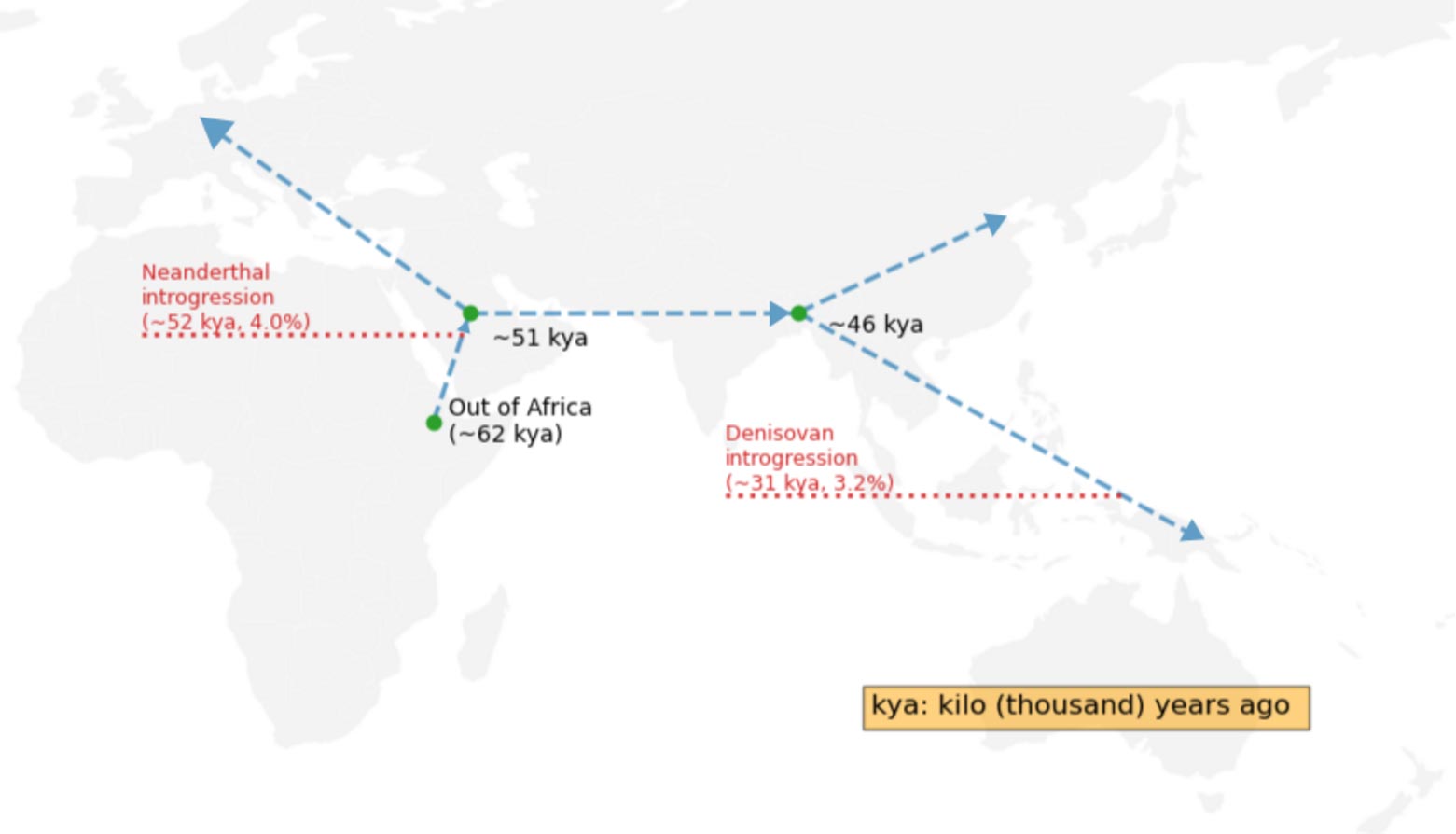
Most scientists agree that modern humans left Africa between 50,000 and 70,000 years ago, eventually spreading into Europe, Asia, and other regions. Early archaeological findings suggested that the ancestors of Papua New Guineans may have come from a distinct, earlier migration (the so-called ‘First Out of Africa’ hypothesis), following a coastal path through India and Southeast Asia. Supporting this idea, the oldest human site in Oceania is dated to about 50,000–60,000 years ago, which predates the earliest known sites in Europe and indicates that at least part of their ancestry could trace back to this early dispersal.
With the development of modern DNA sequencing, researchers have revisited the ‘First Out of Africa’ theory. Analyses of both maternal (mitochondrial) and paternal (Y-chromosome) DNA have found no strong evidence that the majority of Papuan ancestry came from this earlier wave. Instead, genetic data suggest closer links to other non-African populations, although a small contribution from ancient migrations cannot be completely dismissed.
Adding to this complexity, the genomes of Papua New Guineans contain a notable proportion of Denisovan DNA — an extinct human lineage related to Neanderthals. This genetic legacy likely came from interbreeding events in Southeast Asia or Oceania, further shaping their distinct ancestry.
Even with these insights, the origins of Papuan New Guineans are not fully resolved. Were they an early branch that diverged before Europeans and Asians? Did related populations mix into their genetic history? Do they preserve ancestry from the elusive ‘First Out of Africa’ group, or are they firmly within the broader Asian lineage? These questions remain open for future study.
Unique demographic history
In this study, scientists used high-quality genomic data and AI-powered models to compare different demographic scenarios for the origin of the Papuan New Guineans’ genetic diversity. Their results suggest that Papua New Guineans are a sister group to other Asian populations. Contribution from a ‘First Out of Africa’ migration might not be needed to explain their origins.
The researchers found that the ancestors of Papuan New Guineans went through a dramatic population bottleneck — most likely their numbers dropped sharply after reaching Papua New Guinea and stayed low for thousands of years. Unlike other non-African groups, they did not experience the farming-driven population boom that reshaped Europe and Asia. This unique demographic history left genetic signatures that, if misunderstood, could look like evidence of a contribution from an unknown population.
Reference: “Resolving out of Africa event for Papua New Guinean population using neural network” by Mayukh Mondal, Mathilde André, Ajai K. Pathak, Nicolas Brucato, François-Xavier Ricaut, Mait Metspalu and Anders Eriksson, 9 July 2025, Nature Communications.
DOI: 10.1038/s41467-025-61661-w
Funding: European Regional Development Fund, Horizon 2020 research and innovation program, European Regional Development Fund, Estonian Research Council, Estonian Research Council, European Union’s Horizon Europe research and innovation program, Estonian Research Council, French National Research Agency, Tartu University
Never miss a breakthrough: Join the SciTechDaily newsletter.
Follow us on Google and Google News.
7 Comments
And how sure are we that the AI didn’t just make stuff up?
I think dumb people will be very sure.
If, as has been claimed, the Australian Aborigines had got to Australia 65 000 years ago and humans (of the sapiens variety) only escaped from Africa between 50000-70 000 years ago and one cannot walk on water, then……………..?
H erectus had got to Indonesia and was living there 100 000 years ago and had presumably built boats that could cross the sea between Singapore and Java, at the very least……………..Mungo Man, which would appear to be the skeleton of a bloke who died 45 000 years ago, might be interesting in regard to his DNA, but those bones have long been nicked and hidden from human ken.
Very greatfull for the revealing of my whereabout Papua New Guinea. It gives me an high look on doing in- depth studies..
My Kairiru Island speaking tribe and other related tribes in Aitape coastal villages have traditional names similar to middle eastern names and have dialects related to MOTUAN Language in the MOTUAN REGION OF Central province. How will the AI explain this ?
Probably we were here since then anyway! Who knows 🤨 no one knows I’m sure, only God knows 🙏straight outta 🇵🇬
It is very greatfull to reveal where we came from.PNG is unique and every places have their own stories to tell. Like, one small village that I was ordinated from has an interesting story to tell. It is Wanelek near Simbai in Madang Province. Wanelek is a home to first human settlement in PNG. Wanelek story has a connections to Waim sites where as Kuk heritage sites near Mt. Hagen in Western Highland Province. Their ancestors were the first gardeners in the world but Wanelek if conducted more research I hope a real point of origin of human, first hunters and gathers on this earth and the first people to trade with Highlands and the costal to unite them. Later, people were migrated from South East Asia. People have been here in Papua New Guinea already. Our archaeologists needs to conduct more research at Wanelek Village, Simbai LLG in Madang Province.