
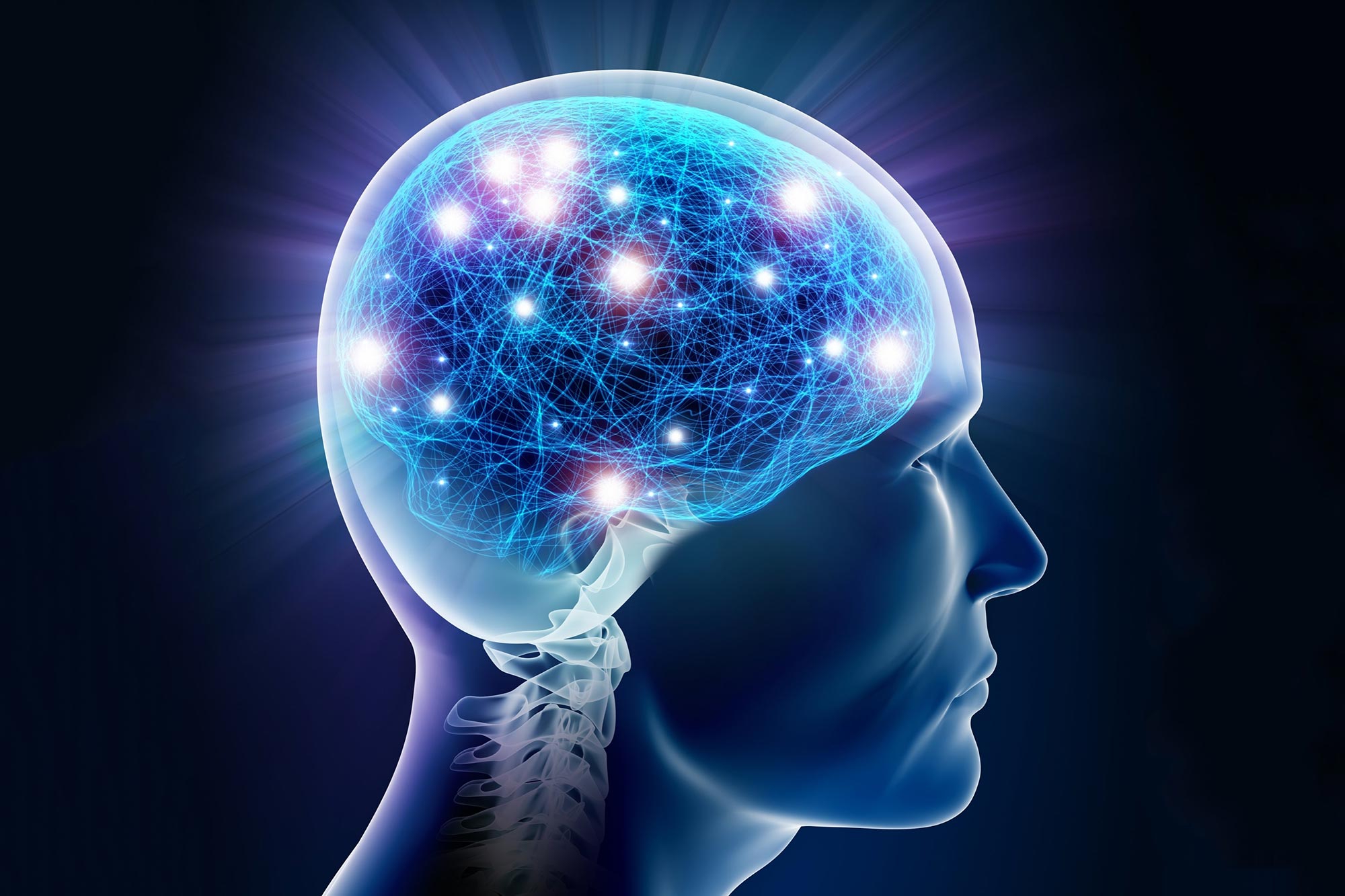
For the first time, it has been confirmed that individual neurons represent the concepts we learn, regardless of the context in which they are encountered, challenging previous beliefs.
A study led by Dr. Rodrigo Quian Quiroga, head of the Neural Mechanisms of Perception and Memory Research Group at the Hospital del Mar Research Institute, has provided the first direct evidence of how neurons in the human brain store memories independently of the context in which they are acquired.
Published in Cell Reports, the study confirms that neurons can recognize objects or individuals regardless of the surrounding environment. This ability allows the brain to form higher-level, abstract relationships – a fundamental aspect of human intelligence.
This is the first time this neuronal behavior has been observed in humans. Previous research in animals indicated that concept encoding varied significantly with changes in context. For instance, in rats, neurons responded differently to the same object depending on its location, leading scientists to believe that such memories were stored in separate groups of neurons.
The study led by Dr. Quian Quiroga has yielded “surprising responses” that contradict previous findings, as neuronal responses to a specific concept remain the same when the context changes, such as remembering having seen a person in different locations.
“The basic principle of neuronal coding in humans is the opposite of what has been observed in other species, which has significant implications,” notes Quian Quiroga.
Single Neuron Data
The study involved data from nine patients in Argentina and the United Kingdom with treatment for refractory epilepsy, who had electrodes implanted to monitor the activity of specific groups of neurons individually. This allowed researchers to obtain precise recordings of their responses, unlike previous human studies based on fMRI recording, which cannot differentiate individual neurons.
Patients were presented with two stories featuring the same person in different contexts, supported by images. Thanks to the monitoring of individual neurons while performing this task, researchers could observe which groups of neurons were activated and how they responded in the two stories.
Specifically, they confirmed that if a neuron responded to a person’s image, the response remained the same in both stories. Furthermore, when patients recounted the story themselves, the same neurons were activated seconds before they referred to the protagonist, and also in the same way for both stories.
“Memories are stored in a much more abstract manner in humans compared to other animals. You can think of concepts or anything else in more abstract terms, independent of the context in which you learned them,” explains Dr. Quian Quiroga, suggesting that this could be one of the “foundations of human intelligence.”
“This ability allows us to make much more abstract and complex associations and inferences than if we were forced to think of each concept within a specific, concrete context,” he asserts. In other words, humans can decontextualize their memories to create more abstract thoughts.
Reference: “Lack of context modulation in human single neuron responses in the medial temporal lobe” by Hernan G. Rey, Theofanis I. Panagiotaropoulos, Lorenzo Gutierrez, Fernando J. Chaure, Alejandro Nasimbera, Santiago Cordisco, Fabian Nishida, Antonio Valentin, Gonzalo Alarcon, Mark P. Richardson, Silvia Kochen and Rodrigo Quian Quiroga, 28 January 2025, Cell Reports.
DOI: 10.1016/j.celrep.2024.115218
Never miss a breakthrough: Join the SciTechDaily newsletter.
Follow us on Google and Google News.
2 Comments
“The basic principle of neuronal coding in humans is the opposite of what has been observed in other species, which has significant implications.” Yes. It means stop researching on animals if you want to understand humans. ‘
Also, this research was done on epileptics with implanted electrodes. Does that affect the results? Could be. And neuronal activity is not the same as memory and thought. Consciousness is a whole greater than its neuronal mechanisms.
Cybernetic interactions are structured and engaged from global demands. It is fluid, always new experience and ‘memories’ are not specifically cached. Human memories are thought streams concerning recognizable subjects.