
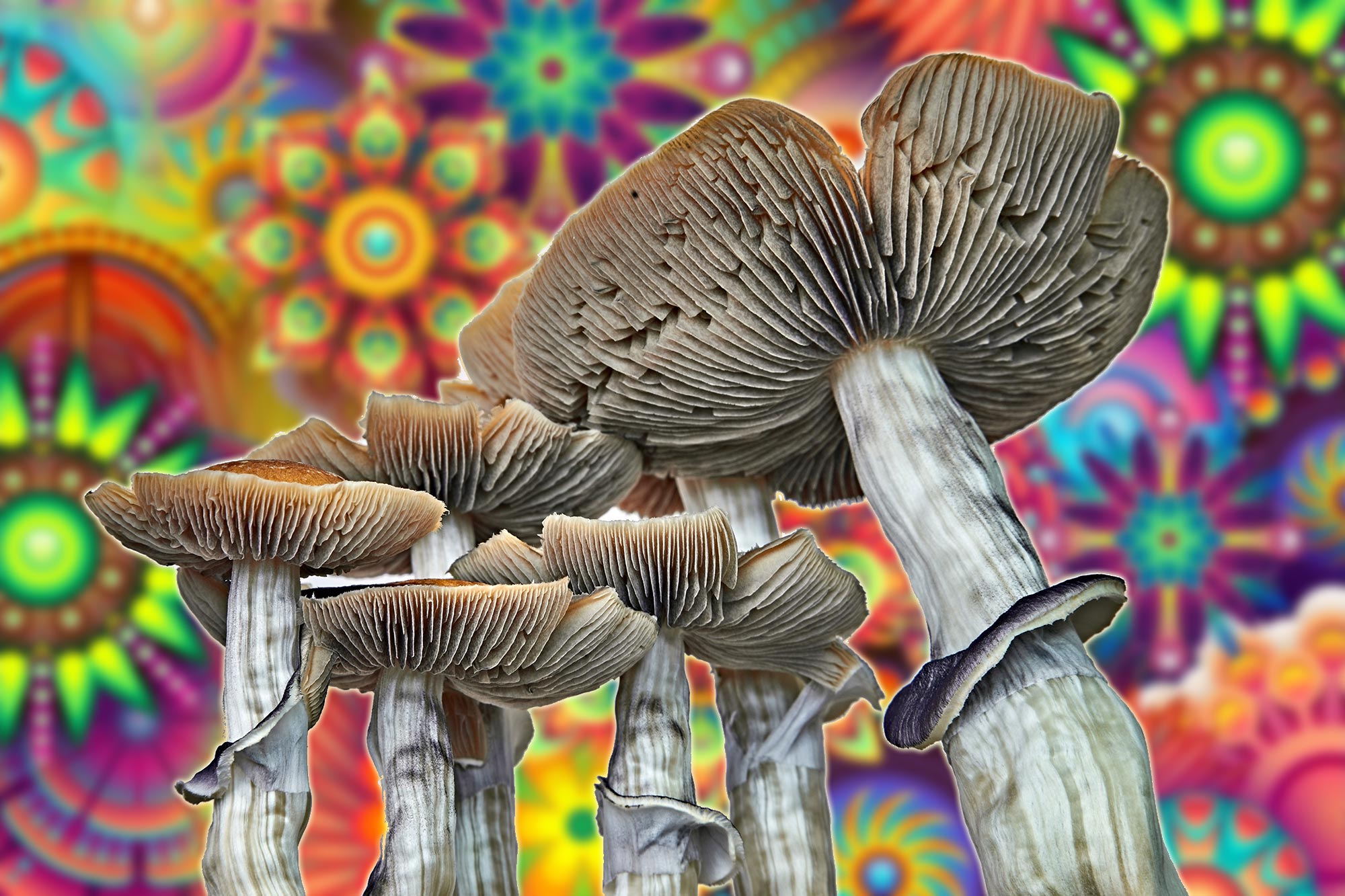
New research shows a concerning increase in interest in the highly toxic Amanita muscaria mushroom, often misleadingly marketed as a therapeutic substance akin to psilocybin, highlighting an urgent need for stricter regulations and consumer education to prevent potential harm.
Interest in the potentially harmful “magic mushroom” Amanita muscaria has surged among Americans, with Google searches increasing by 114 percent from 2022 to 2023, according to a new study by researchers at the University of California San Diego’s Herbert Wertheim School of Public Health and Human Longevity Science. The study, published in the American Journal of Preventive Medicine, suggests that the growing market for Amanita muscaria may be partly driven by emerging clinical research supporting the safety and efficacy of psilocybin in treating depression.
Like psilocybin mushrooms, Amanita muscaria mushrooms have psychotropic effects. These include a feeling of weightlessness, visual and auditory hypersensitivity, space distortion, unawareness of time, and colored hallucinations. The psychotropic effects are produced by compounds that naturally occur in the mushroom called muscimol and ibotenic acid, its biosynthetic precursor.
However, in addition to being psychotropic, these compounds can also be more toxic than fentanyl, cocaine, and PCP, according to the scientists’ review of estimates from published mouse studies. Nevertheless, gummies and chocolates containing these compounds are being marketed with health-related claims such as mitigation of anxiety, depression, and other conditions, often by vague references to clinical studies related to psilocybin, which is not as toxic and produces different psychotropic effects.
Marketing Misinformation and Consumer Rights
“There is a lot of interest in the therapeutic potential for psilocybin and for good reason. But at the same time, a growing industry may be trying to capitalize on this interest by marketing other mushrooms. For example, some manufacturers are calling Amanita muscaria products ‘magic mushroom gummies’ and not disclosing what mushroom they contain, or not making it clear Amanita muscaria is a different mushroom than psilocybin and has essentially no clinical evidence supporting its use as a therapy,” said Eric Leas, Ph.D., M.P.H., assistant professor in the UC San Diego Herbert Wertheim School of Public Health and Human Longevity Science and senior author on the paper.
Psilocybin and muscimol work in different ways. Psilocybin is an antidepressant that primarily binds to serotonin receptors, activating a neural pathway that mediates happiness and optimism. Amanita muscaria however is a depressant, similar to alcohol and benzodiazepines, which suppress the central nervous system. Leas believes that marketing Amanita muscaria as a psilocybin-type product violates consumers’ right to informed consent.
“There may be some pharmaceutical potential to Amanita muscaria, but muscimol does not have the same effects on the body as psilocybin, so it probably would not have the same treatment applications if it ever went through drug development. For this reason, it is misleading not to clearly distinguish between muscimol and psilocybin. If someone is consenting to a psychedelic experience, they have a right to know what substance they are taking and receive accurate information about its potential health benefits and health risks.”
False marketing may be enabled by the lack of federal regulation of Amanita muscaria. Under the 1970 Controlled Substances Act, psilocybin is a Schedule 1 drug, making its manufacture, distribution, import/export, possession and use illegal. In 2017, the FDA designated psilocybin as a “breakthrough therapy” and in 2023 loosened restrictions to allow drug developers and scientists to conduct clinical trials with psilocybin, including some that are taking place at UC San Diego. Nevertheless, it continues to be a Schedule 1 controlled substance, and, therefore its use is disallowed out of the context of clinical trials.
Concluding Thoughts and Policy Recommendations
Not so for Amanita muscaria. Although there are several published case studies of hospitalizations and deaths resulting from Amanita muscaria consumption, to date, it is not included on a Controlled Substances list (except for the State of Louisiana, where sales are restricted). However, it is often marketed as a dietary supplement, products covered by regulations enforced by the U.S. Food and Drug Administration (FDA) and the Federal Trade Commission (FTC).
“We have found that many manufacturers use supplement labeling, including ‘Supplement Facts’ panels,” said Leas. “However, there is a process for bringing a supplement to market that involves presenting safety data and filing an application, and we cannot find any evidence that any of these manufacturers have gone through this process, and this makes the current products sold in this manner illegal.
“In my view, if a manufacturer wanted to develop a dietary supplement from Amanita muscaria, the application probably would not be approved because of muscimol and ibotenic acids’ inherent risks,” he added. “But right now it is the ‘Wild West,’ and companies are profiting from delayed enforcement while putting consumers at risk.”
The authors are making several general recommendations. The most restrictive would be to put Amanita muscaria on the Controlled Substances list, where it could first be evaluated for its medical potential and abuse liability before it is widely sold. However, if Amanita muscaria is not placed on a drug schedule, they recommend commonsense precautions, such as setting age restrictions, accurate dosing standards, childproof packaging, and marketing aimed at adults rather than children, all now required for legal sales of recreational cannabis. The authors would also like to see mental health professionals help their patients distinguish between psilocybin and Amanita muscaria.
The authors’ key takeaway is that “companies who are making these products are pushing the limits of our regulations. They are getting away with making a buck until someone tells them they can’t. Given the substantial risks associated with using Amanita muscaria products, it is a buyer beware marketplace where consumers are at risk and are not accurately informed. The time for a public health first response is now.”
Reference: “Need for a Public Health Response to the Unregulated Sales of Amanita muscaria Mushrooms” by Eric C. Leas, Nora Satybaldiyeva, Wayne Kepner, Kevin H. Yang, Raquel M. Harati, Jamie Corroon and Matthieu Rouffet, 10 June 2024, American Journal of Preventive Medicine.
DOI: 10.1016/j.amepre.2024.05.006
Co-authors include: Nora Satybaldiyeva, Wayne Kepner, Kevin H. Yang, Raquel M. Harati, Jamie Corroon, and Matthieu Rouffet, of UC San Diego.
The work is supported in part by grant T32IP4684 from the California Tobacco Related Disease Research Program and grant K01DA054303 from the U.S. National Institute on Drug Abuse.
Never miss a breakthrough: Join the SciTechDaily newsletter.
Follow us on Google and Google News.
5 Comments
How is it that professors at UC San Diego have no understanding of what amanita muscaria is? “More toxic than fentanyl”, I see. A Google Trends chart, a story about Santa, and a toxicity chart against uncontrolled and prescription concentrations of other drugs showing tobacco as ten times more toxic; how much did the American federal NIH and state of California pay these seven doctors and MoPH’s to do this minute worth of google research for a drugwar press release?
Your brain is refreshing to see in the modern day. I was thinking the same thing
You have done a great dis-service to call these “magic mushrooms,” when their real common name is fly agaric or fly amanita.
What the hell is this guy smoking? Saying to people that the mushroom is as dangerous as Fentanyl? That’s like saying a knife is as dangerous as Fentanyl. Shouldn’t be so quick to demonize this mushroom as it has its own purposes and yes it’s being abused and touted as a psychedelic one that’s fooling a lot of people which is a shame.
Better title…“Corrupt Scientists Who Get Payments From Filthy Companies Like Pfizer For Every Prescription Drug They Peddle, Warn, “we are going to lose everything!!”
Liars, “the face of the lord is against those who do evil.”
Cars and the abuse of food is markedly far more harmful than these, but where is your warning about the need for better drivers training and the need for better diets?
Woe to those who lie for financial gain, they will not have joy from heaven. But blessed are those who suffer while doing good, they shall never die and all of Amdromeda shall be theirs. Amen.
Using psilocybin is a safe a salubrious practice for those who use it according yo sound guidelines. The people who bribed the author of this bogus article know that, along with every other common sensed person on this planet, and throughout the cosmos. Amen
So those doctors are warning us about something that can treat depression for 6 months after one, 15 dollar dose? Yeah…makes sense…for they sell worthless antidepressant drugs like Caplyta and Prozac for $600 to $1400 a month and most people, like me, attest that those drugs are WORTHLESS POISONS.
Dear Big Pharma, please sell cocaine, cannabis, amphetamines, khat, and all that good stuff that you pay the government to take off the market. The world can be a better place to live for all of us. Just don’t rip people off with exorbitant prices, the way you are doing now, or else the “illegal” market will continue to flourish.
Repent, oh corrupt scholars and journalists, the kingdom of God is upon you. May it be that you see the light and change your ways, leaving the ways of darkness and leaning on the way of light. Amen