
Close Menu
    Facebook X (Twitter) Instagram
    SciTechDaily
    • Biology
    • Chemistry
    • Earth
    • Health
    • Physics
    • Science
    • Space
    • Technology
    Facebook X (Twitter) Pinterest YouTube RSS
    SciTechDaily
    Home»Space»Rocket Tanks Made of Lightweight Carbon Fiber Proven Possible
    Space

    Rocket Tanks Made of Lightweight Carbon Fiber Proven Possible

    By European Space Agency (ESA)August 4, 2021No Comments4 Mins Read
    Facebook Twitter Pinterest Telegram LinkedIn WhatsApp Email Reddit
    Share
    Facebook Twitter LinkedIn Pinterest Telegram Email Reddit
    Carbon Composite Tank Test
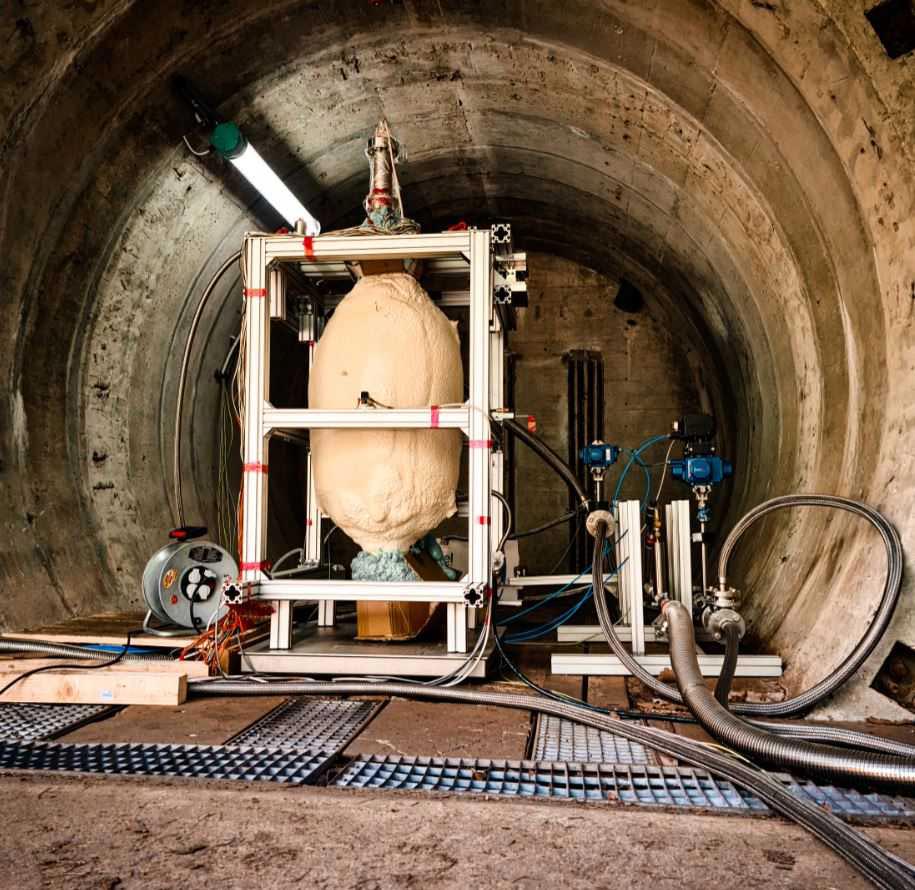
    Tests show that lightweight carbon-fiber-reinforced plastic is strong enough to replace metal used in upper-stage rocket structures. This is an important milestone in Europe for the development of a prototype of a highly-optimized ‘black’ upper stage, Phoebus, a joint initiative by MT Aerospace and ArianeGroup, funded by ESA’s Future Launchers Preparatory Programme. Credit: MT Aerospace

    ESA-backed CFRP tanks could cut upper stage weight by two tonnes, marking a major leap in rocket design and payload capacity.

    Future rockets could fly with tanks made of lightweight carbon fiber reinforced plastic thanks to ground-breaking research carried out within ESA’s Future Launchers Preparatory Program.

    Building on earlier studies, MT Aerospace in Germany has demonstrated a novel design of a small-scale tank made of a unique carbon fiber reinforced plastic (CFRP) that is not only leak-proof with liquid hydrogen, but also compatible with liquid oxygen, without the use of a metal liner.

    A tank made solely of CFRP is much lighter than metal, requires fewer parts, and is therefore faster and cheaper to manufacture.

    This is a milestone achievement as normally, storage of cryogenic propellants such as these which are cooled to -253˚C (-423˚F) requires tanks with metallic liners to make them leak-proof, with or without a composite overwrap.

    Carbon Composite Oxidizer Tank Test
    MT Aerospace tested the strength of a subscale oxidizer tank made from carbon-fiber reinforced plastic. Credit: MT Aerospace AG

    “Fuel tanks are safety-critical elements in any propulsion system,” explained Hans Steininger, CEO at MT Aerospace. “We have provided proof that a high-performance pressure tank made of CFRP can withstand cryogenic stress. In the future, the use of CFRP high-performance tanks should not only enable safe rocket launches, it can also exploit the advantage of significantly lower mass compared to metallic tanks.”

    “This is a tremendous step forward. We have found a very specific carbon composite and processing method that will allow us to consider new architectures and combinations of functions for rocket upper stages which are not possible using metal,” added Kate Underhill, Upper stage and propulsion demonstrators project manager in the Future Launchers Preparatory Program at ESA.

    “Metal is leak-tight. To recreate the same property with carbon composite required a complex weave of black carbon fiber and a special resin. The material resisted cryogenic temperatures, pressure cycles, and reactive substances over a number of separate tests.”
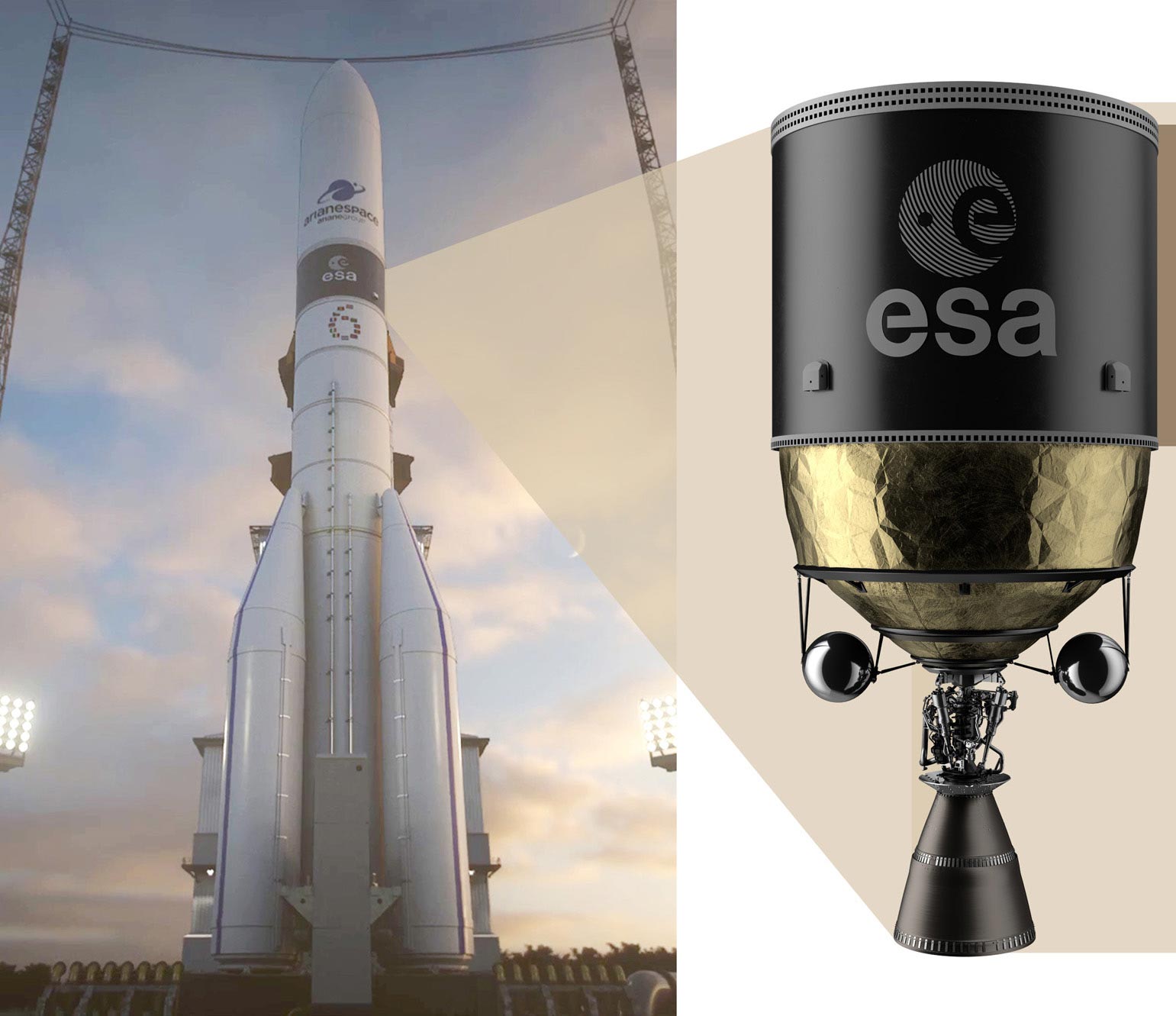
    Phoebus
    MT Aerospace and ArianeGroup signed contracts with ESA on 14 May 2019 to develop Phoebus, a prototype of a highly-optimized black upper stage. Rocket upper stages are commonly made of aluminum but switching to carbon composites lowers cost and could yield two tonnes of spare payload capacity. Credit: ArianeGroup

    Following these ‘bottle’ tests, small-scale tank demonstrators with integrated thermal protection will soon be built for further tests. Data collected will feed into development of a full-scale demonstrator of a future highly-optimized upper stage, called Phoebus. 

    Phoebus will have 3.5m (11.5ft) diameter hydrogen and oxygen tanks, thermal protection, structural assembly elements, and feature new technologies in avionics, structures, and propulsion equipment. CFRP will be applied in the tanks, the interface structure between the two tanks, and the outside cylinder representative of the upper stage outer skin.

    The Phoebus demonstrator will be tested with cryogenic fluids in 2023 to confirm the functional performance of the technologies and new cost-efficient production methods as part of a new contract to advance the development of highly optimized upper stages.

    “Here is an excellent example of how ESA’s support to mature cutting-edge technologies leads to major breakthroughs. This new lightweight carbon-based material would allow the manufacture of an Ariane 6 upper stage that is two tonnes lighter – mass made free for payloads,” said Daniel Neuenschwander, ESA Director of Space Transportation.

    The Phoebus project is a joint initiative by MT Aerospace and ArianeGroup in Germany to validate key technologies developed with support from ESA since May 2019.

    Never miss a breakthrough: Join the SciTechDaily newsletter.
    Follow us on Google and Google News.

    European Space Agency Rocket
    Share. Facebook Twitter Pinterest LinkedIn Email Reddit

    Related Articles

    Ariane 6 Main Engine Ignition: Rocket Hot Fire Test Highlight Video

    Prometheus Full Ignition: Progress for Ultra-Low Cost Reusable Rocket Engine

    Igniting Ariane 6: Europe’s Spaceport Tests the Next Big Thing in Rockets

    Next-Generation Heavy-Lift Launcher: Trial by Fire for Ariane 6 Rocket’s Upper Stage

    Prometheus Ignites: Future of Space Travel With Reusable Rockets

    Blasting Off to Jupiter’s Moons: Ariane 5 Sends JUICE on a Chilling Expedition

    Standing Tall: Massive Moon Rocket Milestone for Artemis

    Webb Space Telescope’s Ariane 5 Rocket Core Stage Ready

    ESA’s Vega Rocket Has Launched on Its Maiden Voyage, Carries 9 Satellites

    Leave A Reply Cancel Reply

    • Facebook
    • Twitter
    • Pinterest
    • YouTube

    Don't Miss a Discovery

    Subscribe for the Latest in Science & Tech!

    Trending News

    Scientists Discover How Coffee Impacts Memory, Mood, and Gut Health

    Why Did the Neanderthals Disappear? Scientists Reveal Humans Had a Hidden Advantage

    Physicists Propose Strange Experiment Where Time Goes Quantum

    Magnesium Magic: New Drug Melts Fat Even on a High-Fat, High-Sugar Diet

    Weight-Loss Drugs Like Ozempic May Come With an Unexpected Cost

    Mezcal “Worm” in a Bottle Mystery: DNA Testing Reveals a Surprise

    New Research Reveals That Your Morning Coffee Activates an Ancient Longevity Switch

    This Is What Makes You Irresistible to Mosquitoes

    Follow SciTechDaily
    • Facebook
    • Twitter
    • YouTube
    • Pinterest
    • Newsletter
    • RSS
    SciTech News
    • Biology News
    • Chemistry News
    • Earth News
    • Health News
    • Physics News
    • Science News
    • Space News
    • Technology News
    Recent Posts
    • Harvard Scientists Reveal Secret Structure Behind How You Smell
    • Scientists Just Discovered the Hidden Trick That Keeps Your Cells Alive
    • This Simple Movement Could Be Secretly Cleaning Your Brain
    • Male Birth Control Breakthrough: Scientists Find Way To Turn Sperm Production Off and Back On
    • A Common Vitamin Could Hold the Key to Treating Fatty Liver Disease
    Copyright © 1998 - 2026 SciTechDaily. All Rights Reserved.
    • Science News
    • About
    • Contact
    • Editorial Board
    • Privacy Policy
    • Terms of Use

    Type above and press Enter to search. Press Esc to cancel.