
Close Menu
    Facebook X (Twitter) Instagram
    SciTechDaily
    • Biology
    • Chemistry
    • Earth
    • Health
    • Physics
    • Science
    • Space
    • Technology
    Facebook X (Twitter) Pinterest YouTube RSS
    SciTechDaily
    Home»Earth»Russian Arctic Losing Billions of Tons of Ice Each Year As Climate Warms
    Earth

    Russian Arctic Losing Billions of Tons of Ice Each Year As Climate Warms

    By University of EdinburghSeptember 4, 20211 Comment3 Mins Read
    Facebook Twitter Pinterest Telegram LinkedIn WhatsApp Email Reddit
    Share
    Facebook Twitter LinkedIn Pinterest Telegram Email Reddit
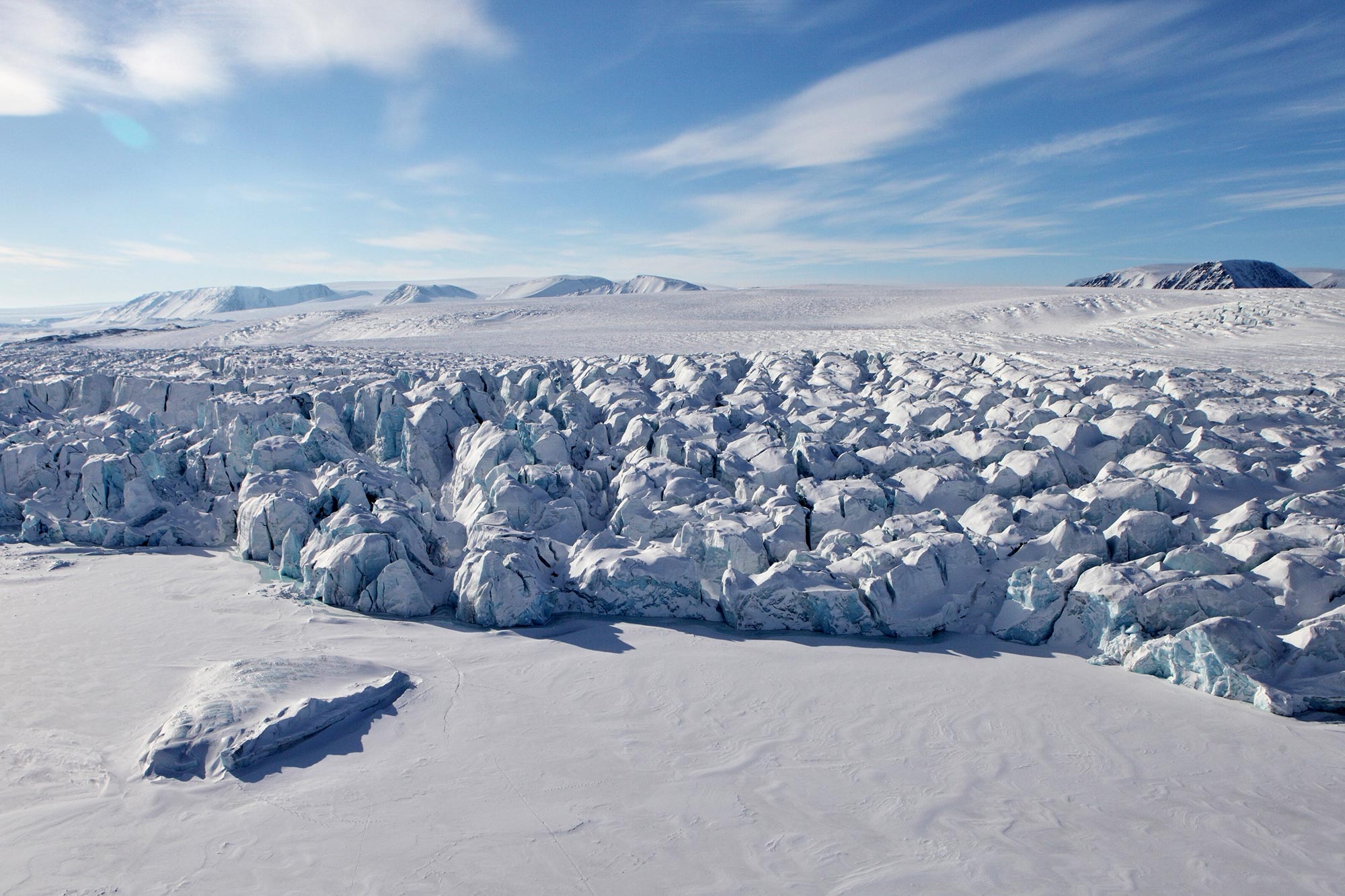
    Severnaya Zemlya in Russian Arctic
    Aerial view of Severnaya Zemlya in the Russian Arctic.

    Glaciers and ice caps in two archipelagos in the Russian Arctic are losing enough meltwater to fill nearly five million Olympic-size swimming pools each year, research shows.

    Satellite data suggests that the amount of ice lost between 2010 and 2018 would put an area the size of the Netherlands under seven feet of water.

    Warming of the Arctic Ocean appears to play a key role in accelerating ice loss from two large groups of islands that border the Kara Sea, researchers say.

    Satellite Data

    The Edinburgh team mapped data collected by the European Space Agency’s CryoSat-2 research satellite to monitor changes to the surface height and mass of ice caps and glaciers.

    Comparing these with climate data for the same period revealed a clear link between rising atmospheric and ocean temperatures and increased ice loss from two archipelagos.

    The team’s analysis shows that the Novaya Zemlya and Severnaya Zemlya archipelagos – which cover a combined area of around 50,000 square miles – lost 11.4 billion tonnes of ice each year between 2010 and 2018.

    Arctic Warming

    Thinning of the ice has already had a major impact on the stability of some of the region’s glaciers and ice caps, which could further increase ice loss in the future, the team says.

    Compared to the relatively small size of glaciers, ice caps are large bodies of ice several hundred meters thick that cover areas of up to around 8,000 square miles in the region. Some of these store ice up to 12,000 years old, which provides scientists with valuable long-term records of the Arctic climate.

    Improved Predictions

    Findings from the study add to a body of research suggesting that conditions in the Arctic Ocean are becoming more like those in the North Atlantic, which is much warmer.

    The study could help predict future ice loss in regions experiencing similar patterns of atmospheric and ocean temperature change, and improve global sea level predictions, the team says.

    Lead author Dr Paul Tepes, of the University of Edinburgh’s School of GeoSciences, said: “The Russian Arctic is largely inaccessible, but satellite data has enabled us to monitor changes to its ice caps and glaciers. As has been observed elsewhere in the world, ice loss in the region is accelerating. As the climate continues to warm, significant ice loss in the Russian Arctic will have clear impacts for sea level rise.”

    Reference: “Accelerating ice mass loss across Arctic Russia in response to atmospheric warming, sea ice decline, and Atlantification of the Eurasian Arctic Shelf Seas” by Paul Tepes, Peter Nienow and Noel Gourmelen, 30 June 2021, Journal of Geophysical Research: Earth Surface.
    DOI: 10.1029/2021JF006068

    The research, published in the Journal of Geophysical Research: Earth Surface, was supported by the European Space Agency.

    Never miss a breakthrough: Join the SciTechDaily newsletter.
    Follow us on Google and Google News.

    Arctic Climate Change Global Warming Oceanography Sea Level University of Edinburgh
    Share. Facebook Twitter Pinterest LinkedIn Email Reddit

    Related Articles

    Scientists Say Refreezing Earth’s Poles Is Feasible and Remarkably Cheap

    Flawed Climate Models? Arctic Ocean Started Getting Warmer Decades Earlier Than We Thought

    Soon the North Pole Will Be Ice Free in Summer

    Melting Arctic Ice May Lead to Severe Weather Changes

    Past Estimates of Sea-Level Rise Lowered

    Fossil Fuel Emissions, Organic Carbon and Alaska’s Glaciers

    NASA Study Reveals Multi-Year Ice Declining Faster than Perennial Ice that Surrounds It

    New Research Shows Southern Ocean as a Powerful Influence on Climate Change

    Research Shows Roughly 150 Billion Tons of Ice Lost Annually

    1 Comment

    1. Clyde Spencer on September 4, 2021 3:53 pm

      “Russian Arctic Losing Billions of Tons of Ice Each Year …”

      Why not tell us how many molecules of ice are melted? That would be a much larger and more impressive number. However, about as uninformative as tons!

      An objective, intellectually honest person would tell us what percentage of the total ice melts annually, and not try to ‘snow’ us with irrelevant numbers.

      Reply
    Leave A Reply Cancel Reply

    • Facebook
    • Twitter
    • Pinterest
    • YouTube

    Don't Miss a Discovery

    Subscribe for the Latest in Science & Tech!

    Trending News

    Scientists Just Discovered a Hidden Freshwater World Beneath the Great Salt Lake

    Why Your Daily Shower Could Be Worsening the Water Crisis

    Scientists Discover New “Magic Mushroom” Species That Rewrites Evolutionary History

    Mystery Deepens: Astrophysicists Say Dark Matter May Not Be One Thing

    Your BMI Might Be Wrong: Study Finds Millions Are Misclassified

    A Simple Blood Test Could Predict Dementia Risk 25 Years Early

    3.5-Billion-Year-Old Rocks Rewrite the Story of Plate Tectonics

    Why Aging Lungs Turn Mild Infections Into Life-Threatening Illness

    Follow SciTechDaily
    • Facebook
    • Twitter
    • YouTube
    • Pinterest
    • Newsletter
    • RSS
    SciTech News
    • Biology News
    • Chemistry News
    • Earth News
    • Health News
    • Physics News
    • Science News
    • Space News
    • Technology News
    Recent Posts
    • Are Humans Naturally Violent? Scientists Challenge Long-Held Assumptions
    • Scientists Say This Popular Food Could Help Your Body Get Rid of Microplastics
    • Scientists Build Five-in-One “Super Molecule” for Next-Gen Electronics
    • Physicists Discover Magnetic Mechanism That Challenges a 300-Year-Old Law of Friction
    • For the First Time, ChatGPT Has Solved an Unproven Math Problem in Geometry
    Copyright © 1998 - 2026 SciTechDaily. All Rights Reserved.
    • Science News
    • About
    • Contact
    • Editorial Board
    • Privacy Policy
    • Terms of Use

    Type above and press Enter to search. Press Esc to cancel.