
Close Menu
    Facebook X (Twitter) Instagram
    SciTechDaily
    • Biology
    • Chemistry
    • Earth
    • Health
    • Physics
    • Science
    • Space
    • Technology
    Facebook X (Twitter) Pinterest YouTube RSS
    SciTechDaily
    Home»Physics»Saturn V Rocket Was LOUD – As Loud as 10,000 Jet Engines – but Didn’t Melt Concrete
    Physics

    Saturn V Rocket Was LOUD – As Loud as 10,000 Jet Engines – but Didn’t Melt Concrete

    By American Institute of PhysicsAugust 23, 20226 Comments3 Mins Read
    Facebook Twitter Pinterest Telegram LinkedIn WhatsApp Email Reddit
    Share
    Facebook Twitter LinkedIn Pinterest Telegram Email Reddit
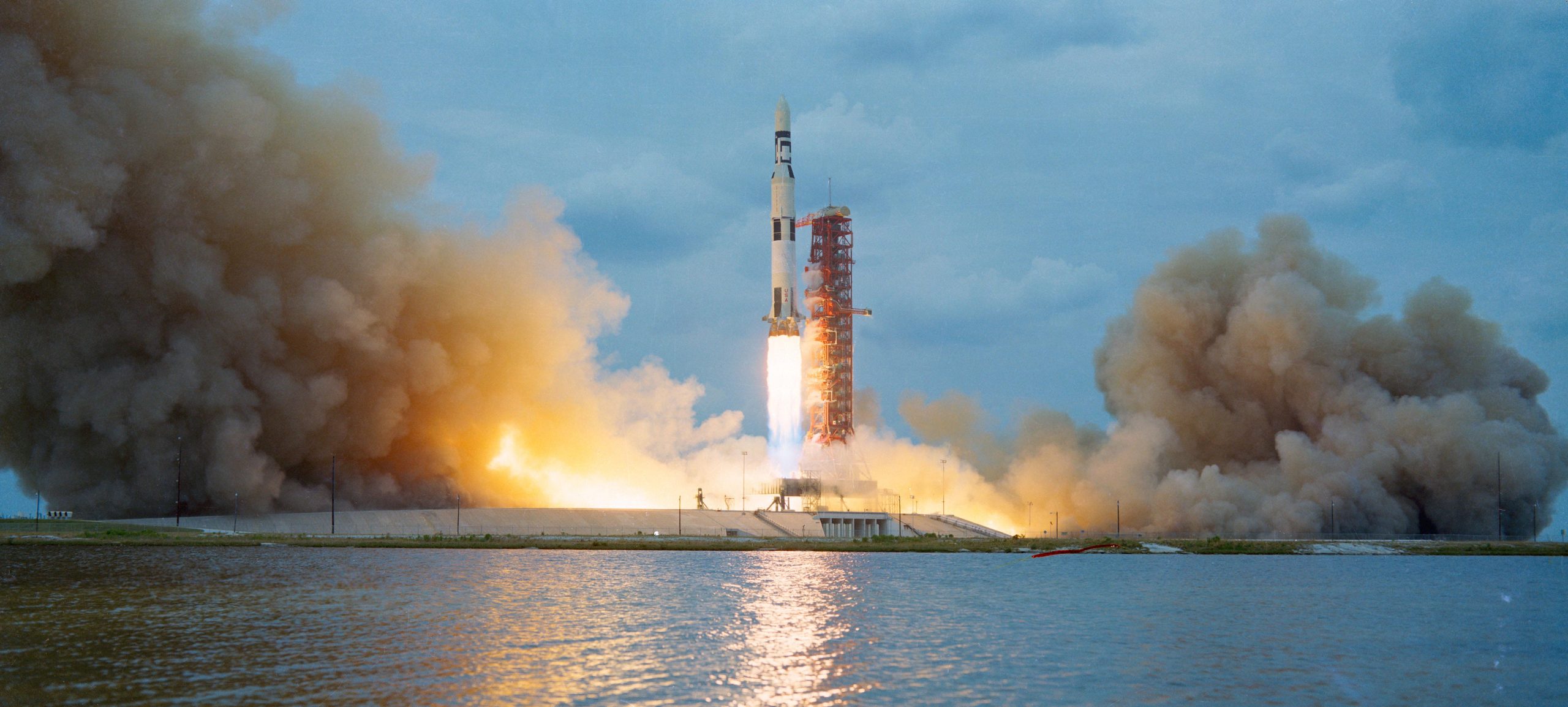
    Saturn V Launch of Uncrewed Skylab Station
    The unmanned Skylab station was launched into orbit by a Saturn V booster. The Saturn V rocket carried humans to the moon and remains the most powerful rocket to reach orbit to date. Credit: NASA

    Physics-based acoustical models and historical data combine to correct common misconceptions about the most powerful rocket launched to date.

    The Saturn V, which carried mankind to the moon, remains the most powerful rocket to successfully launch to orbit. Its incredible power captures the imagination — but sometimes, it might capture a bit too much imagination. Abundant internet claims about the acoustic energy of the rocket suggest that it melted concrete and lit grass on fire over a mile away.

    Such ideas have been proven false. Researchers from Brigham Young University (BYU) used a physics-based model to estimate the acoustic levels of the Saturn V rocket. They obtained a value of 203 decibels, which matches the very limited data recorded in the 1960s. The study appears in The Journal of the Acoustical Society of America, published on behalf of the Acoustical Society of America by AIP Publishing.
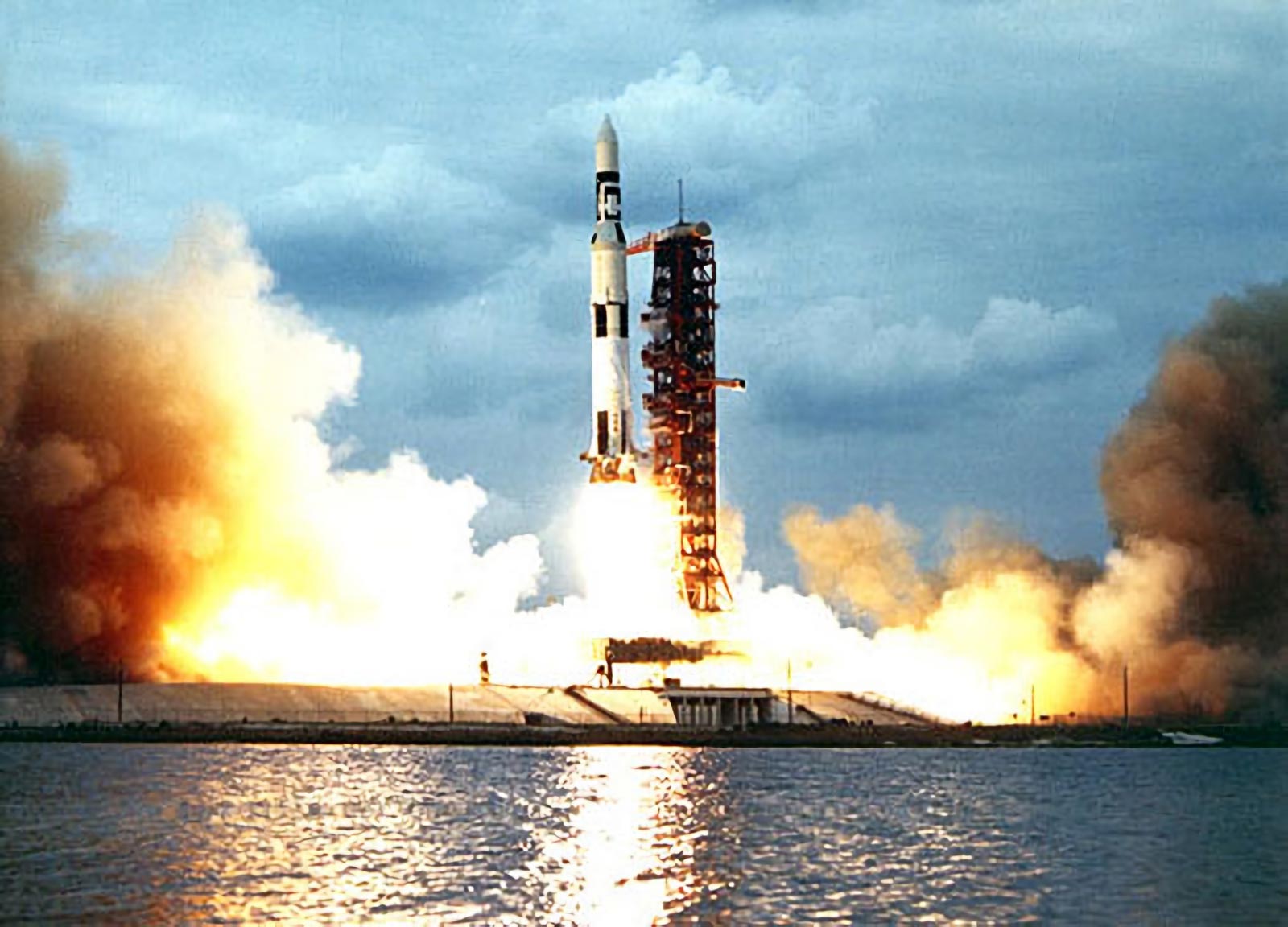
    Saturn V Skylab Launch
    The Skylab space station was launched on a modified Saturn V rocket. Credit: NASA

    To put that number into perspective, commercial jet engines range from around 120 to 160 decibels.

    “Decibels are logarithmic, so every 10 decibels is an order of magnitude increase,” said author Kent L. Gee, of BYU. “One hundred and seventy decibels would be equivalent to 10 aircraft engines. Two hundred would be 10,000 engines!”

    Clarifying Acoustic Misunderstandings
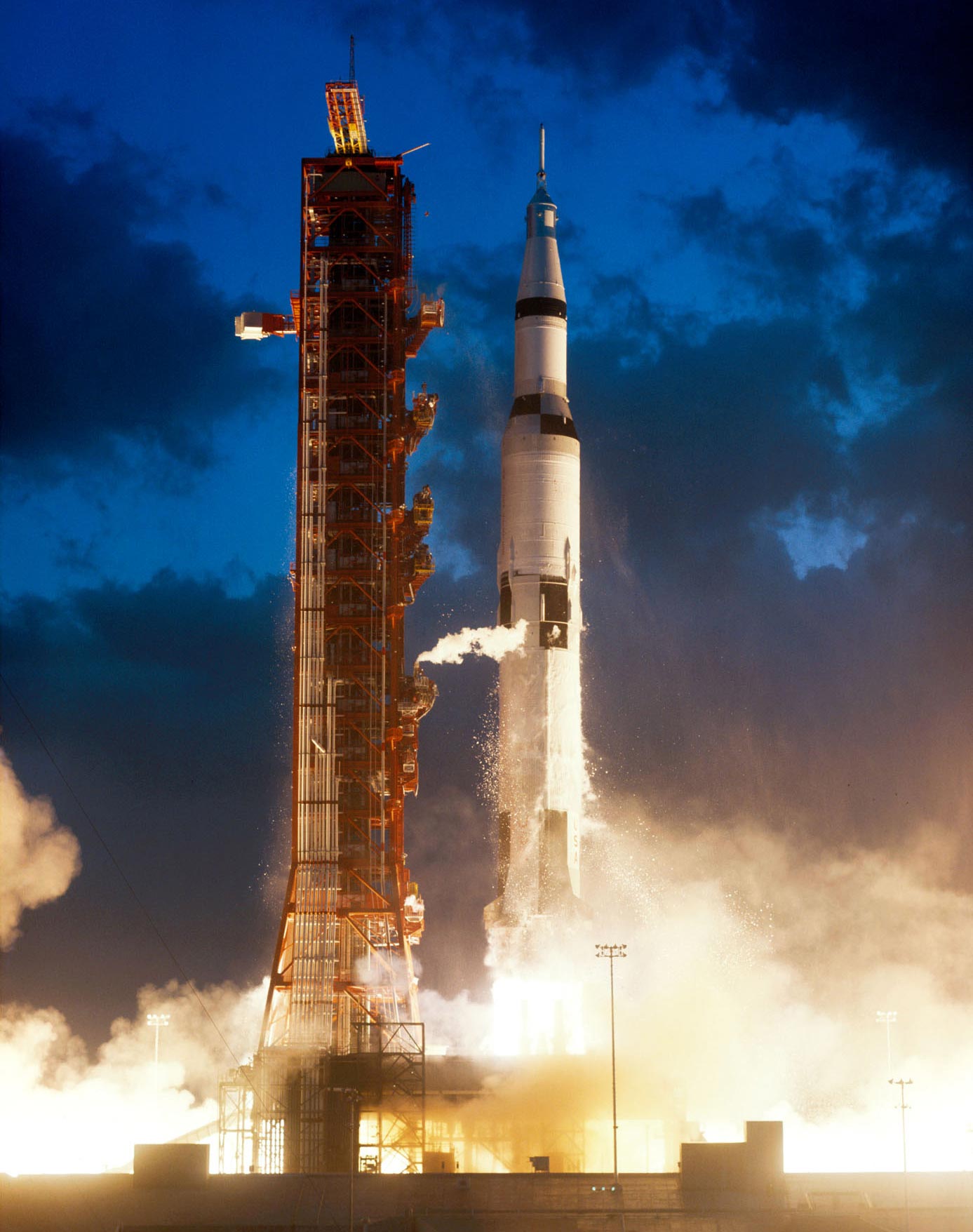
    First Launch of Saturn V
    In 1967, the Apollo 4 mission launched from NASA’s Kennedy Space Center. The mission marked the first launch of the Saturn V rocket. Credit: NASA

    While the Saturn V was indeed extremely loud, that kind of power is nowhere near sufficient to melt concrete or start grass fires. If reports about these phenomena are true, they likely stem from radiative heating via the plume or debris.

    Some of the misunderstanding originates from confusing sound power with sound pressure. The former is like the wattage of a light bulb. The latter is like the brightness from the same bulb: It depends on how far away you’re standing. Mistakes in calculations, changes to the decibel reference system, and the propagation of misinformation have also led to compounding errors.

    “The Saturn V has taken on this sort of legendary, apocryphal status,” said Gee. “We felt that, as part of the JASA special issue on Education in Acoustics, it was an opportunity to correct misinformation about this vehicle.”

    NASA’s Space Launch System (SLS) Artemis 1 launch is scheduled for the fall of this year, when it will surpass the Saturn V in terms of power and noise. Although Artemis 1 will not have a human crew, the massive SLS rocket will send humans back to the moon in later missions. The scientists have used their framework to predict SLS’s sound levels, and they plan to make acoustical measurements at its launch to help further refine predictions.

    The team of researchers also provided educational tools, like homework problems, to share their findings with college-level physics classrooms. They hope this rocket’s story will show the importance of critically examining data and scientific discussions online. 

    Reference: “Saturn-V sound levels: A letter to the Redditor” by Kent L. Geeb), Logan T. Mathews, Mark C. Anderson and Grant W. Hart, 23 August 2022, The Journal of the Acoustical Society of America.
    DOI: 10.1121/10.0013216

    Never miss a breakthrough: Join the SciTechDaily newsletter.
    Follow us on Google and Google News.

    American Institute of Physics Popular Rocket
    Share. Facebook Twitter Pinterest LinkedIn Email Reddit

    Related Articles

    COVID-19 Warning: Humid Air Can Extend Lifetime of Virus-Laden Aerosol Droplets

    How Face Mask Construction & Materials Matter for Containing Coughing & Sneezing Droplets

    Yikes! Flushing Toilets Create Long-Lasting Clouds of Virus-Containing Particles

    Next-Gen Laser Beams With Up to 10 Petawatts of Power Will Usher In New Era of Relativistic Plasmas Research

    Glug, Glug: Physics of Bubble Dynamics Reveals How to Empty Bottles Faster

    Galileo’s Jupiter Entry Probe Vaporized – New Gaps Revealed in Heat Shield Modeling

    Physicists Use Lasers to Study Explosions

    Defrosting Surfaces in Seconds at 100x Efficiency

    Physicists Make First Ever Measurement of Antiproton Interactions

    6 Comments

    1. rofikul on August 23, 2022 8:30 pm

      01864211495

      Reply
    2. Tony Haslam on August 24, 2022 12:11 pm

      The fallacy of your argument is, in part, that all jet engines create the same noise levels, and they don’t. If the premise is invalid, so are any conclusions offered.

      Reply
    3. Mark Tercsak on August 24, 2022 9:43 pm

      Let’s take a Saturn V you fire up but do not release the clamps holding it to the launch tower.
      And you let it burn its self out, how about then , would it have melted concrete

      Reply
    4. Ernie on August 25, 2022 6:25 am

      I was there for the launch of Apollo 11. I was several miles from the launch pad to the south, watching across a bay. It was loud. The first thing was the trembling of the ground underfoot. Then the pressure wave hit you in the chest. Then the titanic roar that began as a deep rumble and rose in pitch. Then this thing the size of a forty story building, slowly, deliberately got up and left for the moon. I understood why our ancestors thought volcanoes were gods.

      Reply
      • Frank on August 25, 2022 10:45 am

        Thanks. I’ve always wanted to be there at a launch. Now I know how it feels.

        Reply
    5. AKG on August 26, 2022 3:19 am

      Found it interesting. Good work, relevant stuff👍👍

      Reply
    Leave A Reply Cancel Reply

    • Facebook
    • Twitter
    • Pinterest
    • YouTube

    Don't Miss a Discovery

    Subscribe for the Latest in Science & Tech!

    Trending News

    5 Simple Ways To Remember More and Forget Less

    The Atomic Gap That Could Cost the Semiconductor Industry Billions

    Researchers Finally Solve 50-Year-Old Blood Group Mystery

    Scientists Discover “Molecular Switch” That Fuels Alzheimer’s Brain Inflammation

    Trees Emit Tiny Lightning Flashes During Storms and Scientists Finally Prove It

    Pomegranate Compound Could Help Protect Against Heart Disease

    Your Blood Test Might Already Show Alzheimer’s Risk

    Scientists Were Wrong About This Strange “Rule-Breaking” Particle

    Follow SciTechDaily
    • Facebook
    • Twitter
    • YouTube
    • Pinterest
    • Newsletter
    • RSS
    SciTech News
    • Biology News
    • Chemistry News
    • Earth News
    • Health News
    • Physics News
    • Science News
    • Space News
    • Technology News
    Recent Posts
    • Hidden Parasite Found in Popular Portuguese Lake Raises Health Concerns
    • This Simple Trick Can Boost Your Workout Endurance by 20%
    • This Popular Supplement May Interfere With Cancer Treatment, Scientists Warn
    • Scientists Propose Radical New Way To Detect Alien Life – Without Traditional Biosignatures
    • Scientists Just Discovered Light Can Actually Slow Plant Growth
    Copyright © 1998 - 2026 SciTechDaily. All Rights Reserved.
    • Science News
    • About
    • Contact
    • Editorial Board
    • Privacy Policy
    • Terms of Use

    Type above and press Enter to search. Press Esc to cancel.