
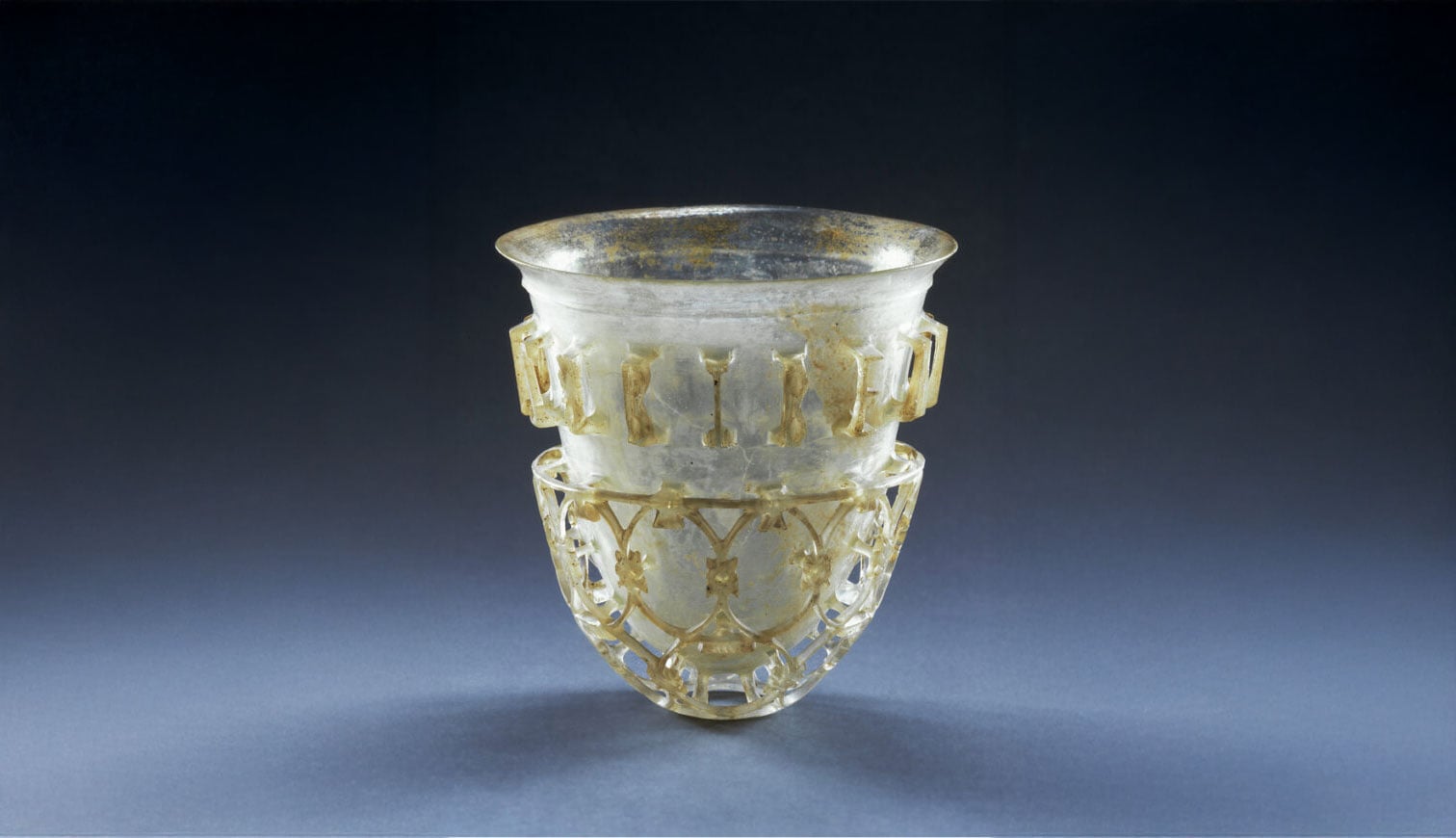
A flipped Roman glass cup revealed symbols once thought decorative but now understood as ancient makers’ marks.
In the quiet atmosphere of a museum gallery, Hallie Meredith noticed an unexpected detail hidden in plain view on a piece of ancient Roman glass.
During a February 2023 visit to the Metropolitan Museum of Art in New York City, the Washington State University art history professor and trained glassblower examined a private collection of Roman glass cage cups. These luxurious objects, carved from single blocks of glass between 300 and 500 CE, have long been admired for their craftsmanship. Meredith’s insight did not come from specialized equipment or new analytical methods. Instead, it emerged from a simple moment of curiosity when she turned one of the cups around.
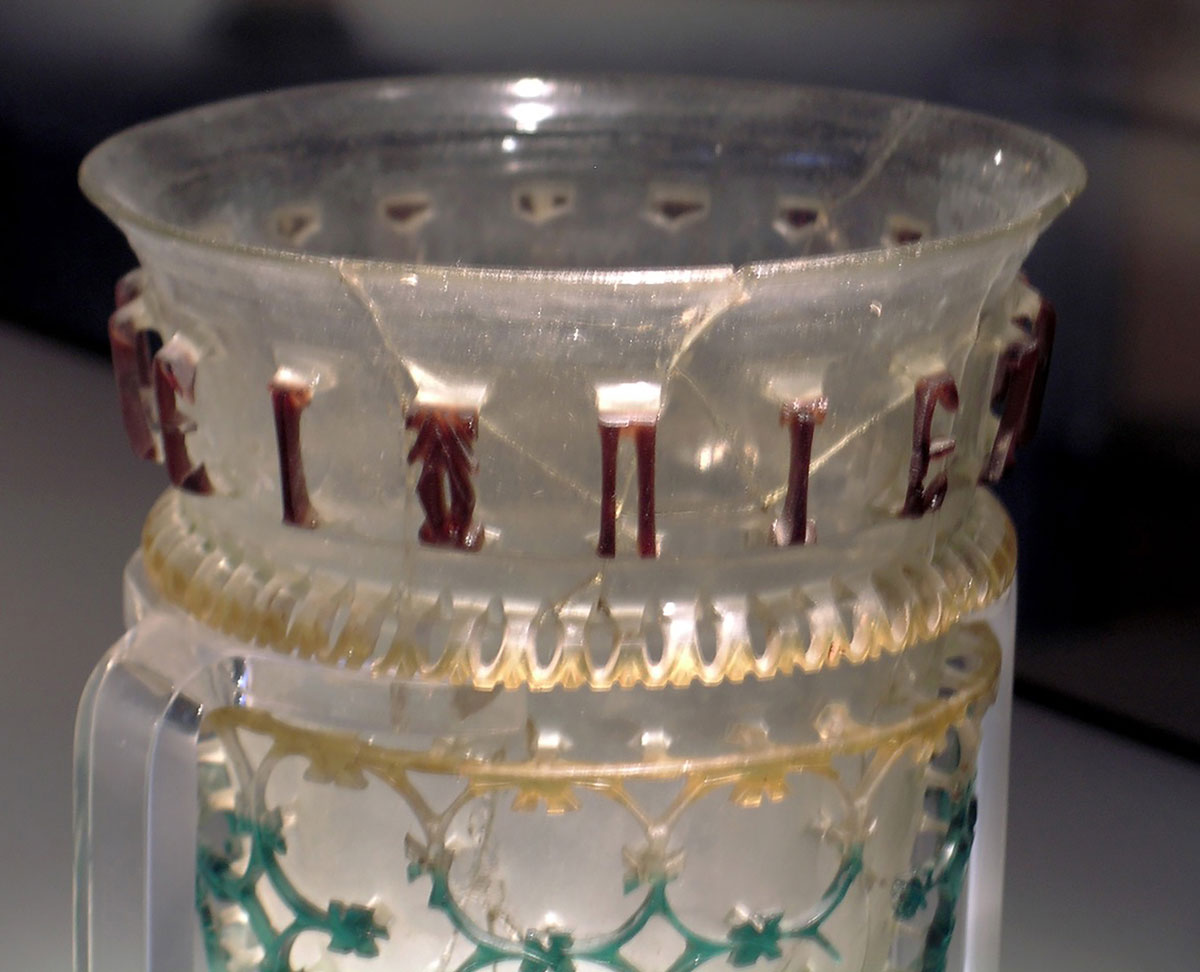
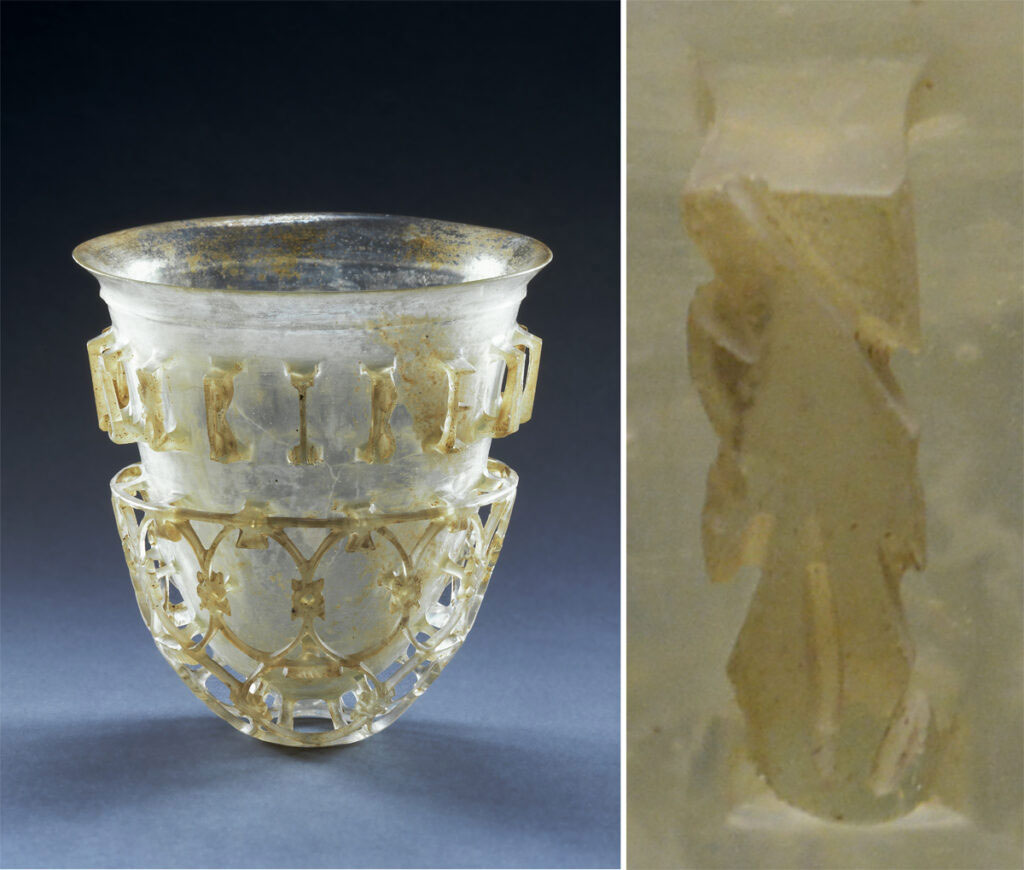
On the back of the late-Roman vessel, she observed abstract openwork shapes (including diamonds, leaves, and crosses) placed beside an inscription wishing the owner a long life. Scholars had previously treated these symbols as purely decorative. Meredith’s research, however, indicates that they are likely makers’ marks that identified the workshops and artisans responsible for producing some of the most intricate glass pieces of the Roman Empire.
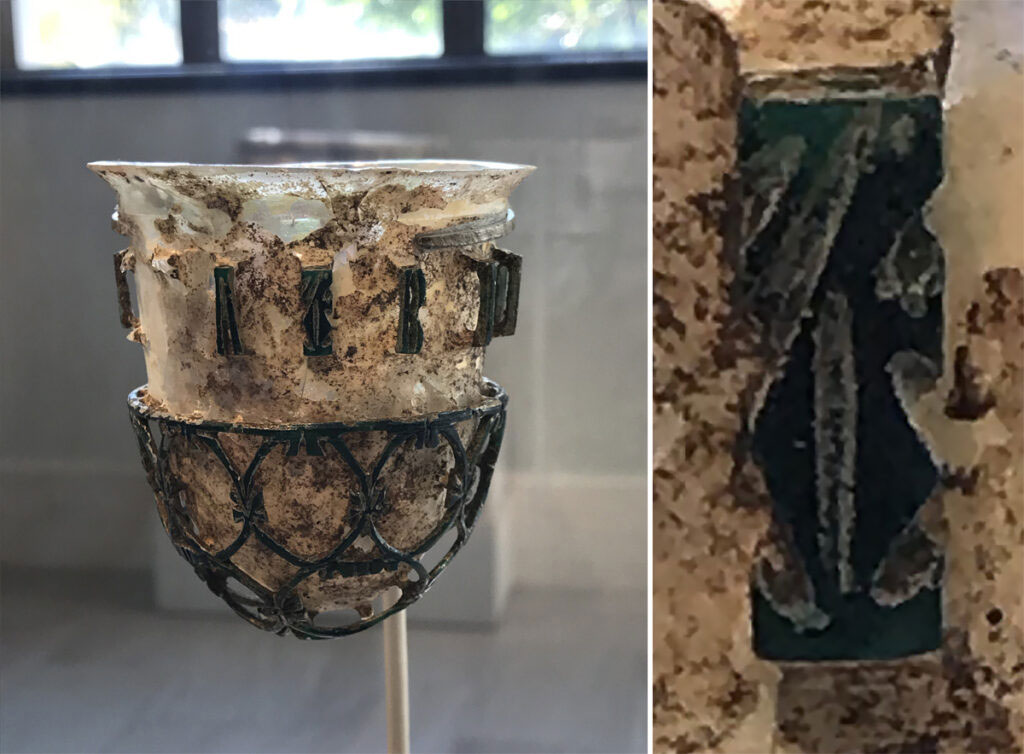
That moment in the museum soon grew into a larger investigation of how Roman artisans worked. In two recent papers — one published in April in the Journal of Glass Studies and another in October in World Archaeology — Meredith traced the same symbols across other carved vessels, linking them to a visual language shared by glassworkers from the fourth to sixth centuries CE.
By studying tool marks, inscriptions, and unfinished fragments, she showed that these objects were not made by solitary masters but by coordinated teams of engravers, polishers, and apprentices. What began with a simple turn of the wrist revealed a hidden network of makers whose signatures, overlooked for centuries, are now coming into view.
Reframing a Longstanding Debate
For more than 250 years, scholars have debated how Roman glass openwork vessels were made — whether they were carved by hand, cast, or blown. Few looked beyond the inscriptions. Meredith’s findings suggest that understanding these vessels requires more than identifying their techniques; it means recognizing the people behind them.
Each cup, known as a diatretum, began as a thick-walled blank, painstakingly carved into two concentric layers linked by delicate glass bridges. The result — a lattice that seems impossibly light — was a feat of both design and endurance. Meredith’s research suggests that the work required multiple specialists collaborating over weeks, months, or even years. The abstract marks, she believes, identified collective workshops, much like a modern studio logo. “They weren’t personal autographs,” she said. “They were the ancient equivalent of a brand.”
She explores this broader world of Roman artisans in her forthcoming monograph, The Roman Craftworkers of Late Antiquity: A Social History of Glass Production and Related Industries, currently in production with Cambridge University Press and expected for release in 2026 or 2027.
Restoring Visibility to Ancient Makers
That empathy drives her larger mission to restore visibility to the anonymous artisans who shaped the ancient world. “There’s been a static picture of people who do the work,” Meredith said. “We presume we understand them because we focus on elites. But when the evidence is assembled, far more is known about these craftworkers than previously thought.”
Her next project bridges art history and data science. Working with WSU computer science students, Meredith is building a searchable database to track non-standard writing — misspellings, mixed alphabets, and coded inscriptions — across thousands of portable objects. What earlier scholars dismissed as gibberish may, she believes, be evidence of multilingual makers adapting scripts for new audiences.
Meredith’s research ultimately challenges scholars to view ancient artifacts from a new perspective. When light glances off a diatretum’s lattice, the glass reveals more than a marvel of engineering — it reflects the hands, skill, and imagination of the people who made it.
References:
“Looking for—and Finding?—Workshop Makers’ Marks on Late Roman Diatreta” by Hallie G. Meredith, 4 April 2025, Journal of Glass Studies.
DOI: 10.3998/jgs.6943
“An approach to craft and craftworkers in process: re-examining late 3rd-6th century CE Roman carvings, inscriptions, and engraved symbols” by Hallie G. Meredith, 13 October 2025, World Archaeology.
DOI: 10.1080/00438243.2025.2570270
Never miss a breakthrough: Join the SciTechDaily newsletter.
Follow us on Google and Google News.