
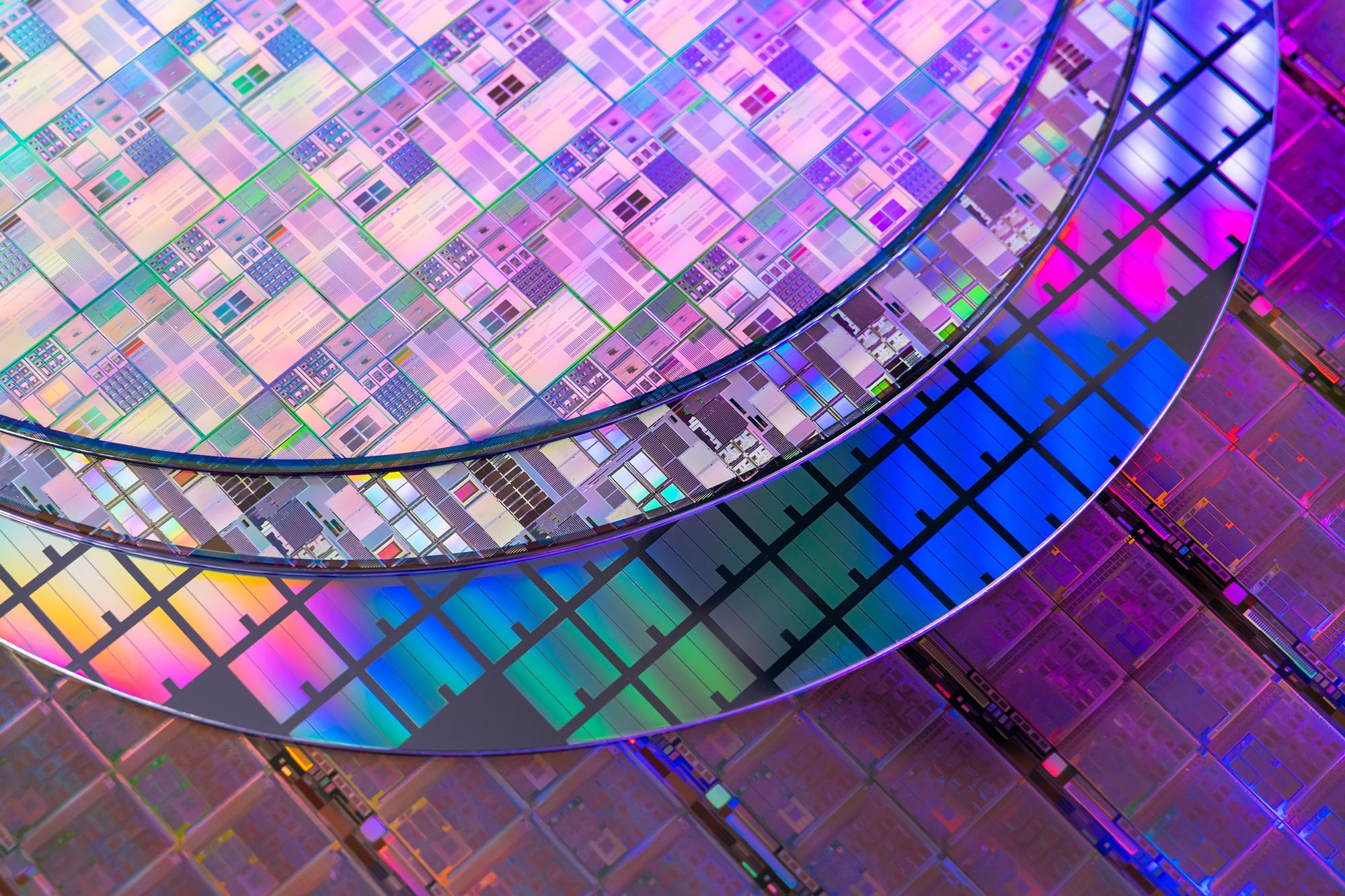
What Is Microelectronics?
Microelectronic devices — such as the microchips in computers and cell phones — process and store information. They are crucial to our lives. They are essential to running businesses, helping to track the spread of disease, delivering power to homes through the electric grid and conducting scientific research to combat big challenges like the climate crisis.
The building block of any microelectronic device is the transistor, invented in the 1940s. Transistors can almost instantaneously switch electric current on and off. This feature makes possible the ones and zeros used to instruct a computer what to do.
In this Science 101: What is microelectronics, the director of Argonne National Laboratory’s Mathematics and Computer Science Division Valerie Taylor and principal materials scientist Yuepeng Zhang discuss the ultrasmall components in computers, smartphones, and much more. Microelectronics is essential to running businesses, halting the spread of disease, delivering power to homes through the electric grid and conducting scientific research to combat big challenges like the climate crisis.
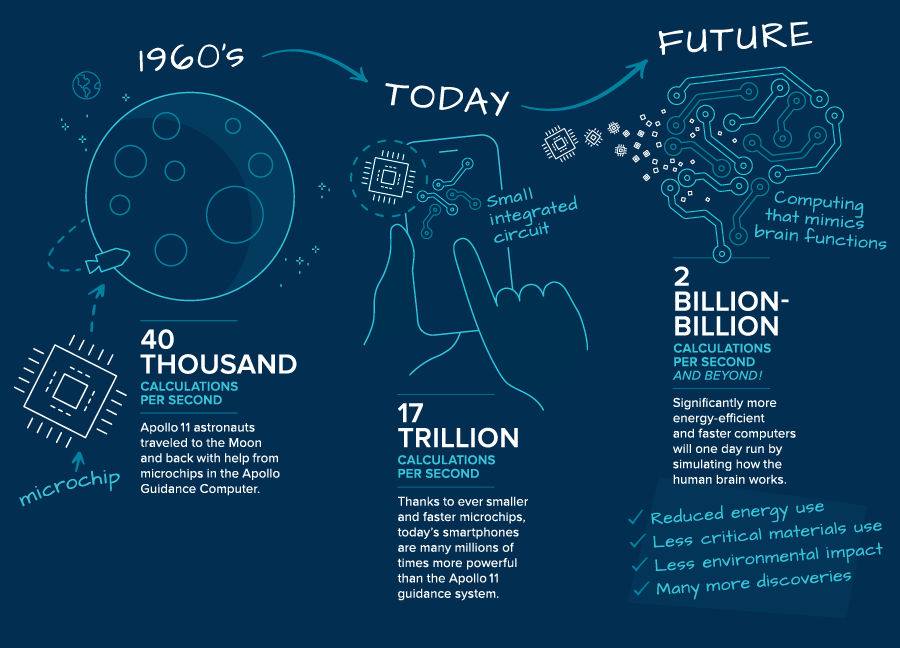
Because of increasingly smaller transistors and other improvements, computers that once occupied an entire room in a building now fit on a laptop or even in a smartwatch. Cost per computing unit has fallen dramatically, too.
Yet across all sectors of the economy, there is an urgent need for radically new forms of microelectronics that can collect and analyze unprecedented volumes of data faster than ever before. But the science and technology that will enable such new microelectronics does not exist. One of the challenges is that the size of the transistors in today’s supercomputers has shrunk from a millionth to a billionth of a meter, approaching the size of atoms. In their quest for radical improvements, researchers must look for alternative paths to miniaturization and solutions beyond the present types of computer architecture.
Along with far faster data processing, researchers have two big problems to solve. First, the microelectronics in computers, data centers and networks consume roughly 10% of the world’s electricity, and that number is growing. A single supercomputer can require enough electricity to power almost 10,000 homes. Second, making cutting-edge microelectronics involves many different materials. The shortage of some of these could cause supply chain disruptions that damage the economy.
These problems are being tackled at the U.S. Department of Energy’s Argonne National Laboratory. Researchers are pursuing new approaches to microelectronics and computing architectures that are faster and more energy efficient and include fewer critical materials. For example, the most efficient processor of information is the human brain. So scientists are looking to develop microelectronics and computer architectures that mimic the brain. Also being developed are environmentally friendly manufacturing processes for microelectronics. Success will keep the U.S. at the forefront of microelectronics R&D and reinvigorate our microelectronics industry.
To learn more about microelectronics, view the playlist Microelectronics for the 21st Century.
What Is Microelectronics?
The technology behind the power of computers, smartphones, autonomous cars, and more.
Ultrasmall electronic components process information in all smart electronic devices. In 1969, they guided the spaceship with two astronauts that landed on the Moon and returned safely. Today, they touch our lives in the form of cell phones, computers, smart TVs, global positioning systems, and more. Ever more powerful microelectronics are essential to progress in scientific research.
Microelectronics has entered a new phase due in part to the advances in Artificial Intelligence (AI). Already making their way into the market are self-driving vehicles. Skin-like AI-based materials that diagnose possible health problems are on the horizon.
But microelectronics is at a crossroads. Without radically new technology, the total energy devoted to all the microelectronics will soon reach staggering proportions.
Argonne is tackling this challenge. Our scientists are pursuing new pathways to materials and devices that consider the use of the devices, leading to more energy-efficient and environment-friendly micro-electronics for the 21st century.
Never miss a breakthrough: Join the SciTechDaily newsletter.
Follow us on Google and Google News.