
Close Menu
    Facebook X (Twitter) Instagram
    SciTechDaily
    • Biology
    • Chemistry
    • Earth
    • Health
    • Physics
    • Science
    • Space
    • Technology
    Facebook X (Twitter) Pinterest YouTube RSS
    SciTechDaily
    Home»Space»Scientific Hardware and Space Experiments Returning to Earth on SpaceX CRS-24 Dragon
    Space

    Scientific Hardware and Space Experiments Returning to Earth on SpaceX CRS-24 Dragon

    By Melissa Gaskill, NASA Johnson Space CenterJanuary 24, 2022No Comments4 Mins Read
    Facebook Twitter Pinterest Telegram LinkedIn WhatsApp Email Reddit
    Share
    Facebook Twitter LinkedIn Pinterest Telegram Email Reddit
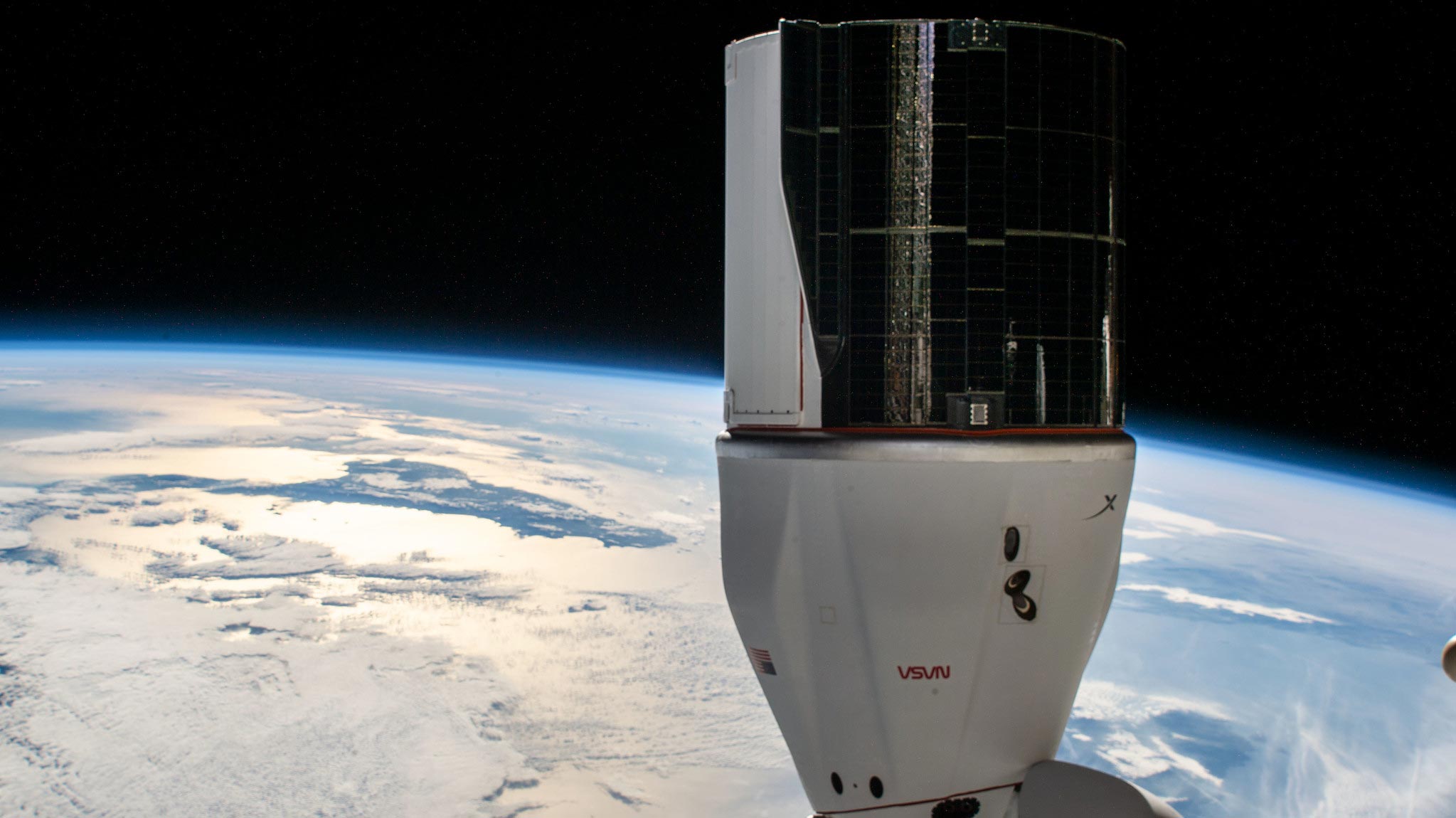
    SpaceX CRS 24 Dragon Docked ISS
    A SpaceX Cargo Dragon spacecraft docked to the International Space Station. Credit: NASA

    SpaceX Dragon Returns Scientific Cargo from ISS

    A retired microscope and samples from studies on colloids and cellular signaling are among the cargo returning from the International Space Station aboard the 24th SpaceX commercial resupply services mission. The Dragon craft, which arrived at the station on December 22, 2021, is undocked on January 23 with parachute-assisted splashdown the next afternoon (today, January 24) off the coast of Florida.

    These quick return flights allow scientists to make additional observations and analyses of their experiments at Kennedy Space Center, minimizing the effects of gravity on samples. Investigators then can conduct more in-depth analyses back at their home labs.

    Read more about some of the equipment and experiment samples making the journey back to Earth:

    Last Light for LMM

    A state-of-the-art light imaging microscope, the Light Microscopy Module (LMM), launched to station in 2009 and returns to Earth aboard Dragon for a well-earned retirement. Sponsored by NASA’s Biological and Physical Sciences division, this powerful diagnostic tool enabled novel research of microscopic phenomena in microgravity, providing the capability to remotely acquire and download images and videos at many levels of magnification.
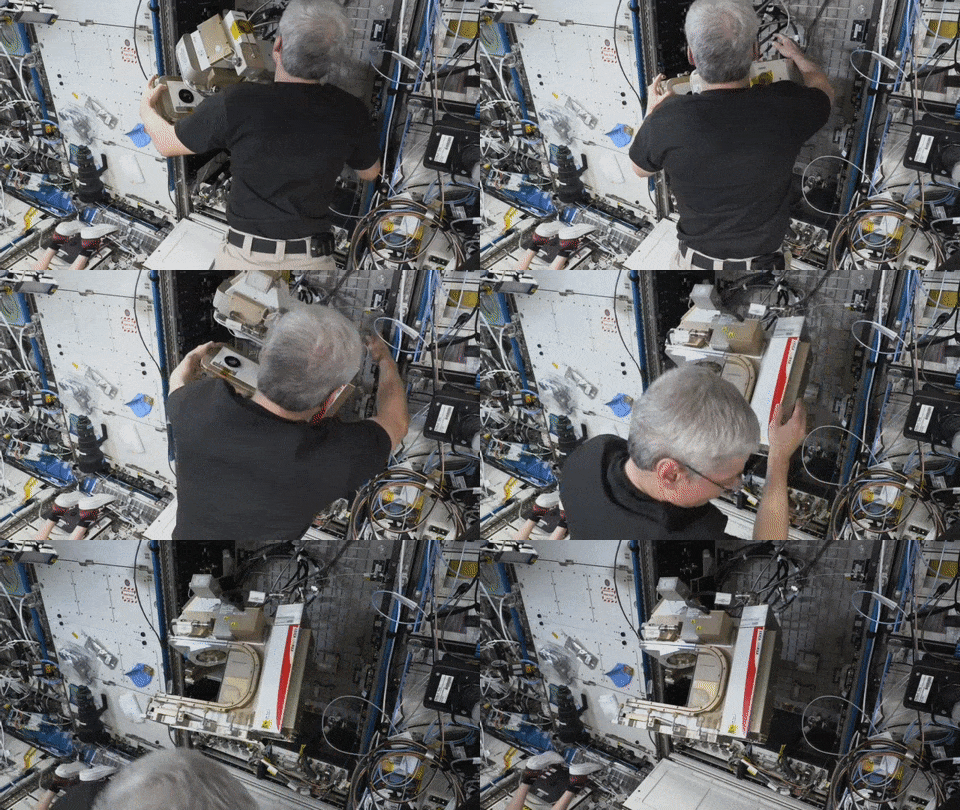
    Light Microscopy Module
    NASA astronaut Mark Vande Hei uninstalls the Light Microscopy Module from the station. The instrument returns to Earth after more than a decade of supporting scientific investigations. Credit: NASA

    LMM made it possible to observe and record the way matter is organized and moves on the microscopic level. Scientists employed this tool for microgravity research on colloids, tiny particles suspended in a liquid, that contributed to advances in formulations and the shelf life of consumer products such as toothpaste and shampoo, 3D printing, and technology for detecting shifting sands on Mars. The LMM also contributed to studies of plants in microgravity, including the CARA investigation, and supported thermophysics research, including CVB and CVB-2, studies on heat transfer systems in microgravity.

    Tiny Structures, Assemble

    InSPACE-4 studies assembly of tiny structures from colloids, or particles suspended in a liquid, using magnetic fields. Colloidal structures change the properties of the assembled material, such as its mechanical response to or interaction with light and heat. Microgravity offers a unique opportunity to observe assembly in ways and over time scales not possible on Earth.
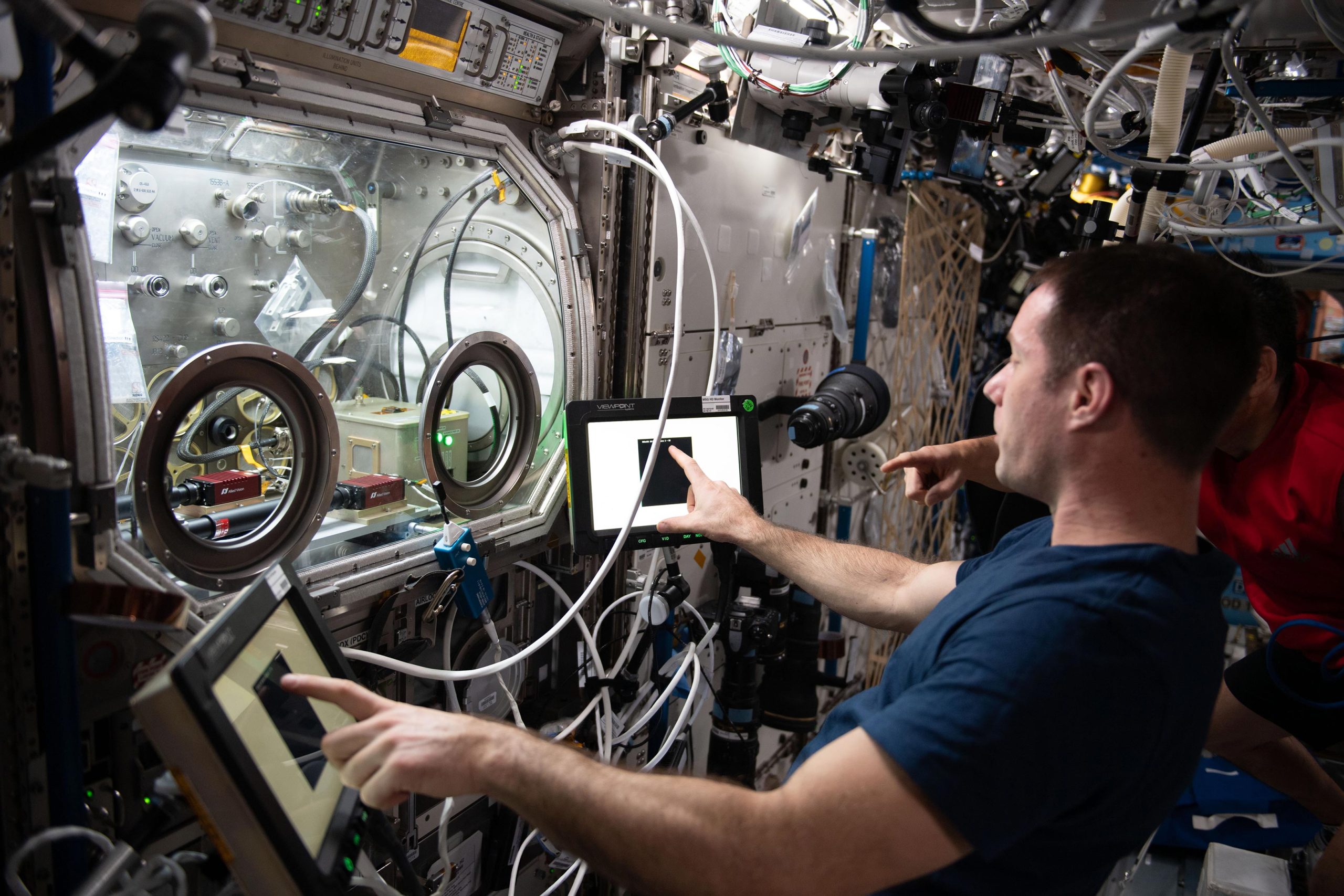
    InSPACE 4 Physics Study
    Thomas Pesquet of ESA (European Space Agency) conducts a session for the InSPACE-4 physics study, which could provide insight into how to harness nanoparticles to fabricate and manufacture new materials for Earth and space applications. Credit: NASA

    Results could provide insight into how to harness nanoparticles to fabricate and manufacture new materials and lead to more advanced materials for space applications, including thermal shields, protection from micrometeorites, energy production, energy transfer, and actuators and sensors for robotic and human missions. Other potential applications include advancing the manufacturing of materials on Earth for applications such as thermal shields, sound damping devices, camouflage, and medical diagnostics. The technology also could support larger-scale applications such as building foundation stabilizers for areas prone to earthquakes.

    Investigators monitored the experiment via video downlink and vials containing the colloidal structures are returning to Earth for additional analysis.

    Cell Signaling in Microgravity

    Scientists continue to study how microgravity affects mammalian cells. Cytoskeleton, an investigation from ESA (European Space Agency), examines whether microgravity affects the function of cellular signaling molecules known as RhoGTPases. These molecules function as “molecular switches” and are involved in the control of cell proliferation, programmed cell death, gene expression, and organization of the cytoskeleton (the network of protein filaments and tubules that give cells their shape).
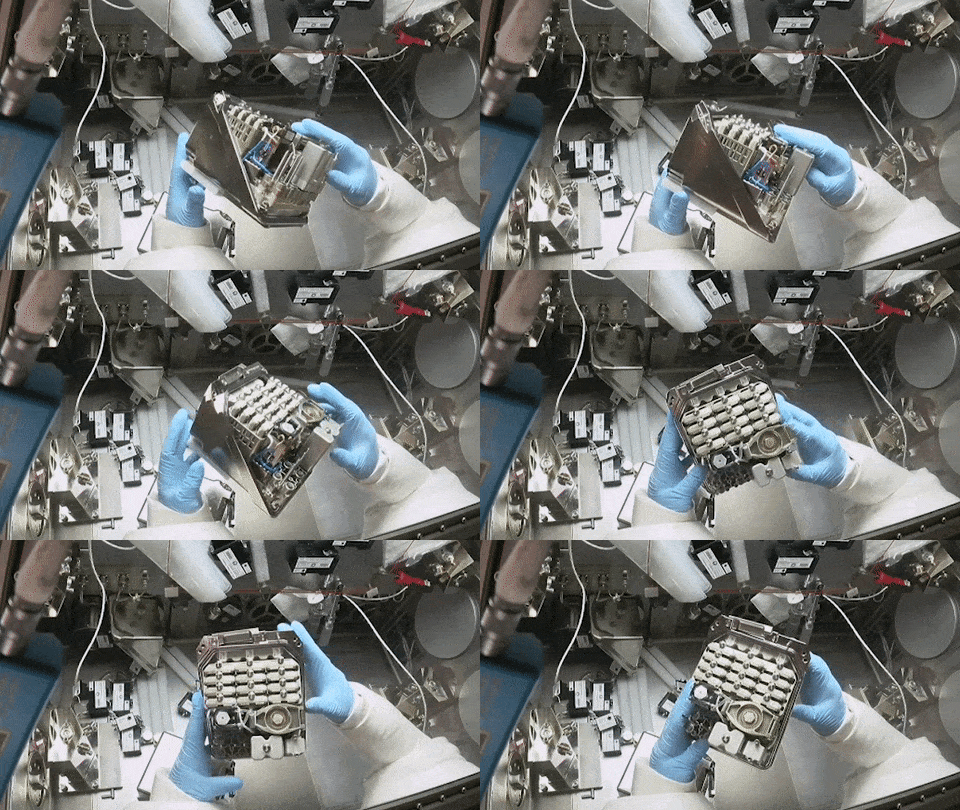
    Cytoskeleton Investigation
    ESA (European Space Agency) astronaut Matthias Maurer sets up for the Cytoskeleton investigation. Credit: NASA

    This investigation contributes to our understanding of how the human body responds to microgravity and could support development of countermeasures to help crew members maintain optimum health on future missions. The work also may expand knowledge about cellular function on Earth and contribute to future medical research here on the ground. Cell cultures are returning to the ground for analysis.

    Never miss a breakthrough: Join the SciTechDaily newsletter.
    Follow us on Google and Google News.

    International Space Station Johnson Space Center NASA SpaceX
    Share. Facebook Twitter Pinterest LinkedIn Email Reddit

    Related Articles

    NASA SpaceX Crew-12 Enters Isolation Ahead of Launch

    Watch Live: SpaceX Dragon Delivering Cutting-Edge Science Back to Earth

    Innovative Science Experiments Aboard NASA’s SpaceX 30th Resupply Mission to the ISS

    Commercial Crew Shake-Up: NASA Reassigns Two Astronauts From Boeing Starliner to SpaceX Crew Dragon

    Intriguing Science Experiments Launching on SpaceX’s Cargo Resupply Mission to the Space Station

    NASA Adds Kayla Barron to SpaceX Crew-3 Mission to International Space Station

    SpaceX Dragon Heads to Space Station With Upgraded Science Hardware – Here’s What It’s For

    “Robot Hotel” Launching to the International Space Station on SpaceX Falcon 9 Rocket

    SpaceX Falcon 9 Launches, Dragon Capsule Headed Towards Space Station

    Leave A Reply Cancel Reply

    • Facebook
    • Twitter
    • Pinterest
    • YouTube

    Don't Miss a Discovery

    Subscribe for the Latest in Science & Tech!

    Trending News

    Collapsing Plasma May Hold the Key to Cosmic Magnetism

    This Breakthrough Solar Panel Generates Power From Both Sunlight and Raindrops

    Scientists Uncover New Metabolic Effects Beyond Weight Loss of Mounjaro

    Scientists Discover Cancer Tumors Are “Addicted” to This Common Antioxidant

    1,800 Miles Down: Scientists Uncover Mysterious Movements at the Edge of Earth’s Core

    Scientists Discover Hidden “Good Fats” in Green Rice That Could Transform Nutrition

    Your Child’s Clothes Could Contain Toxic Lead, Study Finds

    Researchers Break a 150-Year-Old Math Law With a Surprising Donut Discovery

    Follow SciTechDaily
    • Facebook
    • Twitter
    • YouTube
    • Pinterest
    • Newsletter
    • RSS
    SciTech News
    • Biology News
    • Chemistry News
    • Earth News
    • Health News
    • Physics News
    • Science News
    • Space News
    • Technology News
    Recent Posts
    • The Mystery of the Notes: Why No One Knows How This 120-Year-Old Song Should Sound
    • Scientists Discover 132-Million-Year-Old Dinosaur Tracks on South Africa’s Coast
    • Scientists Uncover the Secret Ingredient Behind the Spark That May Have Started Life on Earth
    • Natural Oils vs. Antibiotics: The Swine Study That Could Change Farming
    • The Biggest Volcanic Event in Earth’s History Transformed an Entire Oceanic Plate
    Copyright © 1998 - 2026 SciTechDaily. All Rights Reserved.
    • Science News
    • About
    • Contact
    • Editorial Board
    • Privacy Policy
    • Terms of Use

    Type above and press Enter to search. Press Esc to cancel.