
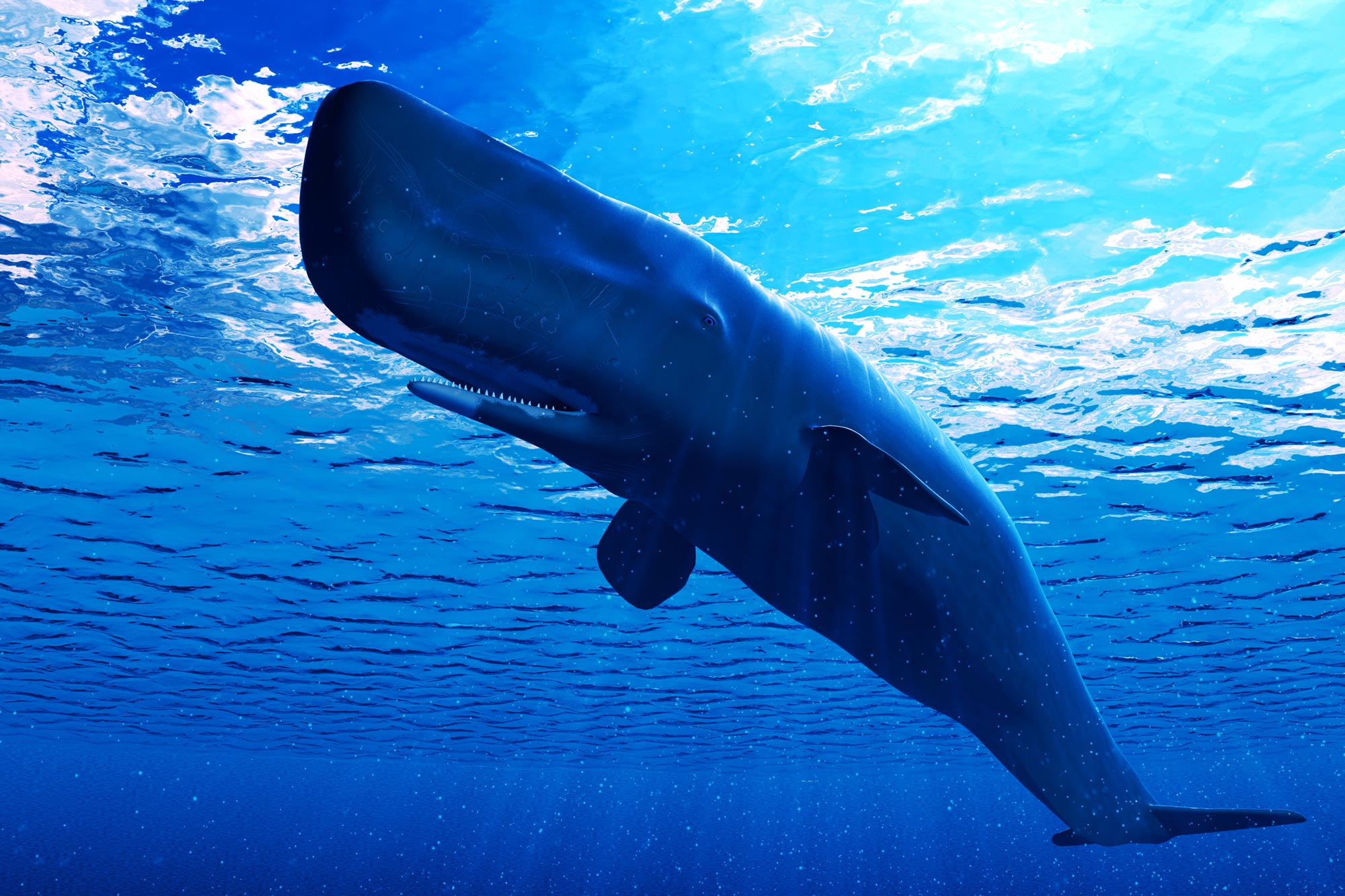
Sperm whales caught on camera headbutting each other—turns out the legends might have been true after all.
Researchers from the University of St Andrews have documented sperm whales headbutting each other, capturing the behavior on video and describing it scientifically for the first time. The finding supports long-standing reports from 19th-century sailors who claimed sperm whales used their heads to push and strike objects, sometimes even sinking ships. Those dramatic encounters later inspired Herman Melville’s famous novel Moby-Dick.
Drone Footage Reveals Hidden Whale Behavior
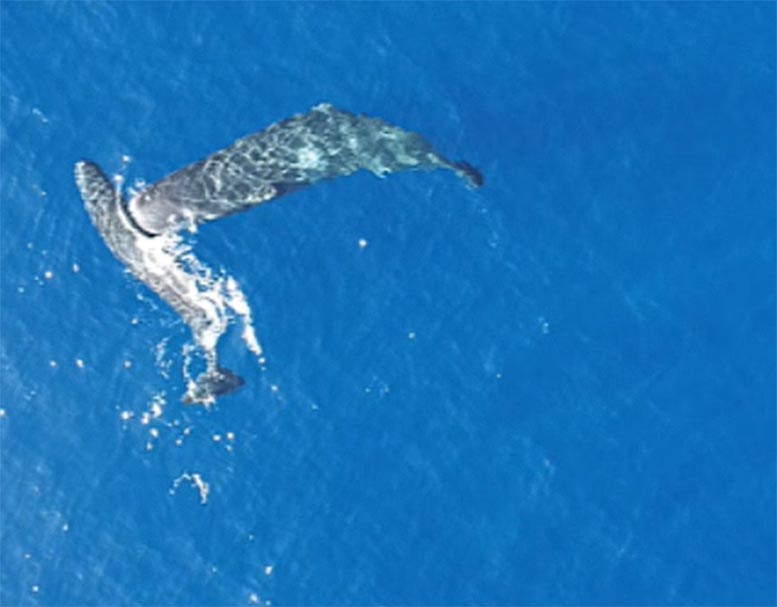
By using drone technology, scientists were able to record not only the headbutting itself but also the surrounding social interactions. The footage was collected during fieldwork conducted in the Azores and Balearic Islands between 2020 and 2022, offering a rare overhead view of whale behavior near the surface.
Younger Whales, Not Adults, Seen Headbutting
The study, published today (March 23) in Marine Mammal Science, found that sub-adult whales were the ones engaging in headbutting, rather than large adult males as previously assumed. This unexpected result raises new questions about what purpose the behavior serves and how it may influence group dynamics and social structure.
Lead author Dr. Alec Burlem, who conducted the research at the University of St Andrews alongside collaborators from the university of the Azores and Asociación Tursiops (an NGO based in the Balearic islands), said: “It was really exciting to observe this behavior, which we knew had been hypothesized for such a long time, but not yet documented and described systematically.”
Why Do Sperm Whales Headbutt?
Scientists say more observations are needed to determine why sperm whales engage in this behavior. The growing use of drones is expected to make it easier to study such interactions, as well as other behaviors that occur near the ocean’s surface but have remained largely unseen.
Some researchers suggest headbutting could have developed from physical contests between whales, possibly linked to competition among males. Others have argued that regularly using the head as a weapon would be risky, since it could damage structures essential for producing sounds used in echolocation and communication.
Echoes of Historic Ship-Sinking Encounters
Stories of sperm whales using their heads to ram objects date back to the era of open-boat whaling in the 19th century. One of the most well-known incidents involved the whaleship Essex, a 27m sailing vessel reportedly sunk by two powerful head-on strikes from a large bull sperm whale near the Galapagos in 1820. The event later helped inspire ‘Moby Dick’.
Owen Chase, First mate upon the Essex described the force of the whale’s headbutt in a contemporaneous report quote
“I turned around and saw him about one hundred rods [approx. 500 m] directly ahead of us, coming down with twice his ordinary speed of around 24 knots, and it appeared with tenfold fury and vengeance in his aspect. The surf flew in all directions about him with the continual violent thrashing of his tail. His head about half out of the water, and in that way he came upon us, and again struck the ship.”
Other reports from the same period describe similar sinkings, including those of Ann Alexander and Kathleen.
Drones Are Transforming Whale Research
Dr. Burslem, now based at the University of Hawaii, emphasized how new technology is changing the field: “This unique overhead perspective for observing and documenting near-surface behavior is just one of the ways drone technology is transforming the study of wildlife biology. It’s exciting to think about what as-yet unseen behaviors we may soon uncover, as well how more headbutting observations may help us to shed light on the functions the behavior may serve. If there are people out there with similar footage, we would be very keen to hear from them.”
Reference: “Headbutting Behavior Between Sperm Whales Documented Using Unoccupied Aerial Vehicles” by Alec Burslem, Marga Cerdà, Txema Brotons, Luke Rendell, Mónica A. Silva and Rui Prieto, 23 March 2026, Marine Mammal Science.
DOI: 10.1111/mms.70153
Never miss a breakthrough: Join the SciTechDaily newsletter.
Follow us on Google and Google News.
2 Comments
Wow
That’s an amazing discovery in the whale population for them to headbutt like that