
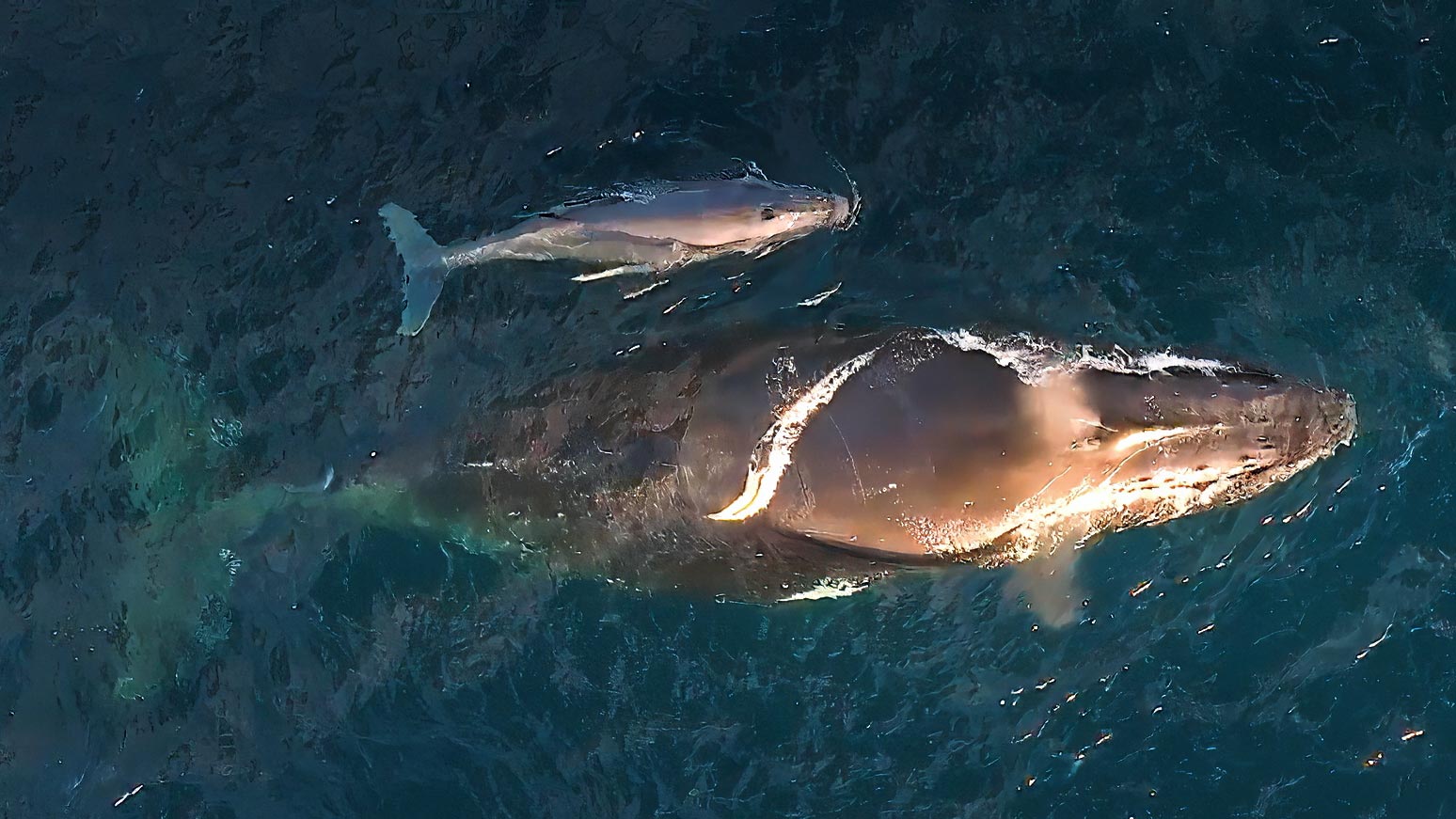
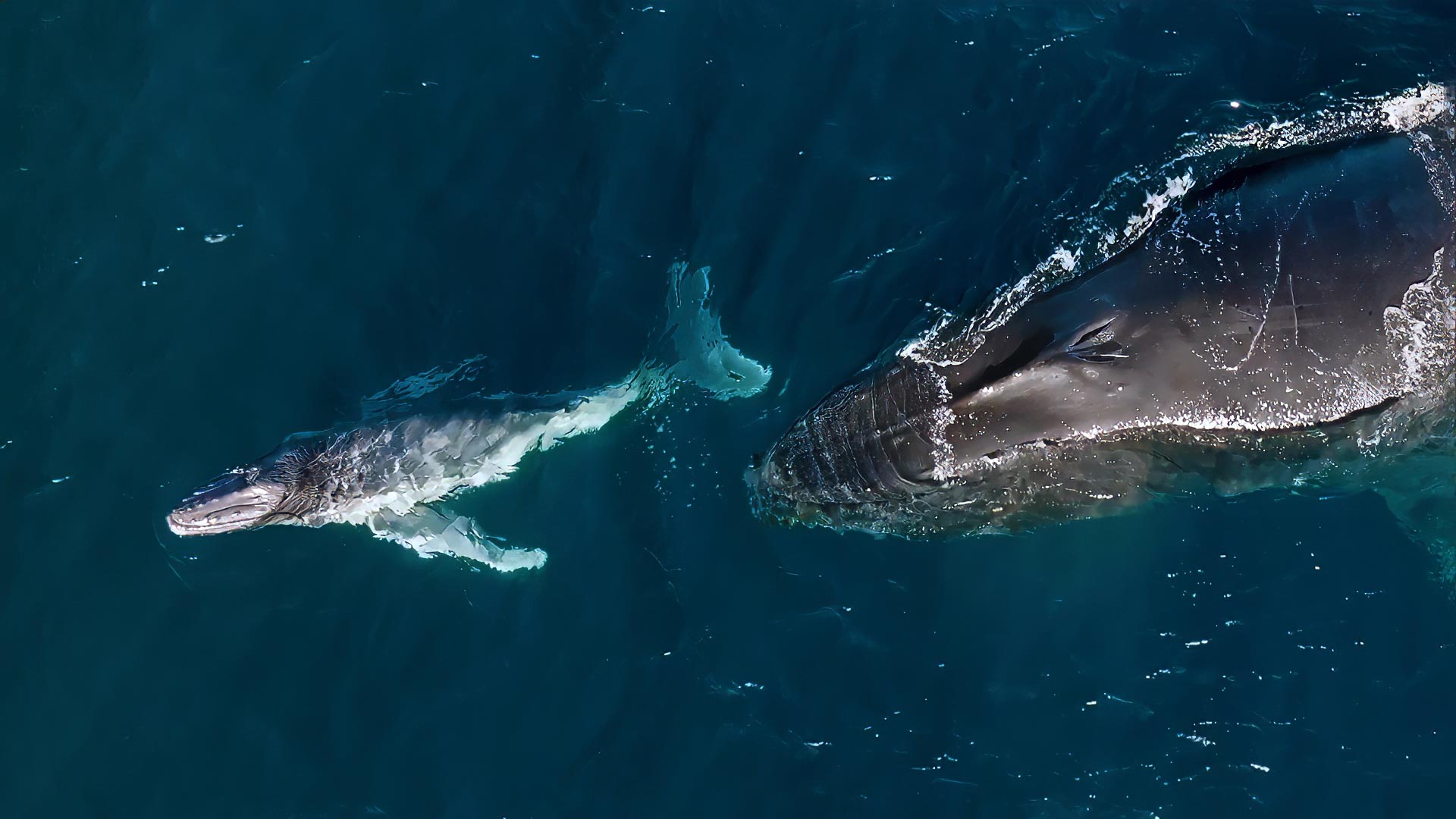
The recovery of the humpback whale population suggests we may have been mistaken about their birthing grounds — tropical waters aren’t the only places where they give birth.
Humpback whales may not need to travel all the way to the tropics to give birth after all. New research shows that calves are being born as far south as Tasmania and New Zealand, up to 1,500 kilometers (930 miles) beyond what scientists once believed. These surprising findings challenge long-held assumptions about humpback migration and highlight the urgent need to raise awareness and protect these newly discovered calving areas.
“Hundreds of humpback calves were born well outside the established breeding grounds,” said Dr Tracey Rogers of the University of New South Wales, senior author of the article in Frontiers in Marine Science. “Giving birth along the ‘humpback highway’ means these vulnerable calves, who are not yet strong swimmers, are required to swim long distances much earlier in life than if they were born in the breeding grounds.”
“Alongside my studies, I work as a marine guide,” said Jane McPhee-Frew of the University of New South Wales, PhD candidate and first author. “In July 2023, during a whale-watching tour, I encountered a mum and calf at the mouth of Newcastle Harbor — the busiest shipping port in Eastern Australia. The calf was tiny, obviously brand new. What were they doing there? But none of my tourism colleagues seemed surprised.”
The whales’ way
Inspired by McPhee-Frew’s sighting, the researchers investigated the calving range for humpback whales around Australia and New Zealand. They combined data from citizen science observations, government surveys, and reported strandings. New Zealand’s Department of Conservation Cook Strait Whale Project supplied data from migration surveys, and Australian state wildlife departments supplied information on strandings dating back to 1991.
The scientists identified 209 records of newborn calves, including 11 births — 41 strandings and 168 observations of live calves, representing at least 169 individuals. They had data on the direction of travel for 118, which showed the whales were continuing to migrate north after delivery.
“Humpback whale populations undertake extensive long-distance migrations from the Southern Ocean to breeding grounds in the tropics,” explained co-author Dr Adelaide Dedden of the National Parks and Wildlife Service, Australia. “They rely heavily on body reserves from an enormous amount of Antarctic krill to support the physiological costs of the journey and reproduction.”
A baby whale breaches in Western Australia. Credit: Footage by Jason Milligan – Instagram: millo_hd
The highest-latitude calf was found at Port Arthur, Tasmania, 1,500km further south than we previously thought humpback whales could calve. The highest-latitude birth recorded was witnessed only slightly further north, at Kaikoura, New Zealand.
Most observations of live calves were recorded from 2016 onwards, with two-thirds of observations made in 2023 or 2024. Meanwhile, comparisons with historical texts and whaling logbooks indicate that calves born during migration were observed before the population crashed due to hunting.
“I think it’s very likely that this pattern has always existed, but the low number of whales obscured it from view,” said McPhee-Frew. “The Eastern Australia humpback population narrowly escaped extinction, but now there are 30, 40, or 50,000 in this population alone. It doesn’t happen overnight, but the recovery of humpback whales, and the return of their full range of behaviors and distribution, just goes to show that with good policies built on good science we can have excellent outcomes.”
Migration motives
Migrating costs energy and leaves calves vulnerable to predators. Why do humpback whales risk migrating if they can give birth further south? This study can’t answer that question, but it’s possible other factors drive migration, or the benefits of usually delivering in tropical waters outweigh the risks to a potential calf born on the way. Although data provided by Western Australia’s Department of Biodiversity, Conservation, and Attractions identified a possible nursery area in Flinders Bay, it’s likely most calves are born much further north in the tropics.
The findings do have conservation implications. Some of the calves observed were injured, and the scientists say expanded protected areas, awareness campaigns about protective measures, and more research into the habitats humpbacks use while migrating are needed to safeguard calves.
“This study was based on opportunistic observations,” cautioned McPhee-Frew. “This data is excellent for answering questions like, ‘are there newborn whales here?’ But we can’t stretch the interpretations too far. It might appear that we see more calves the further north we go, or that we have seen more over time. But it could be that there are more people whale-watching in the north, or more cameras and social media sharing in recent years.”
“We can only document what we see,” added co-author Dr Vanessa Pirotta of Macquarie University. “Perhaps there are things happening in our ocean that we are yet to find out.”
Reference: “Humpback whales (Megaptera novaeangliae) continue migration after giving birth in temperate waters in Australia and New Zealand” by Jane McPhee-Frew, Adelaide V. Dedden, Vanessa Pirotta, Andrew Marshall, Kelly Waples, Holly C. Raudino and Tracey L. Rogers, 24 March 2025, Frontiers in Marine Science.
DOI: 10.3389/fmars.2025.1545526
Funding: NSW Government Marine Estate Management Strategy
Never miss a breakthrough: Join the SciTechDaily newsletter.
Follow us on Google and Google News.